
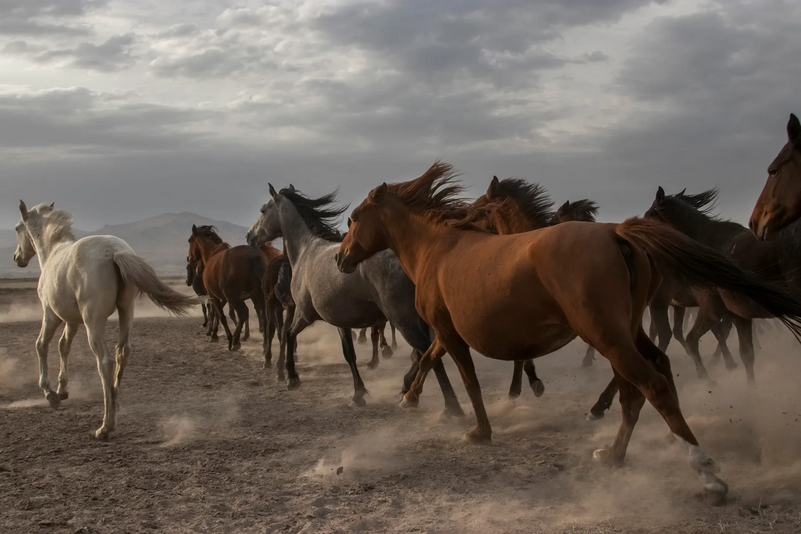
Türkiye's yılkı atları have long stood as one of the country's most distinctive symbols of freedom, resilience, and deep-rooted rural tradition. Historically descended from domesticated horses released into nature generations ago, these herds have since adapted to a fully free-roaming life. Today, they represent one of Anatolia's most authentic and enduring wildlife legacies.
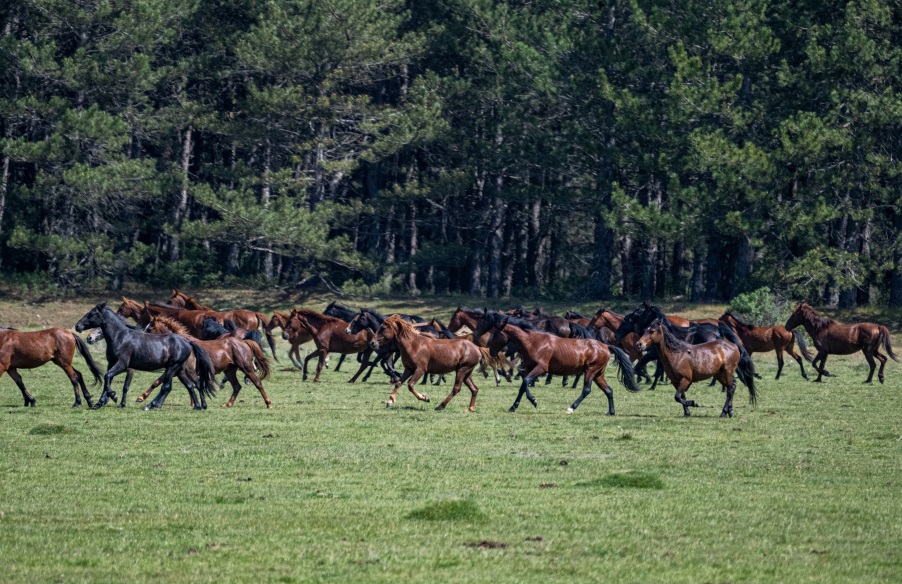
What recent reporting and field observations make unmistakably clear is that the presence of wild horses is not confined to a single region. From the wind-marked hills of Gökçeada to the snow-laden highlands of Central Anatolia, from the grasslands of Kars to the wetlands of the Kızılırmak Delta, yılkı atları appear in landscapes that vary dramatically in climate, altitude, and vegetation. Their ability to survive these contrasts underscores how deeply they are woven into Türkiye's natural fabric.
© iletişim
The Expanding Public Lens
Cappadocia in particular has emerged as a dramatic stage for Türkiye's wild horses. Photographers and filmmakers increasingly document herds galloping across volcanic plains, their silhouettes framed by ancient rock formations and early-morning light. This visual prominence has helped renew national and international awareness of yılkı atları, turning them into cultural ambassadors of Anatolian heritage.
Elsewhere, reports from municipalities and local residents show that the horses continue to appear in forests, mountains, deltas, and steppe regions across the country. While some herds remain fully independent, others receive occasional feed support during harsh winters, reflecting both environmental pressures and a growing public sense of responsibility for their wellbeing.
A Living Indicator of Türkiye's Changing Ecology
The resurgence of attention to yılkı atları coincides with broader conversations about land use, conservation, and biodiversity. As rural landscapes evolve and climate patterns shift, the horses' continued presence has become an informal barometer of ecological health. Their movements, herd stability, and seasonal behavior often reveal changes in vegetation, water availability, and human encroachment more quickly than formal surveys.
A National Legacy Worth Safeguarding
For Türkiye, the wild horses represent more than an ecological asset. They are part of the country's cultural memory: a reminder of pastoral/nomadic traditions, the rhythms of village life, and the longstanding bond between people and the land. Yet their future depends on maintaining the delicate balance between allowing them to live freely and ensuring that their habitats remain viable.
As Türkiye considers new conservation strategies, one thing is clear: yılkı atları are not relics of the past. They are a living, moving heritage that continues to define the country's often forgotten identity, its landscapes, and the stories it tells about itself...