
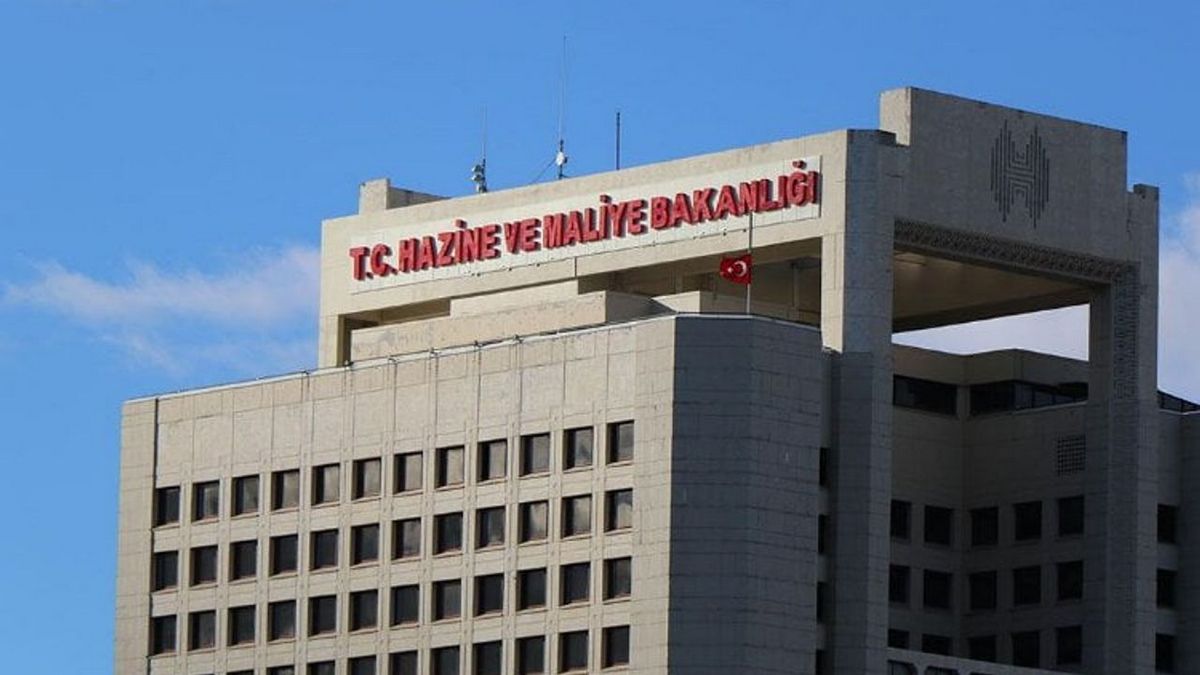
A list that says more than it seems
Türkiye's Treasury and Finance Ministry has once again published its list of designated market-maker banks, reaffirming a framework that sits at the core of the country's domestic debt market. On paper, the system mirrors the primary dealer models used across advanced economies. In practice, however, the list reveals less about market depth and more about the state's priorities.
At its heart lies a persistent ambiguity: is the objective to cultivate a self-sustaining secondary market, or to ensure uninterrupted public borrowing under all conditions?
When market-making begins at the auction room
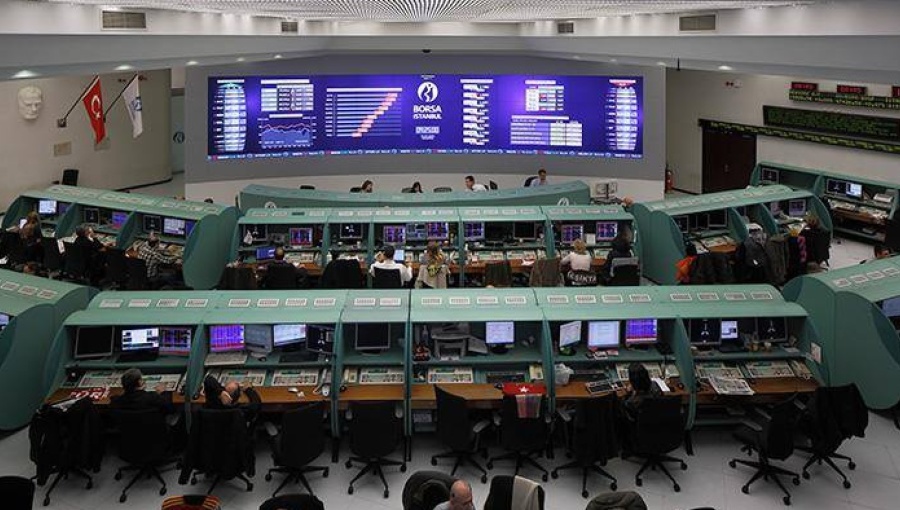
In advanced economies, market makers are judged primarily by what they do after issuance: continuous two-way pricing, narrow spreads, and reliable liquidity during both calm and stress. In Türkiye, by contrast, the market-maker function remains closely tethered to auction performance and debt rollover capacity.
This orientation is not accidental. The system is designed to guarantee demand for government securities, particularly during periods of elevated financing needs. The result is a model where market making often begins—and effectively ends—at the auction room, rather than maturing into a fully competitive secondary-market role.
Liquidity by obligation, not by incentive
Healthy liquidity is voluntary. It emerges when risk, return, and balance-sheet capacity align. Türkiye's framework, however, relies heavily on institutional obligation. Designated banks are expected to remain active even when market conditions deteriorate, spreads widen, and risk appetite collapses.
This shifts market making from a profit-driven activity to a durability test, raising a legitimate question for foreign investors: how sustainable is liquidity that depends on duty rather than incentive?
Concentration as a quiet vulnerability
Another defining feature of Türkiye's system is concentration. Market making rests on a limited circle of large banks—both state-owned and private—creating a structure where liquidity provision is narrow but heavy.
In developed markets, authorities deliberately broaden the dealer base to prevent precisely this outcome. Diffusion reduces systemic risk and sharpens price discovery. Türkiye's more compact structure, by contrast, increases dependence on a few balance sheets and weakens competitive pressure on spreads and pricing.
 © CC
© CC
Where pricing meets perception
Perception matters as much as mechanics. In mature systems, market makers are not seen as instruments of policy, but as neutral intermediaries through which policy is transmitted. In Türkiye, that boundary is less clearly drawn.
Even when no direct intervention exists, the perception that market makers may carry an operational policy role can discourage foreign investor participation. For global portfolios, uncertainty over whether prices reflect market conditions or implicit guidance is often reason enough to remain on the sidelines.
Stress tests without a safety net
Moments of stress expose institutional design. In advanced economies, central banks move quickly to absorb risk, allowing dealers to keep markets functioning without destabilizing their balance sheets. In Türkiye, market makers have more frequently been expected to absorb volatility themselves, reinforcing the view that the role carries asymmetric risk.
This does not indicate institutional failure, but it does underscore a structural choice: the system prioritizes continuity over shock absorption.
Stability achieved, depth deferred
Türkiye's market-maker framework delivers what it is primarily designed to deliver: predictability in public debt financing. What it has yet to deliver is the deeper outcome associated with advanced markets—a resilient, liquid, and autonomous secondary market capable of standing on its own.
For foreign investors, the conclusion is neither alarmist nor dismissive. Türkiye has built a stabilizing mechanism, not a market-building institution. The two are not the same.
Closing that gap would require clearer performance metrics, broader participation, and a sharper separation between fiscal necessity and market function. Until then, Türkiye's market makers will continue to stabilize the system—while leaving its full potential unrealized.