
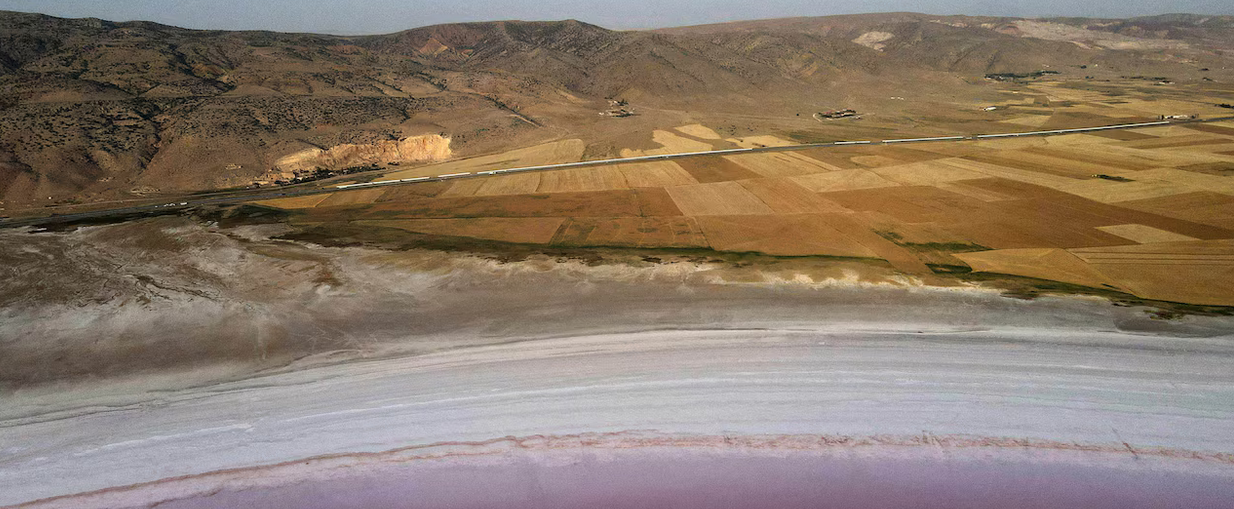
Türkiye is facing one of the most dramatic ecological shifts in its modern history: the rapid disappearance of its lakes. The most symbolic example is Marmara Lake in Manisa—once a vibrant wetland supporting fishermen, migratory birds, and local agriculture—which has now dried up almost entirely.
According to reporting by National Geographic, Marmara Lake lost around 98% of its surface area, shrinking from an expansive 44 km² to a barren stretch of cracked soil. For decades, the lake had served as a natural treasure for the region, home to bird species, fish populations, and local livelihoods tied to tourism and freshwater resources.
A Country Losing Its Lakes
Environmental experts report that Türkiye has lost more than 60% of its wetlands over the last 50 years, primarily due to irrigation demands, dam construction, unregulated groundwater pumping, and prolonged drought cycles linked to climate change. More than 180 lakes are considered to be in a state of severe decline or high risk.
The problem is not unique to Marmara Lake. Prominent water bodies such as Tuz Lake, Eğirdir Lake, Akşehir Lake, and Bafa Lake have all seen significant drops in water levels, with some witnessing their salinity, biodiversity, and agricultural value dramatically change.
Human Impact at the Core
While climate change has intensified the challenge, scientists emphasize that the primary driver is human use. For years, farmers and nearby settlements increasingly relied on diversion channels, underground pumps, and irrigation systems without sufficient environmental controls. As more water was taken for agriculture, less was left to sustain the lakes.
Marmara Lake, in particular, depended heavily on feeder streams—streams that have been increasingly redirected to support farming or left depleted by overuse. As the water levels dropped, fish populations collapsed, followed by the departure of birds that relied on the lake as a stopover during yearly migrations.
Communities Under Pressure
The disappearance of lakes carries profound socio-economic consequences. In Marmara Lake's surrounding villages, families once made their living through fishing. When the lake vanished, so did their primary source of income. Some households have already begun relocating, while others struggle to adapt to farming in increasingly arid conditions.
Environmental groups warn that similar pressures may soon affect communities around other major lakes if urgent measures are not taken.
Climate Stress Intensifying the Crisis
Türkiye's western, central, and southeastern regions have all experienced prolonged drought cycles in recent years. As rainfall decreases and temperatures rise, evaporation accelerates. Without sustainable water management, lakes are unable to recover between dry seasons.
Scientists caution that if existing water practices continue, the loss of wetlands could accelerate, damaging biodiversity, agricultural productivity, and local climate stability.
A Crossroads for Water Policy
The story of Marmara Lake is not just an environmental loss — it is a national signal. Experts argue that Türkiye is at a decisive moment where long-term water policies must shift toward sustainability, efficient irrigation techniques, and stronger protection of wetlands.
The government has taken steps in recent years to improve irrigation systems and raise awareness about groundwater usage, but environmental researchers and local communities call for a more comprehensive nationwide strategy.
The disappearance of Marmara Lake is a stark reminder of how quickly ecosystems can collapse when natural water cycles are disrupted. As Türkiye confronts a changing climate and increasing demand for water, the future of its lakes — and the communities surrounding them — depends on decisions made today.
***Source: National Geographic – Turkey's shrinking lakes reveal a deeper environmental crisis