
Türkiye's latest weekly briefing from the Ministry of National Defence offers a clear snapshot of how Ankara is managing its defence posture at the start of 2026. Rather than signalling acceleration or escalation, the emphasis falls on consolidation: refining capabilities, locking in operational gains, and sustaining multinational coordination across land, sea, and air.
What emerges is a defence agenda shaped less by headline moves than by process, geography, and institutional continuity.
Capability First, Not Spectacle
On the modernisation front, the Turkish Armed Forces continue to prioritise usable capacity over platform symbolism. During the reporting period, new systems were inducted into service following inspection and acceptance procedures, including mobile mortar detection radars, the MİLKED electronic support system, and the MPT-76 national infantry rifle. Parallel deliveries of weapons and ammunition reinforced sustainment rather than force expansion.
The message is incremental but deliberate: enhance situational awareness, protect deployed units, and standardise equipment already embedded in operational planning.
Cross-Border Operations: Locking in Control
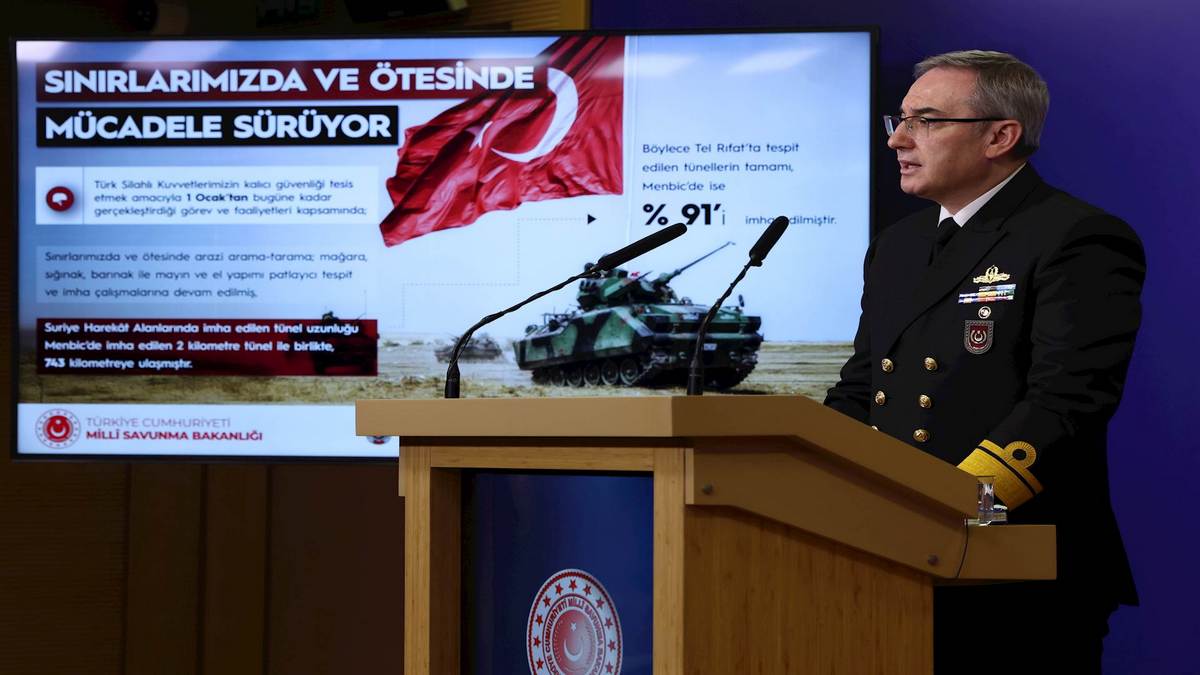
Operationally, the focus remains on denial rather than manoeuvre. Since 1 January 2026, Turkish forces have continued search-and-clear missions along the borders and in external operational areas, targeting tunnels, shelters, mines, and improvised explosive devices.
In Syria, the scale of subsurface neutralisation is now explicit. The total length of destroyed tunnel networks has reached 743 kilometres, including newly eliminated sections in Manbij. All identified tunnels in Tel Rifaat have been neutralised, while the figure in Manbij stands at 91 percent. The priority is clear: prevent underground mobility and logistics from regenerating, and stabilise areas already brought under control.
The Maritime Layer: Black Sea at the Centre
Maritime security remains a defining axis of Türkiye's defence activity. The Black Sea, shaped by wider regional conflict dynamics, continues to anchor multinational coordination. Istanbul hosted the committee meeting, command transfer, and activation ceremony of the Black Sea Mine Countermeasures Task Group on 8 January, marking the start of its eighth activation phase, running through 18 January.
Naval engagement during the week reflected this layered approach. Bulgarian and Romanian naval vessels conducted port visits to Istanbul, while Turkish naval units carried out reciprocal visits to Burgas and Constanta. These movements reinforced interoperability and presence without altering the regional balance.
NATO-linked activity complemented this picture. As part of Standing NATO Maritime Group-2, allied vessels conducted port visits to Izmir and Aksaz, underscoring continuity in alliance maritime routines rather than episodic signalling.
Beyond the Neighbourhood: Exercises and Coordination
Türkiye's defence activity during the period also extended beyond its immediate geography. Participation continued in the Indo-Pacific New Year Parachute Jump Activity in Japan, including senior-level observation, with further multinational airborne exercise participation scheduled later in the month.
At the coordination level, Ankara remained embedded in structured military dialogue. Chiefs of defence from countries contributing to the Ukraine Volunteer Coalition met online, while Türkiye hosted naval cooperation meetings with Saudi Arabia and Bangladesh. Senior bilateral military engagements with Jordan, the United Arab Emirates, and Indonesia reinforced the same pattern: institutional engagement over transactional diplomacy.
The Takeaway
Taken together, the week's briefing points to a defence posture defined by restraint in tone but density in activity. Türkiye is not signalling a shift in doctrine or tempo. Instead, it is reinforcing what is already in place: operational control on land, coordinated presence at sea, and structured engagement with allies and partners abroad.
The strategy is not about moving faster, but about holding ground, refining capability, and ensuring that gains already made remain durable.