
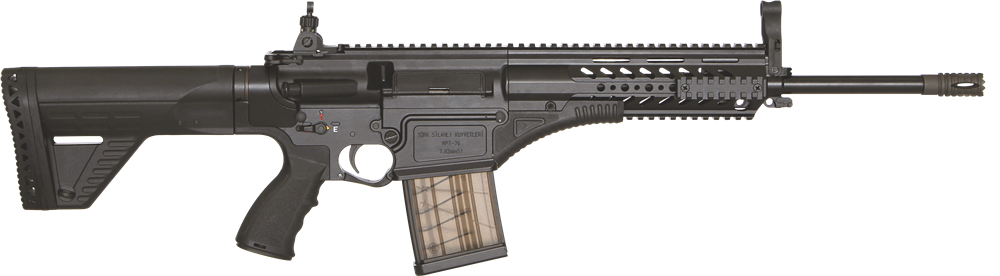
Türkiye has successfully completed the NATO qualification process for its first domestically developed 7.62×51 mm general-purpose machine gun, marking a significant step in the country's efforts to strengthen indigenous defence production and interoperability with allied forces.
According to official statements, the qualification process involved extensive technical and endurance testing carried out in line with NATO standards. The weapon system met all required performance, reliability, and safety criteria, allowing it to proceed to serial production and formal induction into service inventories.
A Milestone for Domestic Small Arms Production
The machine gun, developed by Makine ve Kimya Endüstrisi, represents Türkiye's first domestically designed platform in this caliber to achieve full NATO qualification. Chambered in the standard 7.62×51 mm NATO round, the system is intended to serve as a general-purpose machine gun for infantry units, with flexibility for both dismounted use and mounted configurations.
Officials familiar with the program state that the weapon underwent dozens of standardized tests, including prolonged firing trials designed to assess durability, accuracy, and mechanical resilience under sustained operational stress. The qualification process is widely regarded as one of the most demanding certification tracks within the Alliance.
Designed for Interoperability and Modern Combat Needs
The new system incorporates features aligned with contemporary battlefield requirements, including a quick-change barrel, adjustable gas regulation, and compatibility with modern optics and mounting solutions. Its design emphasizes reduced weight compared to legacy systems, improved ergonomics, and ease of maintenance in field conditions.
Defence officials have highlighted that NATO qualification is not merely a technical benchmark but also a prerequisite for interoperability, logistics compatibility, and potential future exports to allied and partner countries.
Strategic Significance for Türkiye
From a broader perspective, the achievement underscores Türkiye's long-term investment in defence industrial self-sufficiency while remaining embedded within NATO's technical and operational frameworks. By qualifying an indigenous infantry weapon to alliance standards, Ankara reduces external dependency in a critical capability area without diverging from allied norms.
The development also fits within a wider modernization effort across the Turkish Armed Forces, where emphasis has increasingly shifted toward domestically designed platforms that can be sustained, upgraded, and adapted without external constraints.
Looking Ahead
With qualification complete, the next phase will focus on production scheduling, phased deployment, and integration into existing force structures. Defence sources indicate that the system may also be evaluated for use on vehicles and fixed defensive positions, further broadening its operational role.
As Türkiye continues to expand its defence technology portfolio, the successful NATO qualification of this machine gun stands out as a concrete example of how domestic engineering, alliance standards, and operational needs can converge—quietly reinforcing Türkiye's position within NATO through capability rather than rhetoric.