
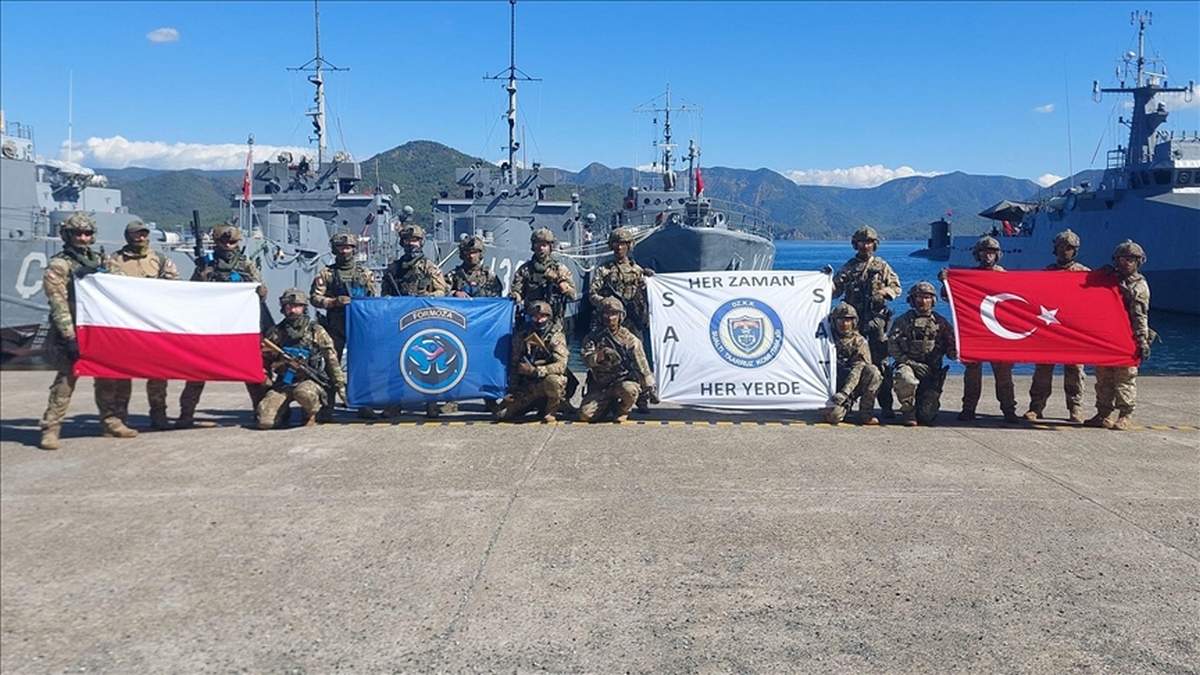
Türkiye and Poland moved defence relations onto firmer ground in December 2025, following a high-level meeting in Ankara and the signing of a bilateral security and defence cooperation agreement. On paper, the framework covers military coordination, defence planning, industrial cooperation, and information sharing. In practice, it reflects a deeper shift in how both countries position themselves within NATO's evolving security map.
From alignment to usable capacity
The Ankara agreement is notable less for its language than for its intent. Rather than restating political alignment, it places emphasis on mechanisms that generate usable capacity: structured military cooperation, defence-industrial linkages, and interoperability.
For Warsaw, this approach fits a security environment defined by urgency. Poland is investing heavily in deterrence and force readiness, and it increasingly values partners that can deliver quickly, adapt operationally, and contribute beyond declaratory support. For Ankara, the agreement reinforces a long-standing preference for bilateral defence frameworks that translate diplomacy into deployable outcomes.
A relationship with strategic memory
Türkiye–Poland defence cooperation has deeper roots than recent headlines suggest. In the interwar period, Türkiye's choice of the Polish-designed PZL P.24 fighter aircraft reflected early defence-industrial trust at a time of mounting insecurity in Europe.
That history is not invoked for nostalgia. It signals continuity. When strategic pressure rises in Europe, Ankara and Warsaw have repeatedly found practical reasons to cooperate in defence. The December 2025 agreement fits that pattern.
Poland's position, Türkiye's reach
Poland today occupies a pivotal role in NATO's security architecture. It is both a frontline state and a logistical anchor for allied forces operating along the alliance's eastern axis. Its defence partnerships are therefore not peripheral; they shape how deterrence is organised and sustained.
For Poland, closer defence ties with Türkiye bring access to a partner with industrial scale, operational experience, and systems tested across multiple theatres. For Türkiye, engagement with Poland extends its strategic reach beyond the alliance's southern flank, embedding Ankara more visibly in Central and Eastern Europe's security calculations.
Bilateral frameworks inside NATO
The agreement also illustrates a broader alliance trend. As NATO's collective posture becomes more demanding, member states are relying increasingly on dense bilateral arrangements to accelerate coordination and reduce friction. These frameworks do not compete with NATO mechanisms; they reinforce them by shortening timelines and clarifying roles.
Türkiye–Poland cooperation sits squarely within this logic. It reflects an understanding that deterrence on NATO's eastern axis is shaped as much by day-to-day operational compatibility as by summit declarations.
From signature to practice
The December agreement builds on an existing record of cooperation. Turkish and Polish forces have taken part in joint and allied activities, including special forces training, airspace support for NATO missions, and coordinated operational tasks. Defence-industrial engagement has also advanced through concrete contracts and partnerships involving Turkish companies.
These elements matter. They indicate that the relationship is already moving beyond formal commitments toward routine interaction and shared operational assumptions.
A wider signal to the alliance
Ankara's deepening defence ties with Warsaw carry implications beyond the bilateral track. They reinforce a cross-regional link between NATO's southern and eastern security agendas at a time when the alliance is under sustained strategic pressure.
For Türkiye, this posture signals that its role in NATO is not geographically confined. For Poland, it underscores a willingness to diversify defence partnerships within the alliance without diluting collective commitments.
A framework with intent
The December 2025 agreement will not, on its own, reshape NATO's defence posture. Its significance lies in intent and direction. By anchoring defence cooperation in capability, industry, and operations, Türkiye and Poland have created a platform that can mature into a durable strategic asset if followed through.
In an alliance increasingly defined by readiness rather than reassurance, that choice matters.