
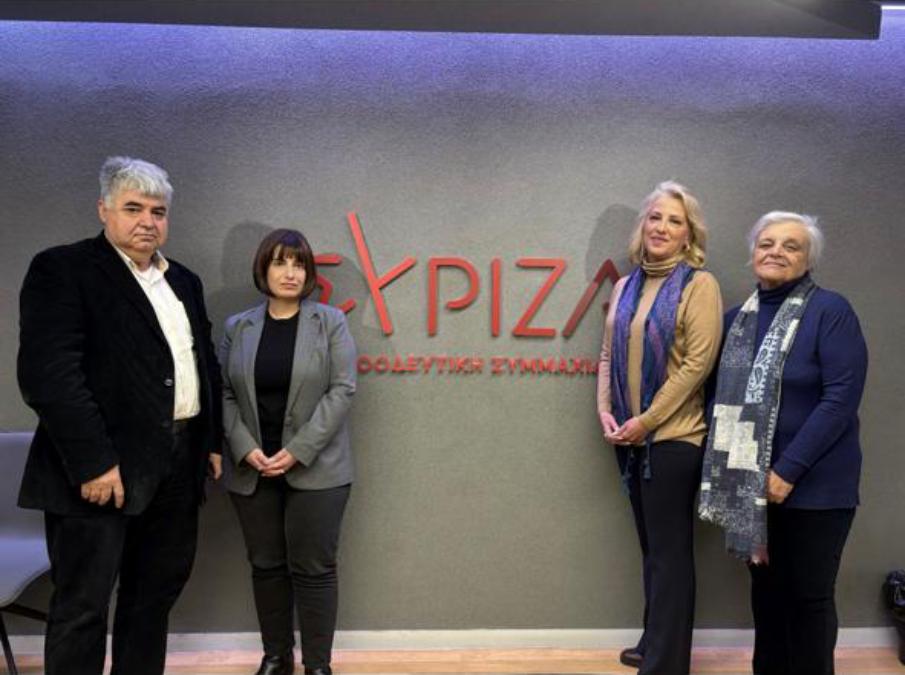
Greece's opposition party SYRIZA–Progressive Alliance (SYRIZA-PS) announced on 4 February 2026 that a party delegation held an official meeting in Athens with İbrahim Müslim, Greece representative of Syria's Democratic Union Party (PYD).
According to the formal statement, Müslim briefed the SYRIZA-PS delegation on the current situation in Syria, citing recent killings, forced displacement, and systematic persecution affecting Syrian Kurds as well as Christian communities, Alawites, and Druze populations.
SYRIZA-PS reiterated its support for the right of Syrian Kurds to self-determination and political representation. The statement further underlined the need for a new constitutional framework in Syria, calling for a democratic and multi-cultural state structure that guarantees equality before the law and full protection of rights and freedoms for all ethnic and religious communities.
The party recalled previous initiatives taken in both the Greek Parliament and the European Parliament and stated that further political and diplomatic steps would follow. It also stressed the need for a more active role by both the Greek government and the European Union in addressing developments in Syria.
The SYRIZA-PS delegation included Rena Dourou, MP for Western Athens and the party's foreign affairs spokesperson; Rania Svikou, member of the Political Secretariat responsible for European and international affairs; and Angeliki Visviki, also a member of the Political Secretariat.
The Türkiye angle
For Ankara, PYD is not viewed as a distant Syrian political actor but as part of a structure it directly links to the PKK. In that context, political engagement by Greek actors with PYD representatives carries weight beyond routine party diplomacy. The contact intersects with three open files for Türkiye: cross-border security dynamics in northern Syria, the international political normalization of Kurdish armed-linked structures, and the already strained strategic relationship with Greece. Timing further sharpens attention, as regional alignments and European political platforms increasingly overlap with conflict dynamics along Türkiye's southern frontier.