
The Diplomatic Breakthrough: A Hand Extended to Ankara
The political landscape of Northeast Syria—often referred to as Rojava—is witnessing its most consequential diplomatic pivot since the fall of the Assad regime in late 2024.
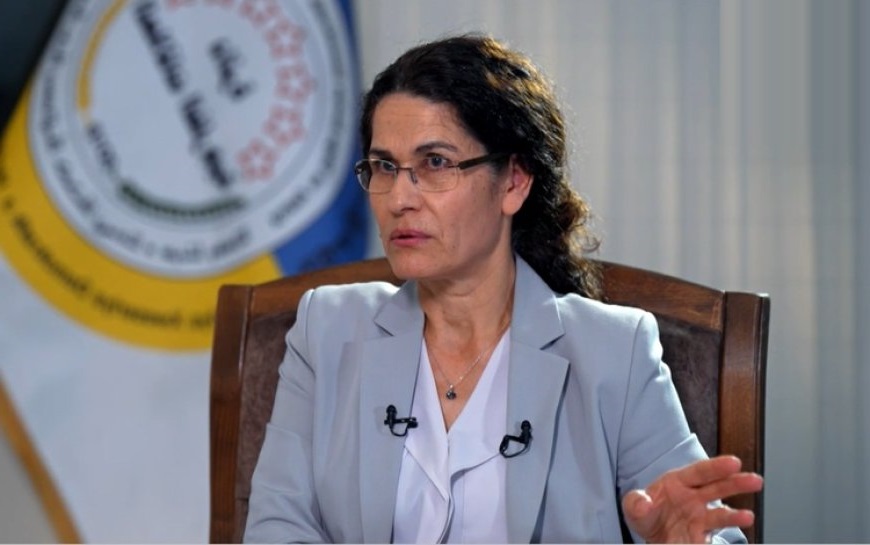
Speaking at a peace forum in Istanbul, Ilham Ehmed, the co-chair of the AANES Foreign Relations Department, announced the administration's definitive willingness to open direct, official dialogue with Turkish authorities.
"We are not supporters of war and weapons; we are supporters of peace," Ehmed affirmed. She stressed that stability in Syria is inextricably linked to the security of Türkiye, voicing a hope to welcome Turkish officials to Rojava and, conversely, to be able to travel to Ankara.
This announcement represents a crucial attempt by the Kurdish-led administration to ease the existential threat posed by Türkiye, which has long viewed the backbone of AANES's security forces—the Syrian Democratic Forces (SDF) and its Kurdish component, the YPG—as a direct extension of the Kurdistan Workers' Party (PKK), a designated terrorist group. The call for dialogue follows the recent announcement that the PKK has agreed to disarm and dissolve, removing a major hurdle in potential normalization talks.
Who is Ilham Ehmed? The Architect of Decentralization
For those unfamiliar with the power brokers of the Syrian conflict, Îlham Ehmed is one of the most visible and influential politicians representing Syria's decentralized Northeast. Born in Afrin, she is a veteran Kurdish activist and a steadfast champion of secular, decentralized governance.
Ehmed previously served as a co-chair of the Syrian Democratic Council (SDC)—the political arm of the SDF—and currently serves as the co-chair of the AANES Foreign Relations Department. She is the principal diplomatic conduit for the autonomous region, having conducted numerous high-level meetings in Washington and European capitals. Her political philosophy centers on establishing a polyethnic, federal Syria where communal identities and local rights are constitutionally guaranteed, a vision that directly clashes with the centralized demands of the new transitional government in Damascus.
The Dual Pressure Point: Damascus and Washington
Ehmed's proactive reach toward Türkiye underscores the delicate and dangerous corner into which the AANES has been pushed by shifting US regional policy and the post-Assad dynamics.
While the US-led coalition still relies on the SDF's approximately 100,000 personnel to contain ISIS remnants, Washington and Ankara are increasingly aligned on the need to maintain Syria's territorial integrity under a single, central authority in Damascus.
Data Point: SDF Integration Deadline In March 2025, the SDF formally signed an agreement with the new Syrian government to begin integrating its institutions. However, implementation has stalled over two non-negotiable points:
- Military Future: Damascus insists that SDF fighters must be incorporated as individuals into a new Syrian National Army, stripping them of their regional command structure. AANES, conversely, seeks the integration of the SDF as a force, retaining local control and command.
- Governance Model: The new Damascus government, led by Ahmad al-Sharaa's transitional authority, categorically rejects AANES's vision of federalism or radical decentralization.
Reports from late summer 2025 suggested that the US and Türkiye had collectively issued a loose "30-day deadline" for the Kurdish administration to make progress on integration, or risk losing crucial diplomatic and military backing.
For Ilham Ehmed and the AANES, the simultaneous push for dialogue with Ankara and the ongoing negotiations with Damascus are two sides of the same coin: an attempt to negotiate autonomy from the periphery before the center—backed by international pressure—can fully dismantle the region's hard-won self-rule. The hope is that a stable, agreed-upon relationship with Türkiye could neutralize the greatest "external threat" and perhaps grant the AANES more leverage in the complex and fragile talks concerning the future of Syria's unified but divided state.