
By Bosphorus News Geopolitics Desk
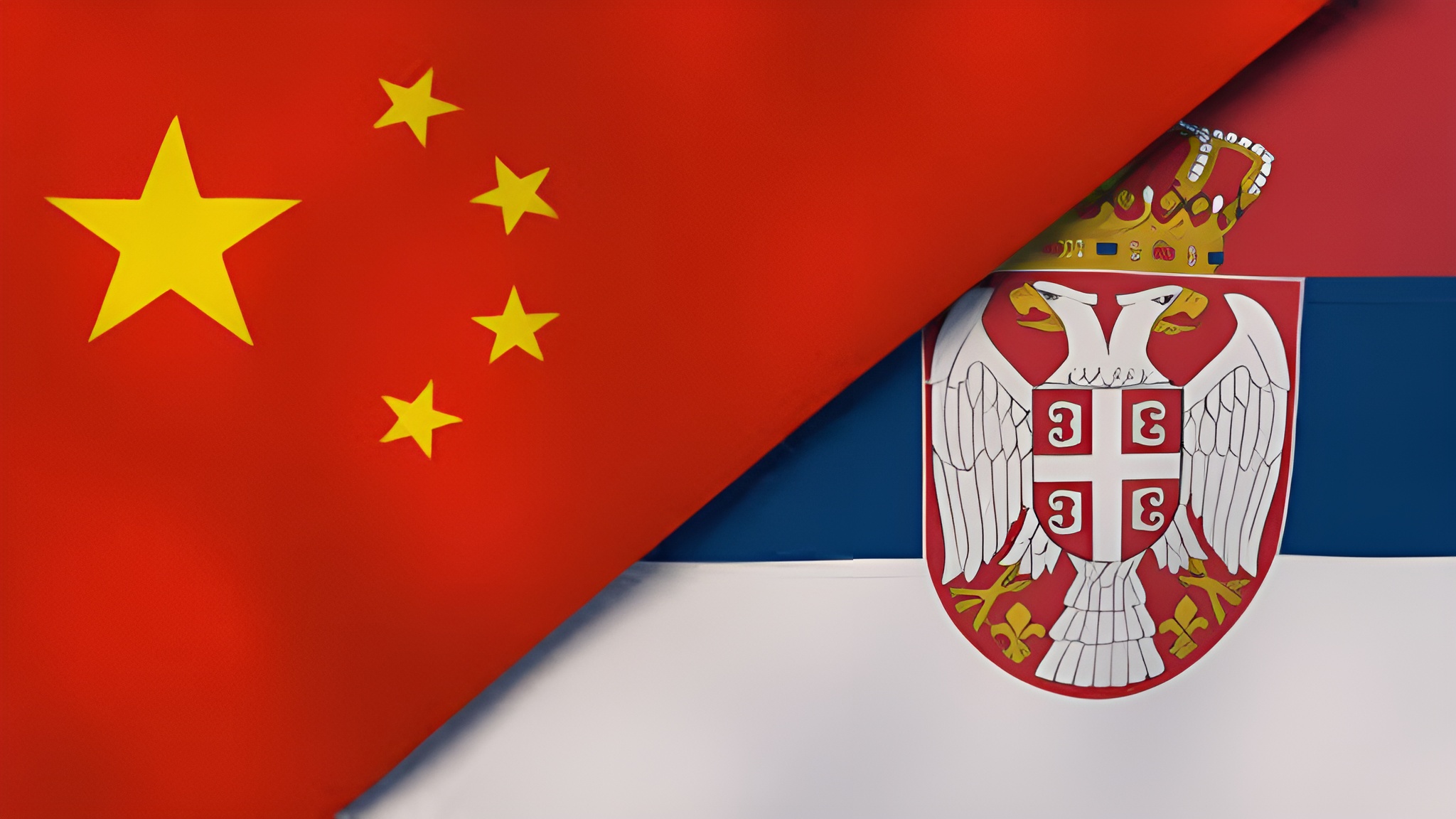
Serbia is hosting its first joint military exercise with NATO while expanding a Chinese weapons portfolio that is already changing how neighbouring states read the Balkan security balance.
The Serbian Defence Ministry said the exercise began on May 12 at South Base and the Borovac Training Ground near Bujanovac. The drill is being organised by Serbia's Army Command and NATO's Allied Joint Force Command Naples, with around 600 personnel taking part.
Serbia is participating alongside Italy, Romania and Türkiye, while military planners and observers from France, Germany, Italy, Montenegro, Romania, Serbia, Türkiye, the United Kingdom and the United States are also involved. The exercise is scheduled to run until May 23.
Belgrade has presented the drill as part of its Partnership for Peace cooperation with NATO and said the activity respects Serbia's declared military neutrality. The Defence Ministry described the exercise as "concrete and transparent Serbia-NATO cooperation" aimed at supporting peace and stability in the region.
That official framing gives only one side of the story. Serbia is keeping the NATO channel open at the same time as it builds one of Europe's most visible Chinese-supplied military portfolios.
The sharpest example came in March, when President Aleksandar Vučić acknowledged that Serbia had acquired Chinese-made CM-400AKG air-to-surface ballistic missiles. Reuters reported that Serbia became the first European operator of the system. Vučić said on Serbian public television that Belgrade had "a significant number" of the missiles and would have more.
The system matters because Serbia has adapted its Soviet-designed MiG-29 fighter aircraft to carry the missiles, according to Reuters. That gives Belgrade a strike capability watched closely by neighbours already concerned about Serbia's rearmament.
Croatia criticised the purchase as a threat to regional stability and described it as an attempt to alter the military balance in the Balkans. Bosnia and Kosovo have also viewed Serbia's military build-up with concern, especially as Belgrade continues to balance between NATO cooperation, EU membership ambitions and close security ties with China and Russia.
The Chinese air defence layer is already inside Serbia's official military structure. In February, the Serbian Defence Ministry said units of the 250th Air Defence Missile Brigade were training on the FK-3 missile system, which entered service in 2022.
Major Vladan Škrkić, a battalion commander in the brigade, said the system had significantly improved Serbia's air defence capability.
"With the introduction of the FK-3 missile system, our units have gained the capability to destroy multiple targets simultaneously at long distances," Škrkić said, according to the Serbian Defence Ministry.
The ministry said the FK-3 can engage targets at ranges of up to 100 kilometres and altitudes of up to 27 kilometres. That places the Chinese system at the centre of Serbia's airspace protection planning.
Drone warfare is becoming the next layer. Vučić told the military in April to create attack drone units, according to Reuters. He said Serbia expected drone production to expand strongly this year and that the army would focus heavily on digitisation.
The wider procurement pattern points in the same direction. Radio Free Europe/Radio Liberty, citing Stockholm International Peace Research Institute data, reported that China accounted for 57 percent of Serbia's arms imports between 2020 and 2024. The same report said Serbia had become the first European country to acquire Chinese CH-92 and CH-95 drones, as well as FK-3 and HQ-17 air defence systems.
This combination gives the NATO drill a different meaning. The exercise does not show a simple Western turn by Belgrade. It shows a Serbian strategy built around keeping several security doors open at once.
Serbia wants the benefits of NATO military cooperation without joining the alliance. It wants EU accession without aligning fully with Western security policy. It wants Chinese weapons without presenting itself as a Chinese military proxy in Europe. That balancing act has worked politically for years, but the hardware now gives it a harder military edge.
The issue also lands inside a wider NATO-EU debate over the Western Balkans, where military chiefs have increasingly treated the region as a single security front rather than a set of separate national files.
The timing is what makes the file sharper. NATO personnel are training with Serbian forces in southern Serbia in May, while Belgrade is integrating Chinese missiles, air defence systems and drone capabilities that neighbouring states see as destabilising. The Balkans are not returning to a Cold War map, but Serbia is turning military neutrality into a procurement doctrine that gives China a deeper defence footprint in Europe's southeast.
That leaves NATO with an uncomfortable reality. Serbia remains a partner in official exercises and a country the alliance does not want to lose. At the same time, its Chinese-supplied arsenal is becoming part of the regional balance that NATO members and partners around the Balkans now have to calculate.
***Sources: Serbian Ministry of Defence, Reuters, Radio Free Europe/Radio Liberty, ANSA, AFP and Bosphorus News reporting.