
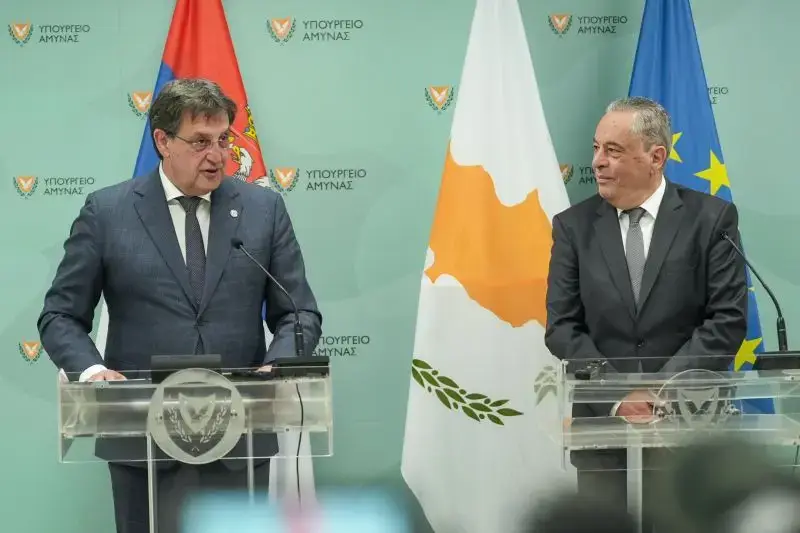
Cyprus and Serbia have advanced their bilateral defence relationship through the signing of a Status of Forces Agreement (SOFA), a pact designed to institutionalise future military cooperation and facilitate joint activities between their armed forces. The agreement was concluded during an official visit by Serbian Defence Minister Bratislav Gašić to Nicosia.
The Serbian government's official statement describes the new cooperation as a strengthening of longstanding ties and mutual commitment to regional security..
Formalising Military Collaboration Through SOFA
The SOFA, signed by Serbian Defence Minister Gašić and Cypriot Defence Minister Vasilis Palmas, is intended to provide a legal and procedural framework for future exchanges, joint exercises, training programmes and logistics coordination. Both ministers characterised the agreement as a milestone in a friendship that extends beyond diplomacy into practical cooperation in defence and security.
Palmas described the agreement as the result of a deep and enduring relationship, highlighting the shared strategic outlook between Nicosia and Belgrade. Gašić underlined Serbia's appreciation for S.Cyprus's support on issues of mutual interest, including principles of sovereignty and respect for territorial integrity.
Media coverage in both countries noted that the SOFA will enhance readiness and streamline potential joint programmes in areas such as peacekeeping, crisis response, and interoperability.
Regional Significance and Strategic Context
The S.Cyprus–Serbia defence agreement emerges against a backdrop of evolving security dynamics in both the Mediterranean and the Balkans. S.Cyprus, a member of the European Union, has pursued broader engagement with regional and extra-regional partners, while Serbia continues to balance its traditional diplomatic relationships with aspirations for European integration.
Reports from multiple outlets highlight that this formal cooperation complements ongoing dialogue in defence industry collaboration, capability development, and interoperability efforts that have been gradually evolving over the past few years.
At the same time, Nicosia has increased its overall diplomatic and defence outreach, participating in multinational exercises and expanding defence cooperation agreements with partners across the EU and beyond.
Turkey's Response to Increased Military Activity in the Region
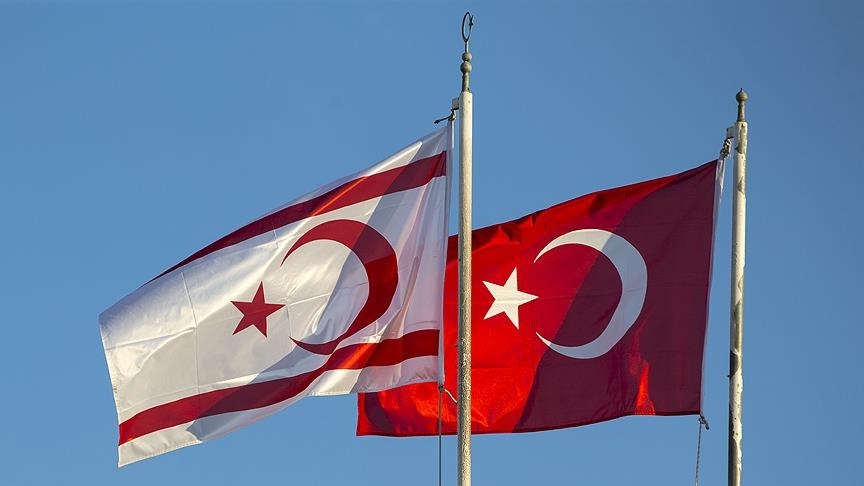
The deepening of defence ties involving the Republic of Cyprus has not gone unnoticed in Ankara. Turkish officials have recently voiced concerns about expanded military activities and external partnerships involving the Greek Cypriot Administration of Southern Cyprus.
Ömer Çelik, the General Vice Chairman and Spokesman of Türkiye's ruling Justice and Development Party, commented sharply on these developments during a press conference. Çelik stated that the Greek Cypriot administration appears to be attempting to transform the southern part of the divided island into a platform for foreign military presence, describing these efforts as "futile" and "contrary to regional stability."
Çelik emphasised his government's objections to maritime agreements concluded by the Greek Cypriot Administration, asserting: "What the Greek Cypriot Administration of Southern Cyprus is doing is completely an occupation. Nothing else. This is an attempt to usurp the sovereignty rights of the Turkish Republic of Northern Cyprus." He added that "any approach that attempts to erase the Turkish Cyprus, that attempts to ignore Türkiye, will have no future here," underlining Ankara's determination to protect the rights and interests of Turkish Cypriots.
Broader Diplomatic Dynamics in the Eastern Mediterranean
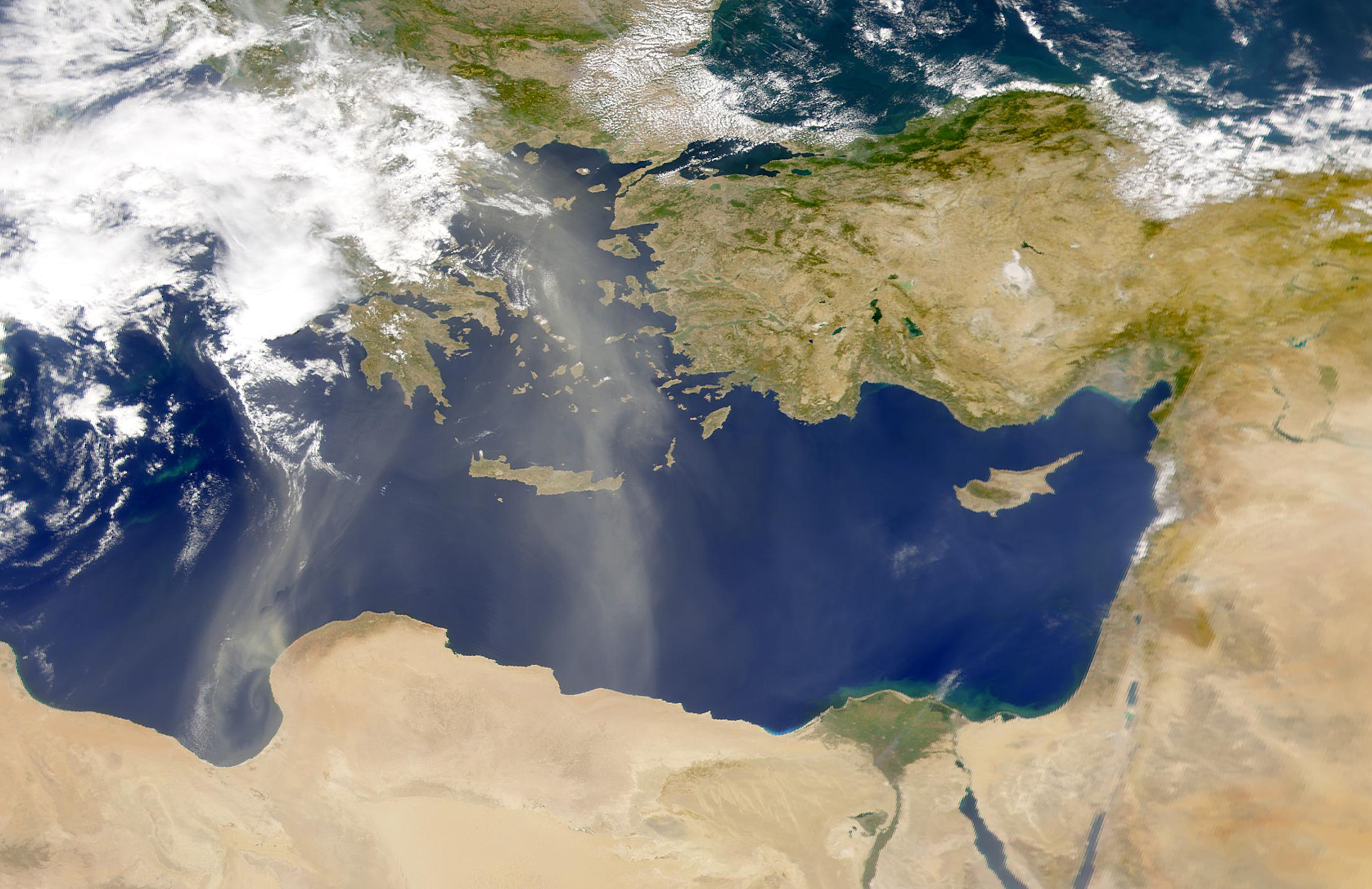
The recent SOFA with Serbia should be seen in the context of increasing diplomatic and defence engagement by the Greek Cypriot Administration with states beyond the immediate region. Agreements on exclusive economic zones, maritime boundaries and joint development initiatives have been points of contention between Nicosia and Ankara. In late 2025, the Republic of Cyprus finalised a maritime delimitation agreement with Lebanon, a deal that was contested by Türkiye as undermining Turkish Cypriot rights.
Both Greece and S.Cyprus affirm their positions as open to negotiations and committed to international legal frameworks, with S.Cypriot officials reiterating their readiness to engage directly with Türkiye on maritime issues based on good-neighbourly relations and established maritime law principles.
Outlook
With the SOFA now signed, Cyprus and Serbia are expected to expand joint training, enhance organisational interoperability, and continue regular defence dialogue. Reciprocal visits and follow-up meetings are anticipated in 2026, as both capitals prioritise sustained engagement in defence cooperation.
From Ankara's perspective, however, such agreements—particularly when concluded by the Greek Cypriot Administration without the inclusion of the Turkish Cypriot side—risk reinforcing existing political imbalances on the island and may undermine the spirit of equitable power-sharing that Türkiye regards as essential for long-term stability. Turkish analysts also caution that defence arrangements which deepen external military footprints on Cyprus could complicate de-escalation efforts and disrupt ongoing regional dialogue mechanisms.