
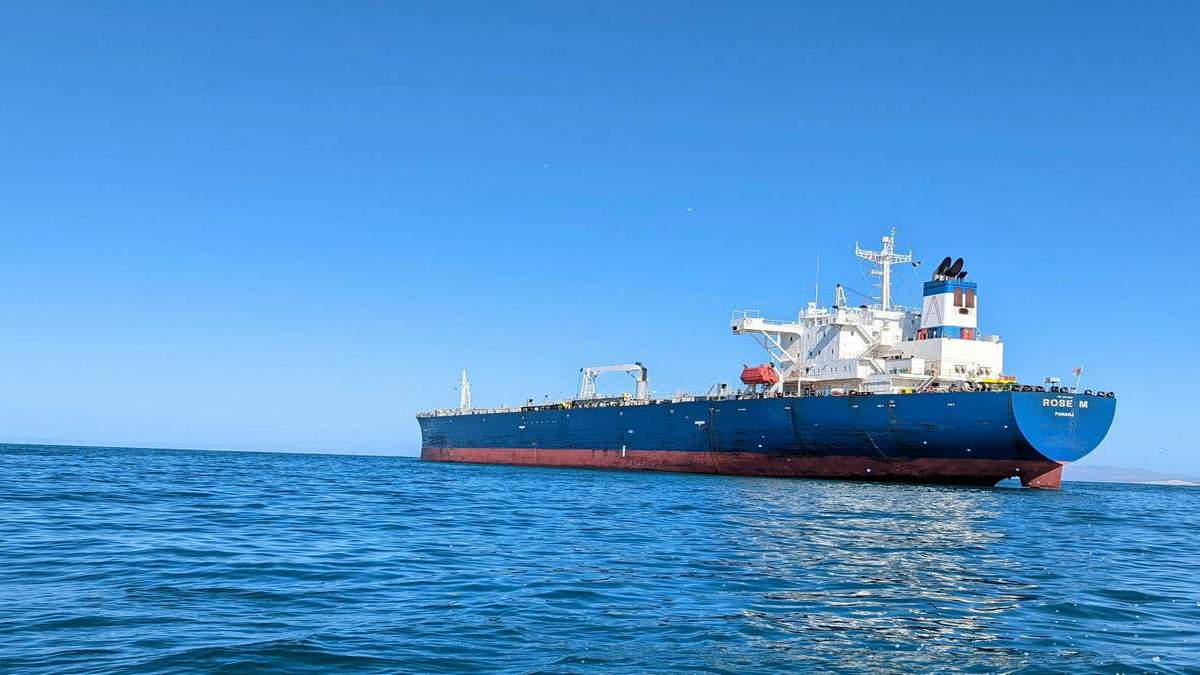
Russian-linked oil tankers operating outside mainstream shipping networks have increasingly adjusted their routes toward waters closer to the Turkish coast, as maritime security risks in the Black Sea and surrounding corridors continue to rise, according to a recent analysis by Windward.
Windward's data indicates that the change in sailing patterns follows a sharp shift in risk perception after Ukraine expanded its use of long-range maritime drones, targeting not only military assets but also energy-related infrastructure linked to Russia's oil exports. As a result, parts of the open sea are now viewed by some operators as more exposed to asymmetric threats.
Risk Avoidance at Sea
Rather than maintaining traditional offshore routes, a number of tankers associated with Russia's so-called "dark fleet" have begun sailing closer to coastlines, where operators assess the risk of drone attacks to be lower. Windward describes this behaviour as risk mitigation, not withdrawal — a tactical adjustment aimed at reducing exposure rather than halting operations.
The analysis emphasises that this shift should not be interpreted as a political or diplomatic signal. The proximity to the Turkish coast reflects geography and maritime security calculations, not coordination with coastal states. Windward's assessment does not attribute any role or facilitation to Türkiye, focusing instead on vessel behaviour in response to changing threat environments.
What 'Dark Fleet' Means in Practice
The term "dark fleet" refers to tankers that deliberately operate with limited transparency, often to circumvent sanctions and regulatory scrutiny. These vessels frequently rely on opaque ownership structures, change flags, and conduct ship-to-ship transfers away from major ports.
Windward's monitoring shows that during periods of heightened risk, such vessels are more likely to manipulate or intermittently disable AIS tracking signals, increasing their operational invisibility. This pattern has become more pronounced as maritime security conditions deteriorate.
Adapting to a Changing Threat Environment
According to Windward, the recent behaviour of dark fleet tankers illustrates how maritime risk has become a central variable shaping energy transportation. Operators already working in regulatory grey zones appear particularly responsive to new threats, adjusting routes, speed and waiting areas to preserve both cargo flows and vessel safety.
Ship-to-ship transfers remain a core operational tool, allowing cargoes to be moved while avoiding ports and inspections. At the same time, the analysis notes that these practices are evolving rather than static, with routes and tactics recalibrated as security conditions shift.
A Fluid Picture, Not a Fixed Route
Windward characterises the current situation as fluid and reactive, rather than a permanent re-routing of shipping lanes. As drone activity, insurance constraints and enforcement risks fluctuate, so too do the choices made by vessels operating on the margins of the global maritime system.
The data-driven assessment highlights how developments far from diplomatic negotiations or port authorities can nonetheless reshape behaviour across key sea lanes — underscoring the growing role of security dynamics in global energy transport.