
By Bosphorus News Geopolitics Desk
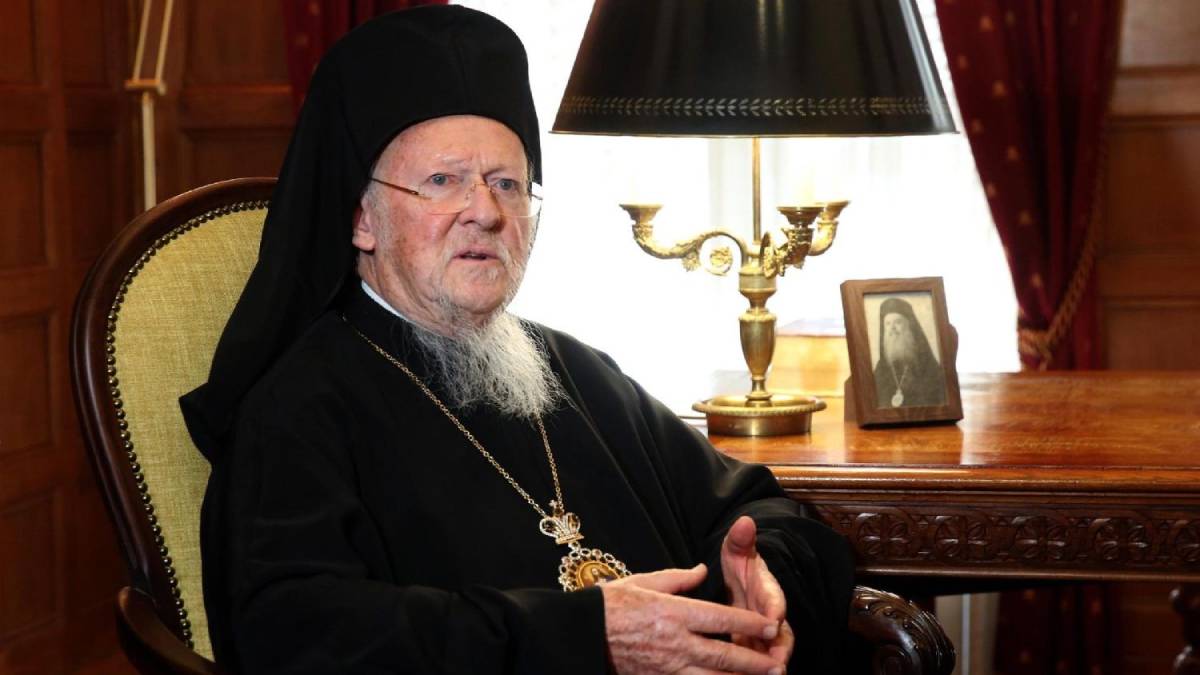
Russia's Foreign Intelligence Service (SVR), the country's external intelligence agency, on 31 March accused Ecumenical Patriarch Bartholomew of seeking influence over the Georgian Orthodox Church after the death of Catholicos-Patriarch Ilia II, opening a new line of tension in the Orthodox world.
Bartholomew has led the Ecumenical Patriarchate in Constantinople since 1991 and is recognised across Orthodox churches as "first among equals," a spiritual primacy that does not give him direct authority over other national churches.
In a statement released by its press bureau, the SVR said the Patriarch is trying to shape the leadership transition in Georgia by backing figures within the local hierarchy. The statement names two senior clerics as possible candidates aligned with Constantinople, but offers no evidence to support the claim.
The Russian agency presents the allegation as part of a wider pattern. It argues that similar disputes have already surfaced around Ukraine and, to a lesser extent, Serbia and parts of the Baltic region.
The Ecumenical Patriarchate has not responded publicly to the claims.
The accusation lands inside a much older struggle between Moscow and Constantinople over authority in the Orthodox world. That rupture deepened in 2019, when Constantinople recognised an independent Orthodox Church of Ukraine. The Russian Orthodox Church rejected the move and broke communion.
Georgia has mostly remained outside that conflict. Its church carries one of the oldest continuous traditions in Orthodoxy and has preserved ties with both sides. Any suggestion that outside actors are trying to shape its succession is likely to be read through the wider Moscow-Constantinople rivalry.
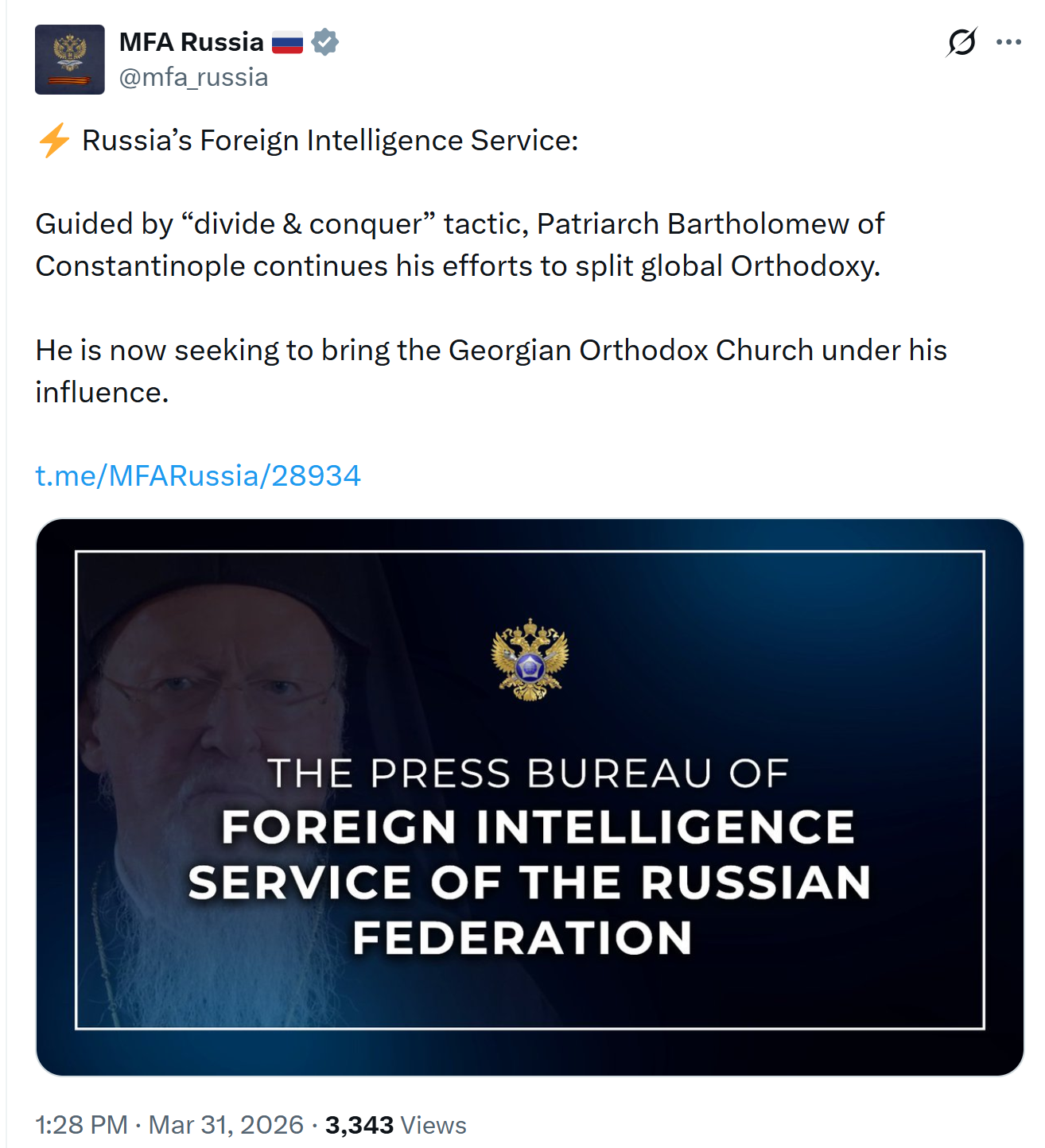
The wording of the Russian statement points to more than a church dispute. It shows how questions of religious authority still overlap with state strategy, especially when ecclesiastical jurisdiction and geopolitical alignment begin to intersect.
What happens next will depend less on the wording of the Russian statement than on how the Georgian Church handles the succession itself, because unless this internal transition starts to tilt clearly toward one external centre of Orthodox authority or the other, Moscow's accusation may remain a warning shot rather than the start of a full public confrontation.