
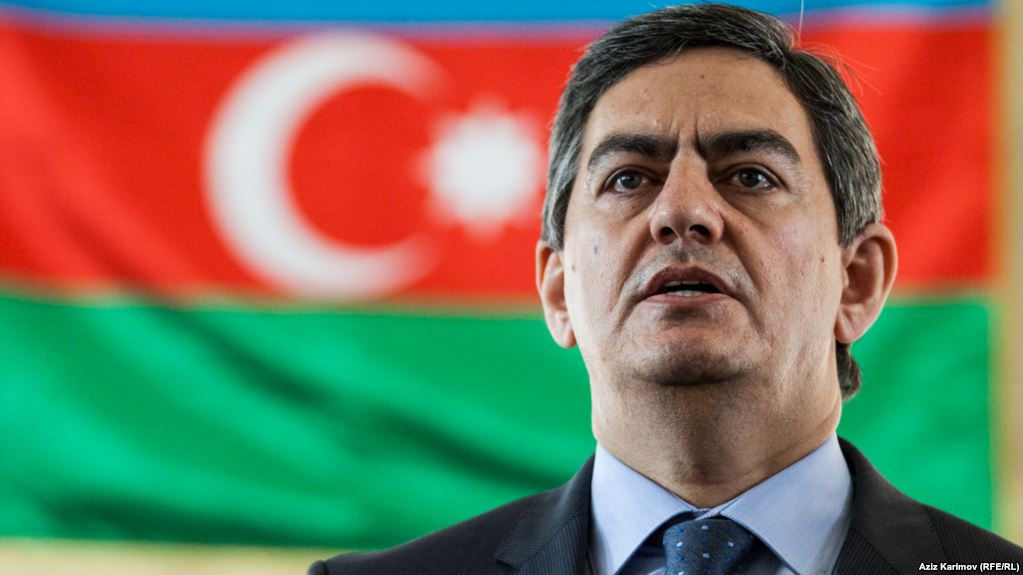
The recent arrest of Ali Karimli, one of the most respected members of Azerbaijan's opposition and the leader of the reformist wing of the Popular Front Party, marks a new chapter in the country's long-standing pattern of political repression. Karimli, whose political career dates to the dissolution of the Soviet Union and who briefly served as a minister in the early 1990s, has for two decades been one of the fiercest critics of the Aliyev ruling family. State authorities have repeatedly detained, restricted, and subjected him to systematic pressure over these years.
State authorities also detained numerous political activists and members of the Popular Front Party alongside Karimli. Mammad Ibrahim and Faiq Amirli were among the individuals arrested alongside Karimli. Even Professor Jamil Hasanli, a well-known academic and political figure, was summoned and interrogated. This episode is part of a broader trajectory of intimidation and forced displacement of political figures inside and outside Azerbaijan. In previous years, individuals such as the journalist Ganimat Zahid were forced to leave Türkiye; Ali Melikov and Parvin Akbar were deported; Rauf Mirqadir oglu was abducted under suspicious circumstances in Türkiye and transported to Azerbaijan; and Afgan Mukhtarli was kidnapped in Georgia by Azerbaijani operatives and taken to Baku.
Earlier precedents include the expulsion of Ferman Demirkol in 1995—accused of involvement in a coup attempt and of being close to Rovshan DJavadov. More recently, activist Nane Khanim Babazade was targeted, and only days ago former Azerbaijani MP Gultekin Haji Beyli was detained in Istanbul, with no clear information yet available about her status. This political reach of Azerbaijan into Türkiye, aimed at pressuring and neutralizing its opponents, is not new. It began during the rule of Heydar Aliyev and has steadily expanded ever since.
After Azerbaijan's victory in Karabakh, Baku's influence in Türkiye's political and social landscape grew substantially. Azerbaijani diaspora networks directly or indirectly fund many cultural and civic foundations operating in Türkiye. One of the few exceptions is the Azerbaijan Cultural Foundation—founded by the national leader Muhammad Amin Rasulzadeh—which continues to resist the financial and ideological pressure of pro-government diaspora structures, even though Rasulzadeh himself is censored within today's Azerbaijan by state propaganda institutions. Most other foundations, however, maintain direct or indirect ties to the Azerbaijani government. Due to legal sensitivities, their names cannot be listed here, but it is reasonable to conclude that approximately ninety percent of these organizations function within this network.
Similarly, the ideological frameworks promoted by the Aliyev government shape the activities of many Azerbaijani academics working in Türkiye. Even organizations representing Iranian Azerbaijanis often operate within the parameters defined by Azerbaijan's diaspora policies, while independent activists who oppose the Iranian government face significant restrictions. This two-faced approach is particularly noticeable because Azerbaijan puts a lot of pressure on political refugees—Azerbaijanis who have escaped their country—and denies them real rights, but at the same time tries to bring these same people into government-related groups when they are in Türkiye.
In previous years, pressure from the Aliyev administration even led to the shutdown of "Azerbaijan Hour TV," formerly broadcast through Erzincan TV in Türkiye. Activists such as Seymour Hezi and Ganimat Zahid were driven out of the country—Hezi spent years in prison in Azerbaijan, while Zahid relocated to France.
Today, the resurfacing of the case of Ramiz Mehdiyev—the former chief of staff of the Azerbaijani presidency and former head of the National Academy of Sciences, who is alleged to have attempted a coup and to have built an extensive political network—has given the government a new pretext to intensify repression. Mehdiyev's political and financial influence, built through systemic corruption, cannot be dismissed. However, the core issue lies in the government's exploitation of this affair to target political opponents both inside and outside Azerbaijan, especially during a period in which the Trump administration and the United States have remained largely silent.
This pattern is not unprecedented. Figures such as Najmaddin Sadigov, the former Chief of the General Staff—long considered close to Russia and accused of obstructing efforts to reclaim occupied territories—and Beylar Eyubov, whose alleged connections with the PKK repeatedly drew criticism from Türkiye, faced only superficial scrutiny and ultimately remained within the power structure.
Repression also takes place through financial penetration. This influence is not solely through SOCAR, Petkim, or large-scale state investments, but increasingly through illegal financial networks and organized crime operations, which have grown since the outbreak of the Russia–Ukraine war. Türkiye has become a venue for settling accounts between competing Azerbaijani power networks. Figures such as Nadir Salifov and Rovshan Janiyev illustrate how deeply these structures have embedded themselves in illicit financial ecosystems.
Paradoxically, while Azerbaijan's influence inside Türkiye has expanded, Türkiye's influence inside Azerbaijan has diminished. Baku has strengthened its position not only through economic leverage and cultural initiatives but also by using its strategic relationship with Israel—an alliance that Ankara views with discomfort—as a balancing tool.
The Aliyev government has long utilized these levers to solidify its authority and prevent Turkish opposition parties from gaining any meaningful foothold in Azerbaijani society.
The government's attempt to link the Mehdiyev case to opposition parties has intensified pressure on Azerbaijani dissidents in Türkiye. Even Turkish opposition parties and groups critical of Azerbaijan–Israel relations have been compelled to maintain silence, as the political costs of speaking out have risen sharply.
A more comprehensive analysis of these developments reveals that the discursive monopoly surrounding Azerbaijan–Türkiye relations is increasingly marginalizing dissenting voices. As this dynamic deepens, critics of the Aliyev administration will gradually be forced to leave Türkiye—voluntarily or by coercion—further consolidating a political landscape dominated by Baku's influence. These arrests will undoubtedly continue, and the Aliyev administration appears determined to use this narrow window—marked by ongoing political, military, and strategic shifts in the region—to silence dissent and to link Azerbaijani opposition figures to controversial actors such as Ramiz Mehdiyev or other external forces. Such tactics are not new; they have been employed before and continue today, but now on a more sophisticated level. In many ways, this strategy reflects the long-term vision of the Pashayev family—the influential power bloc surrounding the First Lady—for rapidly reshaping Azerbaijan's political landscape. Before the coming wave of major transformations in the Middle East and the Caucasus, the government seeks to complete this "purification" both inside the country and abroad, particularly in Türkiye.