
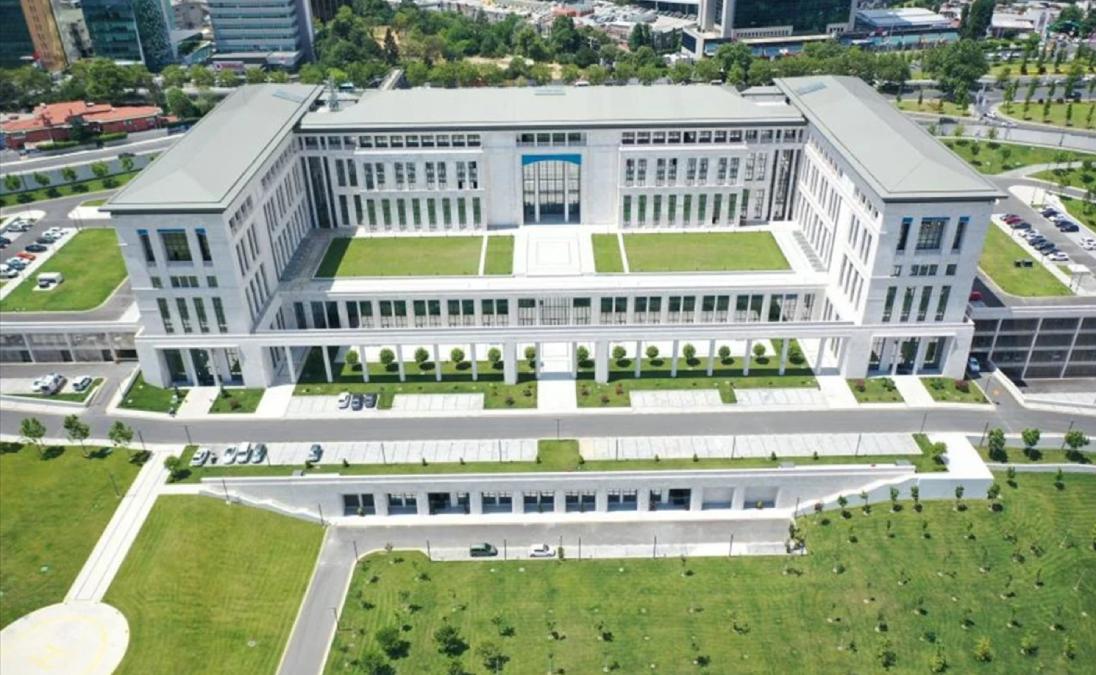
By Bosphorus News Staff
Türkiye's 2025 intelligence report has circulated as if it were a major strategic declaration. The publicly released version, however, consists of sixteen pages. It offers no operational detail, no case studies and no dramatic disclosures. Formally, it is a standard activity report prepared in line with legal requirements.
Its significance lies elsewhere.
The document does not seek attention through revelation. It reveals itself through framing. Global instability is described as layered and interconnected. Conflicts are presented as overlapping rather than isolated. Technological capacity is treated as central to security planning. Intelligence engagement is discussed alongside diplomacy. The emphasis is not on what was done, but on how risk is understood.
The report avoids bold claims. Yet it suggests that security is no longer conceived as waiting for threats to approach the border. The language points toward anticipation, early involvement and shaping conditions before instability hardens. Read carefully, the document outlines a way of thinking rather than a list of actions.
From Reaction to Anticipation
For many years, Türkiye's security posture largely followed events. Developments in neighbouring regions would unfold, intelligence assessments would be produced and political authorities would determine a response. The 2025 report reflects a different tempo.
References to preemptive measures indicate that timing has shifted. Risk is addressed earlier, sometimes before it presents itself as a conventional security problem. Borders remain relevant, but they are no longer described as the only defensive line. Instability in adjacent regions is treated as directly linked to internal stability. The separation between domestic security and regional dynamics appears narrower.
Institutionally, intelligence is positioned differently. It is not described merely as a background provider of information. The document portrays an apparatus involved in strategic coordination and sustained engagement with foreign counterparts. Intelligence appears integrated into decision-making processes rather than operating at a distance from them.
Technology is part of this repositioning. Artificial intelligence applications, large-scale data analysis, satellite capabilities and cyber tools are presented as core elements of capacity. The emphasis is on the ability to detect patterns early and process information rapidly. Security advantage is associated with informational depth rather than visible projection of force.
The report does not announce a new doctrine. It reflects an adjustment in method. Anticipation replaces reaction as the organizing principle.
Extending the Security Horizon
The geographic implications are visible.
Syria is described not only as a neighbouring conflict but as a space undergoing political transformation in which potential risks must be managed before they consolidate. The language surrounding state-building processes and preventive steps implies sustained engagement aimed at limiting outcomes perceived as harmful to Turkish security interests.
Gaza appears in the context of ceasefire efforts and mediation. Intelligence engagement is framed as part of broader coordination. Security is not reduced to military activity; it intersects with negotiation channels and crisis management.
Africa is mentioned in relation to counterterrorism cooperation and global competition. The reference is concise but deliberate. It reflects awareness that geopolitical rivalry increasingly unfolds across the continent and that intelligence cooperation forms part of Türkiye's presence there.
Across these contexts, a consistent pattern is visible. Security concerns are addressed before they reach the national boundary. The operational field expands outward, even when the stated objective remains defensive. What emerges is not territorial expansion but a redefinition of how vulnerability is located and managed.
In practical terms, this amounts to a forward security orientation. The term itself does not appear in the report, yet the logic is clear. The security boundary is no longer a fixed line on the map. It corresponds to the outer edge of assessed risk.
Strategic Implications
This approach provides flexibility. Early engagement can limit escalation and create room for political maneuver. It also broadens the definition of what constitutes a security concern.
When developments abroad are directly incorporated into domestic security calculations, the scope of engagement widens. Diplomatic initiatives, intelligence cooperation and technological investment become interconnected rather than separate tracks.
Institutionally, this brings intelligence structures closer to the center of strategic planning. The capacity to interpret risk early carries weight. It also concentrates responsibility for defining the moment and extent of involvement.
Regionally, perception will shape outcomes. Neighbouring states may interpret extended engagement as stabilizing or intrusive. An outward-moving security horizon alters expectations and strategic calculations, even when described as preventive.
Within NATO, the emphasis on technological capacity and early risk assessment corresponds with alliance priorities in cyber and signal domains. At the same time, the focus on autonomous assessment underscores Ankara's determination to preserve discretion in how it evaluates and addresses threats.
For the European Union, the intersection is geographic and political. The Eastern Mediterranean, the Balkans and parts of Africa increasingly feature in both Turkish and European security planning. Cooperation or friction will depend less on rhetoric and more on alignment in threat perception.
The 2025 intelligence report does not proclaim a dramatic break. It treats the outward extension of Türkiye's security horizon as routine.
That quiet normalization reflects the change.