
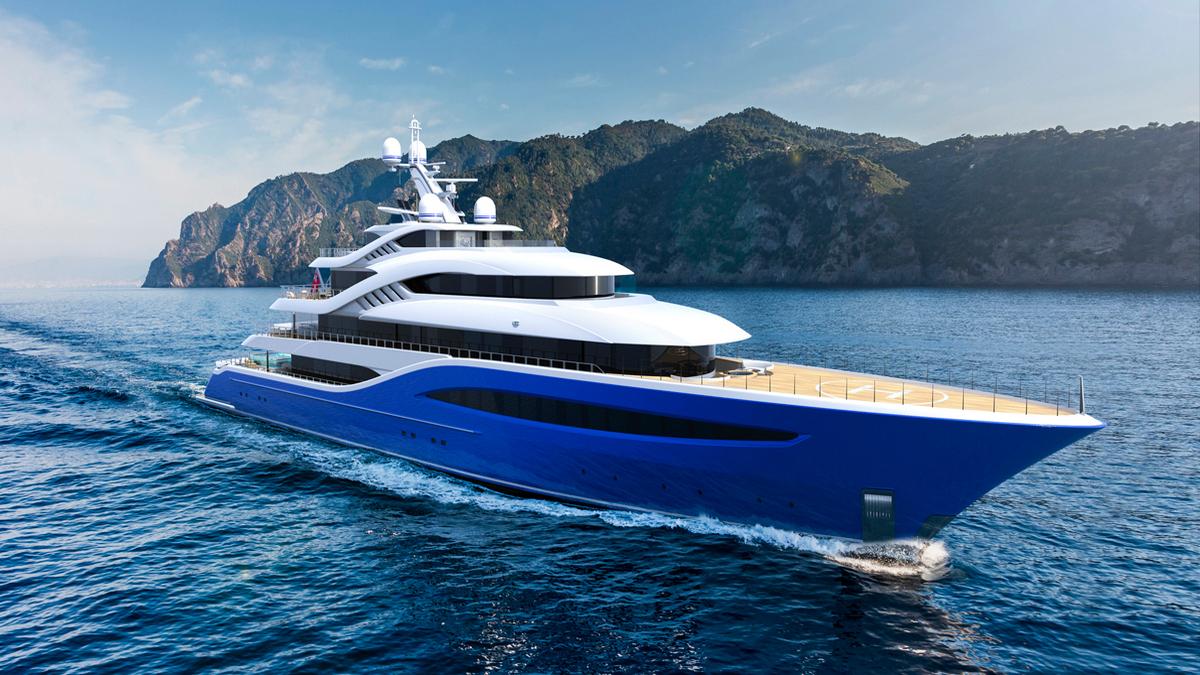
The launch of Project Vento, now named Angelique, the largest yacht ever built in Türkiye, is not a lifestyle story. It is an industrial signal.
Measuring 87.7 metres (287.7 feet) in length with a gross tonnage of 2,550 GT, the vessel is the largest yacht by volume and length ever constructed in Türkiye. Built by Turquoise Yachts, it marks a step change for the yard and for Türkiye's shipbuilding ecosystem as a whole. The significance lies not in the yacht itself, but in what its construction demonstrates about scale, coordination, and execution in high-end manufacturing.
Türkiye's shipyards are often assessed through a defence-focused lens: naval platforms, auxiliary vessels, unmanned systems. That framing captures only part of the picture. Projects such as Angelique show that the same industrial base can deliver complex civilian platforms that demand precision engineering, long-duration project management, tightly integrated supply chains, and compliance with the highest international standards.
Technically, Angelique sits at the upper end of civilian shipbuilding complexity. The 87.7-metre vessel is built across five decks with a steel hull and aluminium superstructure, and a volume normally associated with specialised state or research vessels rather than leisure craft. Engineering-intensive features include an enclosed drive-in tender dock, a multi-level beach club with fold-down terraces, and a 6.5-metre glass-sided main-deck pool structurally integrated with skylights that channel natural light into lower decks. These are not cosmetic elements but coordination-heavy design choices.
This is not serial production. It is custom-built manufacturing at scale. Delivering such platforms requires capabilities that translate directly across sectors: design integration, workforce depth, supplier discipline, and the ability to manage multi-year builds without quality slippage.
The long-running collaboration with H2 Yacht Design, responsible for both the exterior and interior architecture, also points to an often-missed dimension of Türkiye's industrial profile: sustained international partnerships built on delivery rather than visibility. In this segment of the market, repeat projects are not symbolic. They are evidence of reliability.
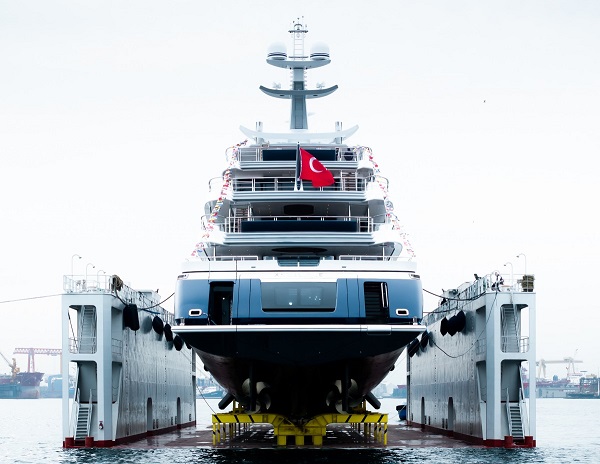
From a geopolitical and industrial perspective, this matters for three reasons.
First, it shows that Türkiye's maritime manufacturing capacity is not confined to military demand. Civilian and defence production draw on the same industrial depth, allowing capability to be maintained across market cycles.
Second, it places Türkiye in a segment where competition is shaped by track record rather than cost. This is a narrower field than volume shipbuilding, but one where credibility accumulates over time.
Third, it reinforces Türkiye's role as a maritime production hub connecting European design, global capital, and regional manufacturing. Geography alone does not produce this outcome; industrial continuity does.
Angelique does not redefine Türkiye's strategic posture. What it does show is more structural: the country's shipbuilding sector is capable of absorbing complexity, coordinating large-scale custom projects, and delivering outcomes that meet the expectations of the most demanding global clients.
This capacity extends beyond any single sector and reflects how Türkiye's shipbuilding industry is structured, organised, and sustained over time. It is neither the first nor likely the last demonstration of that capability.