
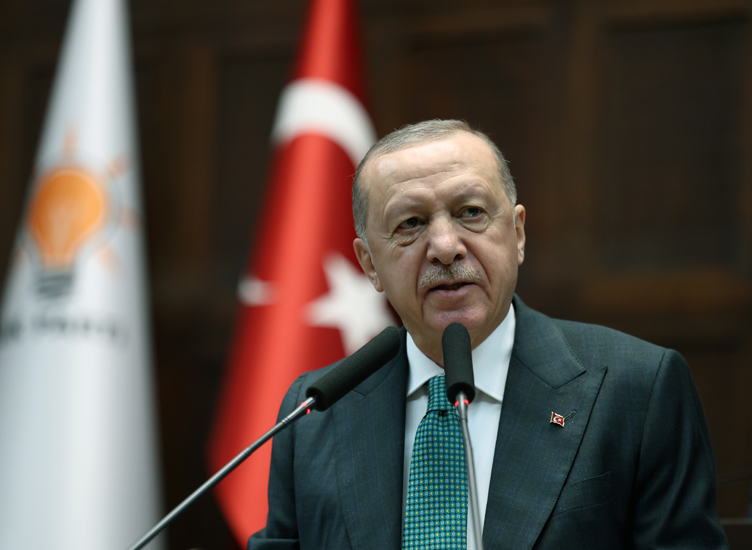
President Recep Tayyip Erdoğan has called for the full and faithful implementation of the March 10 Agreement on Syria, describing it as a "key knot" whose resolution could alter the regional balance and strengthen Syria's territorial integrity.
Speaking at the "Strong Türkiye for Humanity" program held at the AK Party Congress Center in Ankara, Erdoğan framed the agreement as a turning point not only for Syria's internal reconciliation and reconstruction, but also for broader regional security, including Türkiye's own fight against terrorism and irregular migration.
March 10 Agreement at the Center of Erdoğan's Message
Without going into article-by-article detail, Erdoğan underlined that the March 10 Agreement – signed by Syrian actors as part of an internal political process – must be honored by all those who attached their signatures to it.
"In particular, implementation of the March 10 understanding by those who signed it, in line with the principle of fidelity to one's pledge, will resolve an important knot," Erdoğan said.
According to diplomatic and expert assessments, the March 10 framework is understood to encompass commitments related to:
- Preserving Syria's territorial integrity and political unity.
- Advancing an inclusive political process and governance arrangements.
- Gradual normalization and reconstruction in areas stabilized after years of conflict.
- Curbing the influence of non-state armed groups and terrorist organizations.
Erdoğan argued that a smooth, good-faith implementation of the deal would "upend the calculations" of actors investing in an "unstable, divided and weak Syria."
"If the agreement is applied with prudence, the plans of malign centers that have invested in an unstable, fragmented and powerless Syria will be overturned," he said, adding that such a scenario would allow Syria to "move toward the future as a prosperous, victorious and respected country in its region."
Syria's Revolution Anniversary and Erdoğan's Framing
Erdoğan's remarks coincided with what he described as the first anniversary of the "Syrian Revolution" and "Syrian Freedom Day" on 8 December. He praised Syrians who "resisted oppression and tyranny for 13 and a half years" and recalled those who lost their lives in attacks by the Assad government and various armed groups.
Drawing on religious references, Erdoğan portrayed the fall of Syria's "60-year dictatorship" as the result of popular determination and divine support, and said the Syrian people had ultimately "gained their freedom at a heavy cost." This narrative mirrors the way Ankara has, for years, positioned itself as a political and humanitarian supporter of opposition-held and post-conflict areas in northern Syria.
Independent observers note that while the conflict landscape has shifted considerably in recent years – with de facto zones of control under the Syrian government, opposition factions, Kurdish-led forces and foreign militaries – no comprehensive national political settlement has yet been achieved. The March 10 framework, in this context, is presented by its supporters as one of the few structured attempts to formalize internal Syrian commitments on governance and reconciliation.
Support for Reconstruction and "Terror-Free Region" Vision
Erdoğan said Türkiye and the Turkish people are supporting Syria's "rebuilding, revival and recovery efforts with all available means," especially in areas along the Turkish border where Ankara has carried out cross-border operations since 2016.
He emphasized three pillars of Türkiye's Syria policy:
- Ensuring Türkiye's national security within the framework of international law.
- Creating "safe zones" in northern Syria for civilians affected by the conflict.
- Maintaining a long-term vision of a "terror-free Türkiye" and a "terror-free region."
"If today, as a nation, we can speak of a terror-free Türkiye and a terror-free region as a realistic goal, it is primarily thanks to our martyrs," Erdoğan said, paying tribute to Turkish soldiers killed in cross-border operations.
According to official Turkish figures, several operations – including Euphrates Shield (2016), Olive Branch (2018), Peace Spring (2019) and subsequent limited campaigns – have targeted both ISIS and groups Ankara designates as affiliated with the PKK. Western and regional analysts acknowledge that these operations have reshaped control lines in northern Syria, while also generating complex debates in international law, humanitarian policy and regional geopolitics.
Refugees, Domestic Debate and Ankara's Ensar Narrative
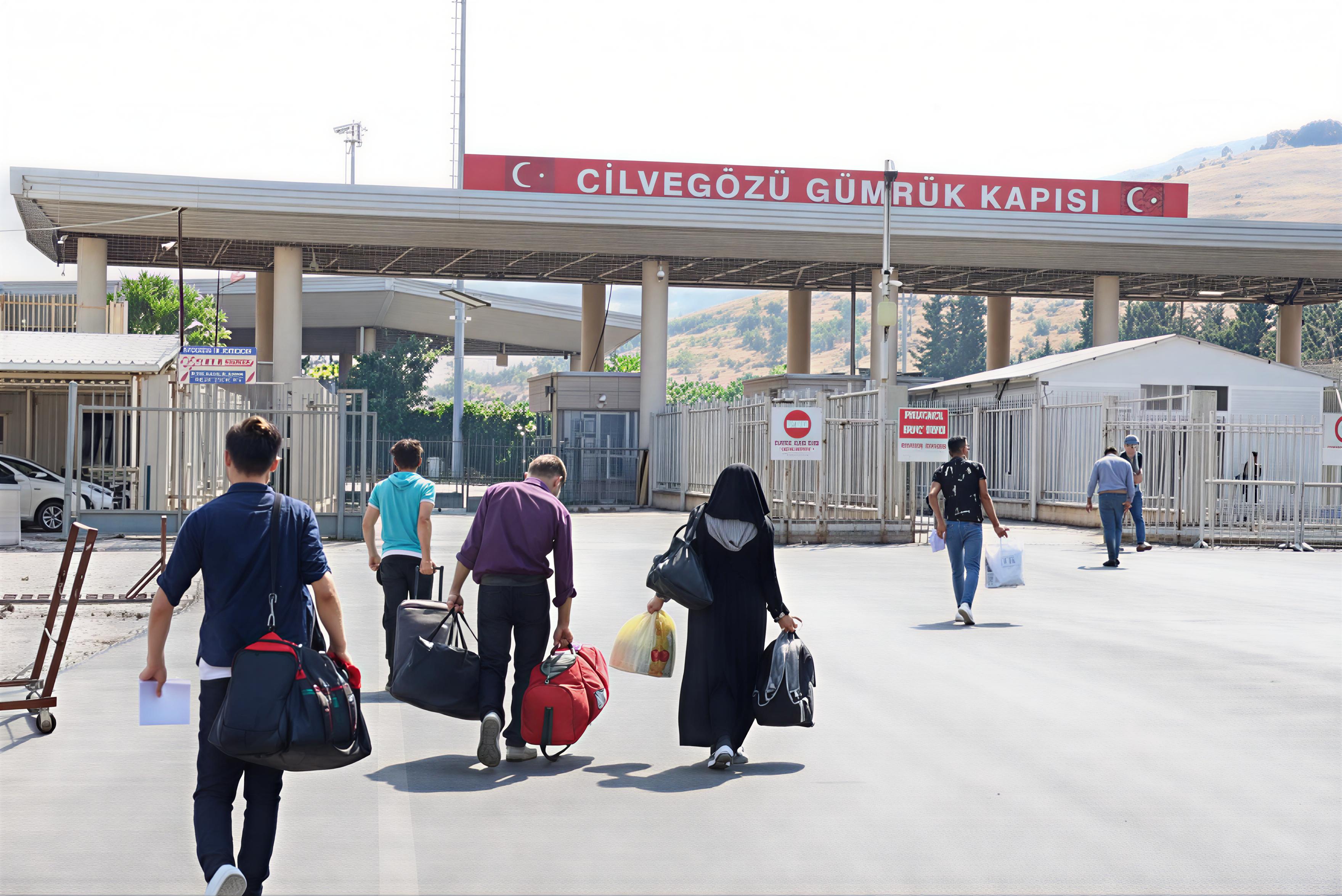
Erdoğan also directly addressed the ongoing domestic debate in Türkiye over the presence of millions of Syrians who fled the war. Recalling opposition party pledges to "send Syrians back," he repeated his longstanding position that Türkiye would not forcibly return those escaping conflict.
"We did not turn our backs on them in war, and we will stand by them in peace," he said. "We embraced the oppressed from Syria with the spirit of the Ansar, built safe areas in northern Syria for them, and for 13 and a half years we patiently resisted both international pressure and fifth-column elements inside Türkiye who filled every corner of the country with 'We will send Syrians back' posters."
Türkiye hosts the world's largest population of Syrians under temporary protection, officially around 3.1–3.5 million people according to Turkish and UN data. While Ankara emphasizes voluntary, safe and dignified returns tied to stabilization and reconstruction inside Syria, opposition parties highlight social, economic and security concerns and argue for more rapid repatriation.
Diplomatic observers note that any large-scale, sustainable return of Syrians from Türkiye will depend on conditions inside Syria, including security guarantees, reconstruction, the rule of law and an agreed political framework. In that sense, Erdoğan's emphasis on the March 10 Agreement links domestic debates on migration with the success of political arrangements across the border.
Call for Inclusive Future and Shared Responsibility
Looking ahead, Erdoğan stressed that different ethnic and sectarian communities in Syria – including Turks, Arabs, Kurds, Türkmen, Sunnis and Alawites (Nusayris) – must "stand shoulder to shoulder" in reconstructing the country.
"Turks, Arabs, Kurds, Türkmens, Sunnis, Nusayris will stand shoulder to shoulder, raise Syria together and jointly undertake its reconstruction," he said, describing this inclusive approach as the only way to prevent a return to "the bad old days."
Internationally, the future of Syria remains closely tied to UN-led talks in Geneva and Astana-format discussions involving Türkiye, Russia, Iran and Syrian parties. Many Western and regional governments continue to insist that any durable settlement must be inclusive, respect Syria's territorial integrity, and provide credible guarantees for human rights and the voluntary return of refugees.
For Ankara, the March 10 Agreement has now been publicly framed as a centerpiece of that process. Erdoğan's message combined a call for legal and political fidelity from Syrian signatories with a broader appeal to regional and international actors to back efforts that prioritize stability, territorial unity and the fight against terrorism over short-term geopolitical calculations.