
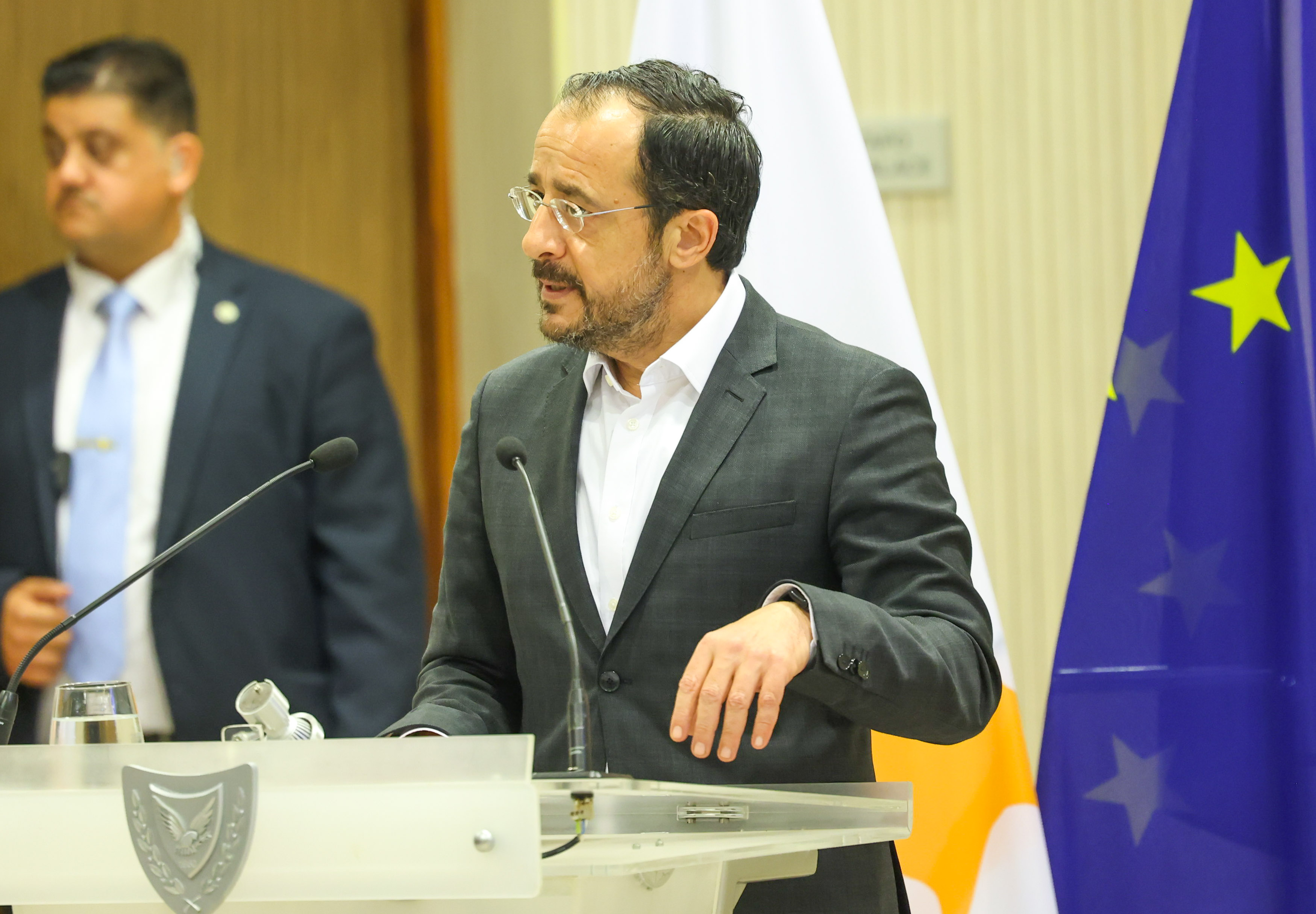
Cyprus Dares Turkey to Maritime Negotiation Showdown
The diplomatic temperature in the Eastern Mediterranean surged this week, transforming a crisis of accusation into a high-stakes challenge. Moments after Ankara unleashed a torrent of condemnation over the new Lebanon-Cyprus maritime boundary agreement, Greek Cypriot President Nikos Christodoulides did the unexpected: he didn't retreat. Instead, he issued a direct, public dare to Türkiye to finally sit down and negotiate their overlapping maritime claims. Nicosia is aiming to turn a political fight over the Cyprus-Lebanon deal into a direct negotiation over Ankara's expansive maritime doctrines.
Countering the Fury with a Direct Offer
The Greek Cypriot President's move was a calculated response to the Turkish Ministry of Foreign Affairs (MFA) and the Ministry of National Defense (MSB), both of whom had flatly rejected the Lebanon agreement as an illegal, unilateral step against Turkish Cypriot interests.
Speaking from Nicosia, President Christodoulides framed his nation's position—and subsequent agreements—as being rooted firmly in international law and the 1982 UN Convention on the Law of the Sea (UNCLOS).
He then delivered the punch:
"My response to what comes from Ankara is to publicly state the readiness of the Republic of Cyprus to sit at the same table with Türkiye to negotiate our maritime borders... If the Turkish side has so much certainty about its positions, feels so much confidence with its approaches, let us sit together at the same table, let us discuss, let us define our maritime borders..."
This challenge directly attempts to undercut the certainty of Türkiye's
"Blue Homeland" doctrine, which asserts wide-ranging claims in the Eastern Mediterranean.
The Political Landmine
While the offer sounds like a path to de-escalation, it is fraught with historical and political obstacles.
For Nicosia, offering dialogue based on UNCLOS reinforces its position as a sovereign, legally compliant state. For Ankara, accepting the invitation would mean a monumental, implicit political shift:
Türkiye does not recognize the Republic of Cyprus (RoC), only the Turkish Republic of Northern Cyprus (TRNC). Entering talks with the RoC over maritime zones would effectively grant the Greek Cypriot Administration legitimacy over its claimed EEZ, a concession Türkiye has steadfastly refused to make for decades.
It is this decades-old diplomatic hurdle that makes the Cypriot challenge so potent.
The Bigger Picture
The agreement with Lebanon is the latest in a series of EEZ delineations pursued by Nicosia with its neighbors (including Egypt and Israel). These pacts are exercises of sovereign right, viewed by some analysts as chipping away at the geopolitical momentum of Türkiye's maritime doctrine.
Despite the tensions over maritime zones, President Christodoulides reiterated Nicosia's commitment to resuming United Nations-facilitated peace talks for the overall reunification of Cyprus. This proposal comes amidst renewed efforts to revive negotiations, including the recent signal from the Turkish Cypriot side, led by Tufan Erhürman, to advance confidence-building measures. The RoC's strategy is thus dual-tracked: assert sovereign rights through maritime agreements while keeping the door open for peace negotiations based on the agreed framework for a bi-zonal, bi-communal federal solution.