
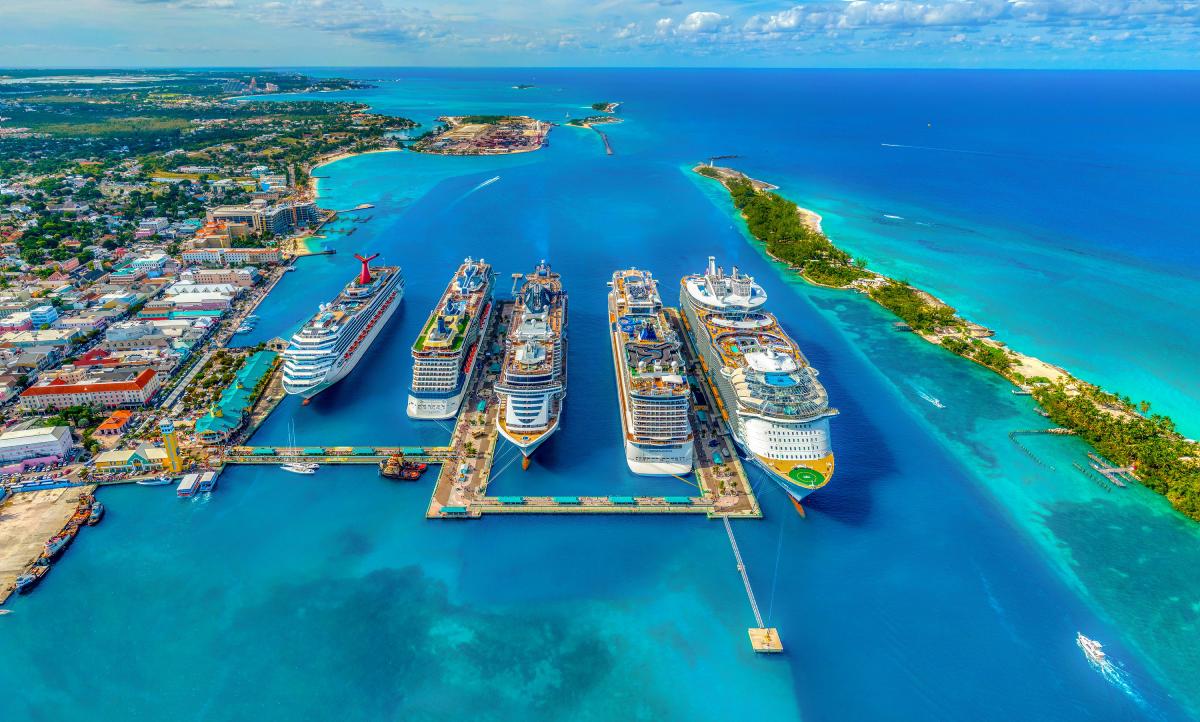
Local authorities across the Mediterranean are moving to curb the impact of mass tourism, introducing new limits on cruise passengers and day visitors as congestion, infrastructure strain and resident backlash intensify.
On Symi, a small Greek island exposed almost entirely to cruise day trips, authorities have introduced a per-visitor fee for short-stay arrivals. The policy targets peak-hour crowding while directing new revenue toward municipal services and heritage maintenance.
Further north along the Adriatic, Split has revised its cruise framework by raising port charges tied to passenger volumes and tightening ship schedules. City officials say unmanaged cruise traffic is increasingly disrupting daily life in the historic centre, where arrivals are concentrated within narrow time windows.
Cruise tourism has become a focal point because arrivals are clustered in both place and time. Large vessels deliver thousands of visitors at once, concentrating pressure on ports, transport links and historic centres within a few hours. The economic return, however, remains limited compared with the strain placed on local services. As a result, several cities no longer treat cruise arrivals as neutral growth, but as a crowd-management issue that requires direct controls.
Venice has barred large cruise ships from key waterways and introduced a day-visitor entry charge during peak periods. Dubrovnik enforces daily passenger caps and limits on simultaneous ship arrivals. Cannes has restricted access for large cruise vessels to reduce pressure on port infrastructure and the city centre.
Several cities have addressed overtourism beyond the cruise sector, focusing instead on housing availability and visitor density. Barcelona has frozen new short-term rental licences and announced a phased removal of existing tourist apartments. Amsterdam has capped short-term rentals and raised tourist taxes as part of efforts to limit visitor saturation.
Other destinations, including Florence, Bruges and Hallstatt, have adopted more granular controls, ranging from group-size limits and bus restrictions to access management in sensitive historic areas.
Türkiye: pressure without formal limits
In Türkiye, overtourism has not yet prompted formal visitor caps or entry fees, but pressure is increasingly visible in high-volume destinations.
Istanbul, Antalya and parts of Muğla experience intense seasonal congestion, particularly during summer months. Cruise tourism has amplified this pattern, with record passenger numbers producing sharp, short-lived pressure around port areas and transport corridors.
More interventionist steps have appeared in fragile heritage zones. In Cappadocia, authorities have tightened controls on tour operations and visitor conduct to protect vulnerable landscapes and archaeological sites. These measures emphasise supervision and compliance rather than numerical limits.
Türkiye's broader response continues to rely on capacity management, digital monitoring and destination diversification. This is not a technical gap but a policy choice. While European counterparts have moved to regulate access, Turkish authorities have largely avoided defining overtourism as a problem requiring limits.
That hesitation carries a cost. As visitor density rises, especially through cruise traffic and short-stay arrivals, pressure is absorbed by residents, local services and heritage sites rather than filtered through regulation. In effect, Türkiye is postponing decisions that others have already taken, betting that management tools can substitute for limits. The European experience suggests that once congestion reaches a certain threshold, that assumption becomes harder to sustain.