
By Bosphorus News Defense Desk
France's pressure on Greece over Mirage jets has pushed the question of military balance in the Aegean back into view. At sea, Türkiye has already spent April testing the other side of that equation. During the Mavi Vatan 2026 exercise, completed on April 9, Turkish forces used a three-sea drill to show how Ankara is trying to connect TCG Anadolu, shipborne drones, unmanned surface threats and indigenous weapons into a single naval operating model.
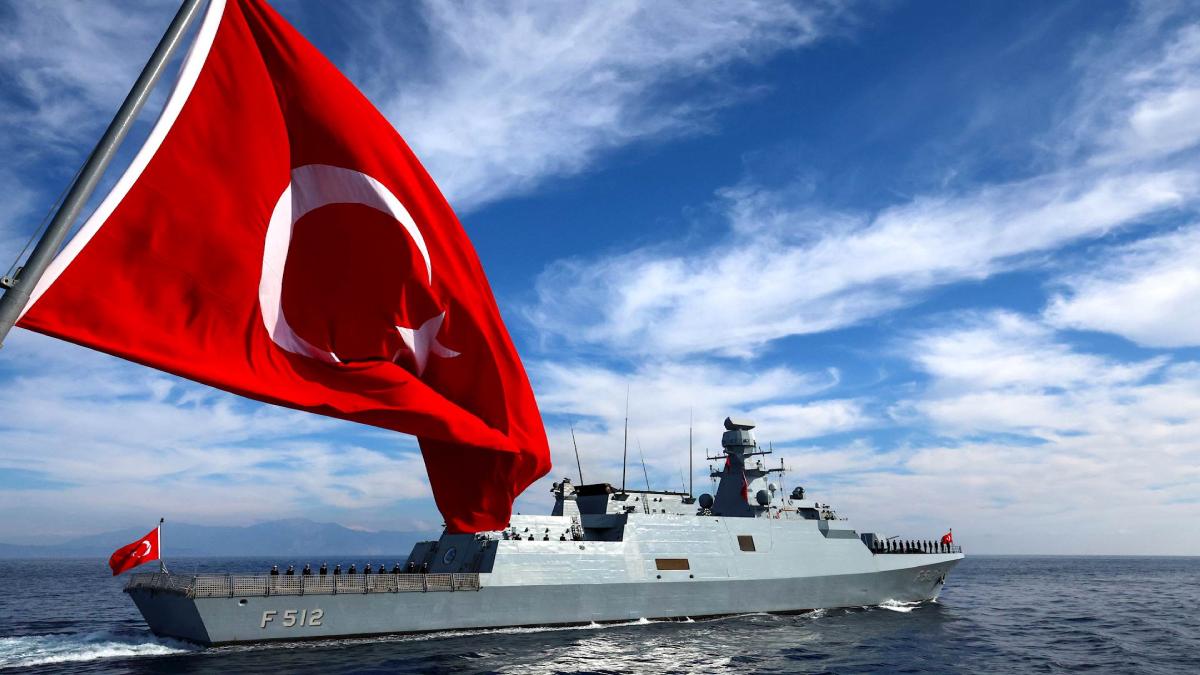
The exercise ran from April 3 to 9 across the Black Sea, the Aegean and the Eastern Mediterranean. The Ministry of National Defence said it involved 120 naval platforms, 50 air assets and around 15,000 personnel drawn from the naval, land and air forces as well as the coast guard. That scale alone made it one of Türkiye's broadest recent naval drills. The more important point was the geography. Mavi Vatan 2026 was built around simultaneous activity in three maritime theatres, not a single showcase zone.
The live-fire phase in the Gulf of Antalya produced the clearest operational signal. A Bayraktar TB3 operating from TCG Anadolu struck an unmanned sea target with MAM-L during the exercise. Turkish defence coverage and Baykar material presented the engagement as a milestone in the use of unmanned air and sea systems inside a naval exercise setting.
That point needs precision. TB3 had already carried out live-fire strikes against surface targets during NATO's Steadfast Dart 2026 exercise in February from TCG Anadolu's short deck. Mavi Vatan 2026 was therefore not the drone's first maritime strike of any kind. What changed here was the target set and the setting. The drill showed TB3 engaging an unmanned sea target inside a larger Turkish naval battlespace in which surface combatants, helicopters, submarines and unmanned systems were working inside the same operational picture. (baykartech.com
That is why the TB3 segment matters beyond the usual drone headline. Türkiye was not only showing that Anadolu can launch an armed unmanned aircraft. It was showing a concept in which a shipborne drone can be inserted into a naval fight shaped by asymmetric surface threats, layered strike chains and a wider task force built around indigenous systems. In current naval warfare, where unmanned surface vessels and low-cost maritime threats are becoming harder to ignore, that is a more serious message than a simple launch and recovery test. (baykartech.com
Other elements of the exercise pointed in the same direction. Defence reporting said the submarine TCG Sakarya carried out a live firing with the AKYA heavyweight torpedo, while Turkish platforms also used systems such as TEMREN and locally developed combat management suites including ADVENT and GENESIS derivatives. The Ministry of National Defence described the exercise in broader terms, stressing readiness, command and control, and coordination under combat-like conditions. The official framing was cautious. The practical picture was not. Mavi Vatan 2026 placed indigenous weapons, sensors and software inside a dense operating environment and treated them as working parts of a naval force, not as exhibition items. (defenceturkey.com
TCG Anadolu sat at the center of that picture. The ship has often been discussed through the lens of prestige, amphibious utility or future aircraft carrier ambitions. Mavi Vatan 2026 offered a clearer answer to a more immediate question. What does Anadolu do now, with the tools already available? In this drill, it functioned as a platform for integrating shipborne unmanned aviation into a broader maritime strike environment. That gives Ankara something more practical than symbolism. It gives the navy a floating node from which it can begin experimenting with a lighter carrier-style concept built around drones. (baykartech.com
The exercise also arrived amid a wider regional military conversation. April has already brought new scrutiny to Greek force structure, French pressure over Mirage transfers and the pace of rearmament across the Eastern Mediterranean. Mavi Vatan 2026 does not answer every question raised by those developments, and a drill cannot substitute for durable force balance. It does, however, show what Türkiye is trying to make operational on the naval side while those debates continue. The relevant takeaway is not that Ankara held another large exercise. It is that Türkiye used a recent three-sea drill to rehearse a more distributed form of maritime warfare in which drones, ships and unmanned surface threats are expected to share the same battlespace.
That leaves the most useful conclusion in plain view. Mavi Vatan 2026 was not only a display of scale and it was not only a TB3 showcase. It offered the clearest recent glimpse of how Türkiye wants to fight at sea, with TCG Anadolu as a working platform, unmanned systems pushed deeper into the naval kill chain and indigenous weapons treated as operational tools inside a force that is trying to stretch across three maritime fronts at once.