
Libya slams Greek demands to scrap 2019 Türkiye maritime pact as sovereignty violation, amid rising tensions over gas-rich waters. Eastern Mediterranean dispute heats up as Tripoli stands firm.
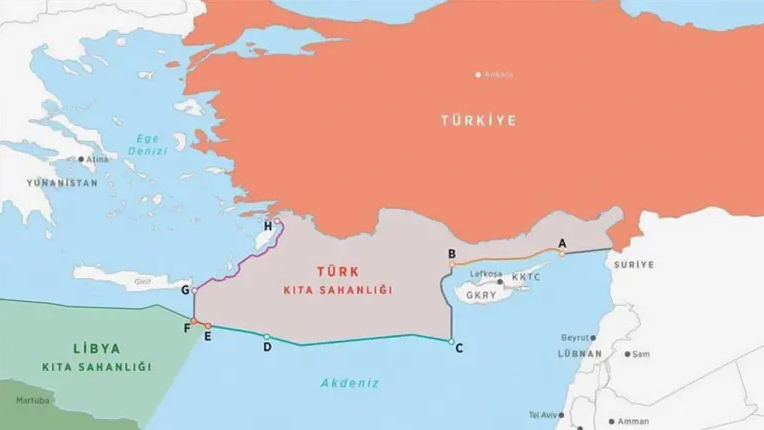
Libya's top officials are pushing back hard against Greece's repeated calls to dismantle the landmark 2019 maritime agreement with Türkiye, labeling the interference a direct assault on national sovereignty. Ramadan Douma, a prominent Libyan parliamentary figure, condemned recent Greek statements as "a violation of national sovereignty," according to a report from Libya Update. This sharp rebuke underscores Tripoli's unwavering support for the deal, which delineates exclusive economic zones (EEZs) in the resource-laden Eastern Mediterranean, rejecting what Libya and Ankara see as encroachments by third parties.

The controversy intensified after Greek Foreign Minister George Gerapetritis urged Libyan leaders during Athens meetings to abandon the accord, which Greece deems invalid for ignoring its islands' maritime claims. Mosbah Aohaida, second deputy speaker of Libya's House of Representatives, fired back, stating, "The agreements reached by Libya are sovereign ones, and no one can dictate Libya what to do." He called on Greece to show restraint and respect Libya's independence.. Aohaida's comments reflect broader frustration in eastern Libyan circles, even though the Benghazi-based parliament has not ratified the pact signed under Tripoli's Government of National Accord.
This flare-up builds on earlier provocations, including Greek Parliament Speaker Konstantinos Tassoulas' demand for Libya to scrap the Türkiye-Libya maritime pact amid "renewed regional tensions," as detailed in our prior reporting here. Tassoulas framed the memorandum as a threat to stability, echoing Athens' long-standing position backed by the EU.
© NASA
Data from the UN Convention on the Law of the Sea (UNCLOS) highlights the stakes: the Türkiye-Libya MoU, registered by the UN in October 2020, carves out overlapping EEZs covering roughly 40,000 square kilometers potentially rich in natural gas. Greece argues it violates islands' 200-nautical-mile zones, a claim supported by EU statements. Yet Libya, fractured since Gaddafi's 2011 fall, leverages the deal to assert control amid rival governments and foreign meddling—Turkey provides military backing to Tripoli, while Greece courts eastern factions.
As Libya navigates its divisions, the spat risks broader escalation in a region where Egypt, Israel, and Cyprus have inked rival pacts. Tripoli's defiance signals no retreat, potentially solidifying the Türkiye axis despite diplomatic headwinds.