
By Bosphorus News Geopolitics Desk
The images from Beirut's southern suburbs, the missile exchanges across the Gulf, the succession vacuum in Tehran are consuming the bandwidth of every newsroom covering the Iran conflict. In that noise, what happened in Beirut on Monday is being buried under the weight of louder developments. It deserves a closer look.
Lebanese Prime Minister Nawaf Salam announced a formal ban on Hizbullah's military and security activities, declared them illegal under Lebanese law, and demanded the group surrender its weapons to the state. This time it was not a political statement. It was a legal act.
A Reformist Government Goes on Record
Salam is not a new critic of Hizbullah. His government came to power on a reformist platform and has been navigating the disarmament question since taking office. In January 2026, Beirut formally complained to the United Nations, documenting over 2,000 Israeli violations of Lebanese sovereignty in the final months of 2025. The Lebanese military had already announced a five-stage plan to dismantle Hizbullah's arsenals in the south, completing the first phase and projecting at least four more months for the second.
Monday's declaration was different in kind, not just in tone. Salam declared Hizbullah's military operations illegal, called them an irresponsible act that jeopardised Lebanon's security, and instructed security forces to prevent further attacks from Lebanese territory. Governments have expressed concern about Hizbullah for years. Salam issued a ban. The Lebanese state had never gone that far before.
The Corridor Salam Did Not Intend to Open
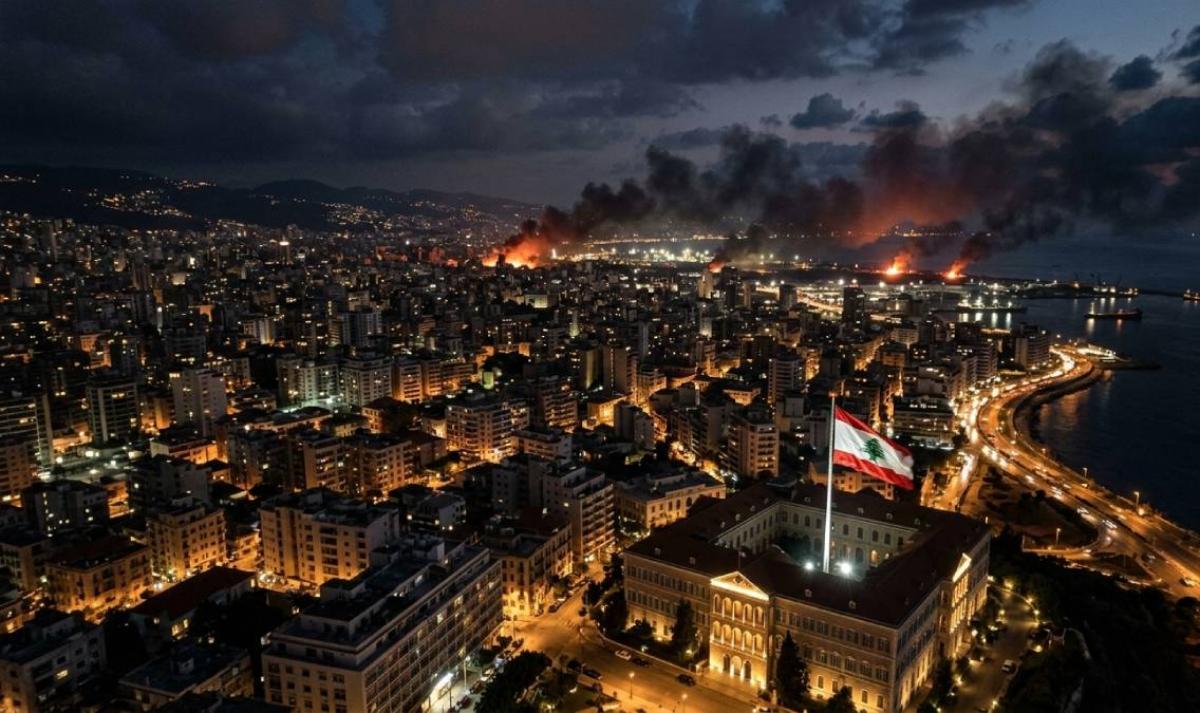
Hizbullah launched rockets and drones toward a missile defence site south of Haifa in the early hours of Monday, framing the attack as retaliation for the killing of Iranian Supreme Leader Ali Khamenei. Israel responded within hours, striking Hizbullah strongholds in Beirut's Dahiyeh district and issuing evacuation orders for dozens of villages in southern Lebanon and the Beqaa Valley. At least 31 people were killed and 149 wounded, according to Lebanon's Health Ministry.
Salam's declaration followed an emergency cabinet meeting convened the same morning. Its content goes further than crisis management. By formally designating Hizbullah's military activities as illegal and placing responsibility for the escalation on the group, Salam drove a fault line between the Lebanese state and the armed organisation that Israel and the United States have long demanded.
That fault line opens a diplomatic corridor for Israel. With the Lebanese government on record opposing Hizbullah's attacks, Israeli strikes on Hizbullah infrastructure become politically easier to sustain internationally. The state has separated itself from the armed group in writing, and Tel Aviv will not ignore that.
Hizbullah's Dilemma
Qassem had vowed confrontation despite the Lebanese government's explicit plea to stay out, framing the attack as a religious and political obligation after Khamenei's killing. Until Monday, Hizbullah operated in tension with the Lebanese state. Salam's declaration moved that relationship into open institutional confrontation.
The formal ban separates Hizbullah's political presence in Lebanese institutions from its military operations, treating the latter as a direct threat to state authority. Whether Hizbullah absorbs that distinction or dismisses it depends largely on how the conflict unfolds. A prolonged Israeli campaign that overwhelms the Lebanese state's capacity to govern leaves the declaration as paperwork. If negotiations resume, Salam's written record may become the baseline from which any disarmament discussion starts.
Disarmament on Paper, War on the Ground
The Iran conflict is being tracked through missile exchanges, naval engagements, the leadership vacuum in Tehran, the widening Gulf front. Lebanon has re-entered the picture primarily as a geographic extension of the Iran-Israel theatre, and that reading misses what is happening inside the country.
Salam's government is making choices under pressure. Going on record, calling Hizbullah's attacks illegal, demanding disarmament, instructing security forces to prevent further strikes. These carry structural consequences that will outlast the current fighting. A post-conflict disarmament process, should one materialise, will have to start somewhere. On Monday, Salam provided the legal ground for it.
Every camera is pointed at Tehran while Beirut's most significant shift in years is going unnoticed.