
By Bosphorus News Staff
Kazakhstan has formalised diplomatic and transport ties with the Republic of Cyprus, a move that has sharpened debate in Türkiye and highlighted widening strains within the Organization of Turkic States over the Cyprus question.
President Recep Tayyip Erdoğan has repeatedly described Cyprus as a "national cause" for Türkiye and has insisted that a two-state solution is the only realistic path forward. Foreign Minister Hakan Fidan has called on Turkic states to lift the isolation of the Turkish Cypriot people and recognise their rights within the broader Turkic world.
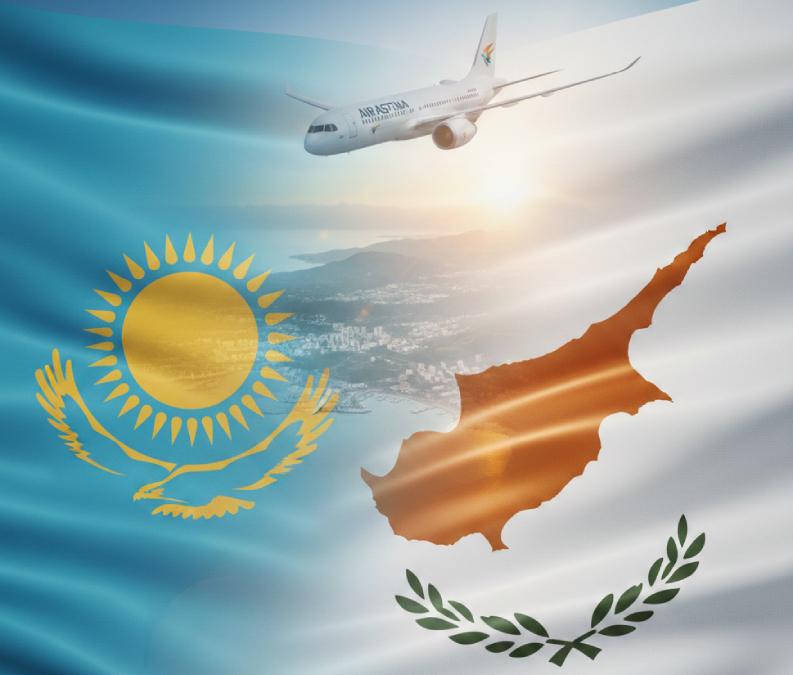
Against this backdrop, Kazakhstan opened a resident embassy in Nicosia in February 2025 and is set to launch scheduled direct flights in June 2026.
Direct Flights to Begin in June 2026
Cyprus Deputy Minister of Tourism Kostas Koumis confirmed that Air Astana will begin direct operations linking Astana and Almaty with Larnaca.
Four weekly rotations are planned from June 2026. Flights from Astana will operate on Tuesdays and Saturdays, while Almaty services will run on Thursdays and Sundays.
Koumis said the new air links are expected to support tourism and broader economic exchanges.
Embassy Upgrade
Kazakhstan became the first OTS member to open a permanent diplomatic mission in the Republic of Cyprus when it established its embassy in Nicosia in February 2025.
Ambassador Nikolay Zhumakanov presented his credentials earlier that year. The Republic of Cyprus has reciprocated by opening its embassy in Astana.
Prior to the upgrade, Kazakhstan managed relations with Cyprus through non-resident accreditation, with its ambassador in Tel Aviv concurrently accredited to Nicosia. The shift to a resident embassy marks a clear elevation of diplomatic engagement.
Cypriot officials have cited expanding investment ties between the two countries, with cumulative Cypriot investment in Kazakhstan reaching several billion dollars over the past two decades.
Cyprus Fault Line Inside the OTS
The latest steps come after a series of sensitive moments within the OTS framework.
At the 2022 Samarkand and 2023 Astana summits, the Turkish Republic of Northern Cyprus (TRNC) secured observer status following Ankara's lobbying. However, several Central Asian Turkic states avoided language that could imply recognition.
Tensions deepened in April 2025 when Kazakhstan, Uzbekistan, Kyrgyzstan and Turkmenistan signed a joint declaration with the European Union explicitly reaffirming commitment to UN Security Council Resolutions 541 and 550, which deem the TRNC's 1983 declaration of independence legally invalid.
The alignment drew attenion to the gap between Türkiye's push for stronger Turkic solidarity on Cyprus and the multi-vector diplomacy pursued by Central Asian Turkic capitals, which continue to prioritise relations with the European Union alongside engagement within the Turkic bloc.
While Turkish officials have largely avoided escalating the issue publicly, the developments have intensified public backlash in Türkiye, where Cyprus remains a deeply rooted national cause and perceived divergence within the Turkic world resonates strongly across political and social spheres.