
Murat YILDIZ
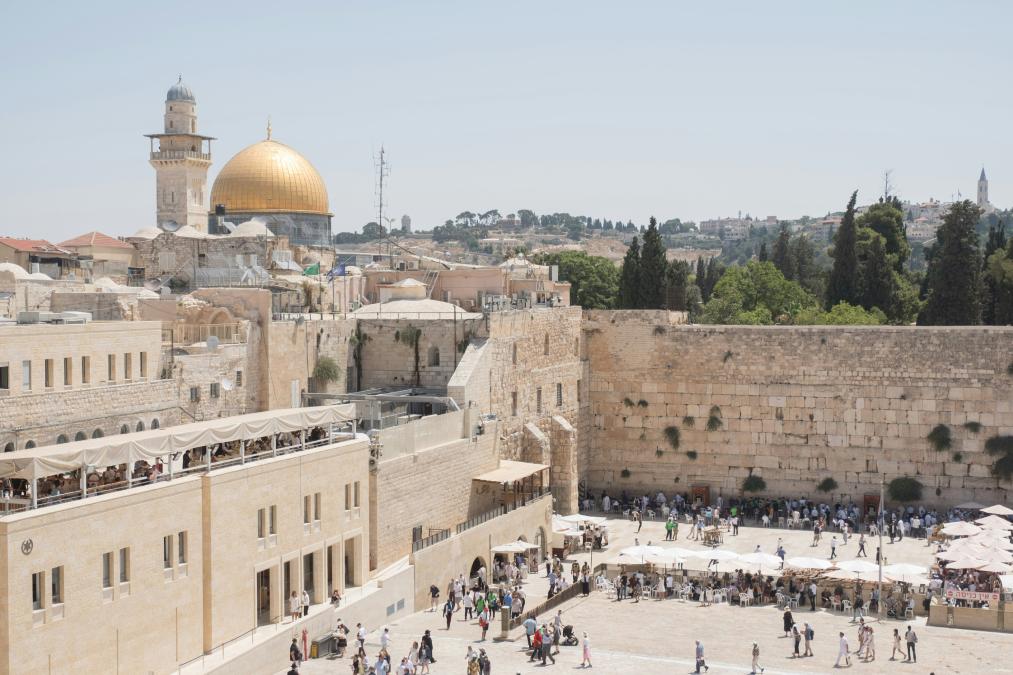
The Gaza and Jerusalem conflict is usually described as a confrontation between Muslims and Jews. That framing captures moments of violence, but it misses how pressure accumulates inside the system that governs the city. Jerusalem is not only a site of belief. It is a place where access, property, policing, and legal authority are continuously negotiated. When those mechanisms weaken, the effects appear first among communities that are not central to the dominant narrative.
For centuries under the Ottoman Empire, Jerusalem was managed through the millet framework. Religious communities were unequal, but they were legally recognized. Muslims, Christians, and Jews administered worship, clergy, personal status law, and internal property within clearly defined jurisdictions. Imperial authorities enforced boundaries and intervened when disputes exceeded communal authority. The system did not aim at equality. It aimed at order.
That order rested on predictability. Access to holy sites followed established practice. Repairs, rituals, and calendars were regulated through custom. Conflicts were handled as administrative matters. Minority communities endured not because they were protected, but because the rules governing their presence were stable and enforceable.
This framework eroded during the British Mandate. Existing arrangements were preserved in form but weakened in practice. Authority fragmented across overlapping legal systems. Enforcement became inconsistent. Religious sites were increasingly entangled with political claims. What had been administered as routine began to acquire symbolic weight.
The creation of the State of Israel completed the shift. Sovereignty and security became the organizing principles of governance. Property regimes, access rules, and religious administration were subsumed under state law and security assessment. Decisions once treated as technical were reframed as matters of national interest and security. The result was not a single rupture, but a cumulative narrowing of space for mediation.
Jerusalem today functions through layered arrangements rather than a single status quo. State institutions, Islamic waqf bodies, and Christian churches operate within limits ultimately set by security agencies. Temporary measures accumulate. Crowd controls, permit systems, and access restrictions reshape norms of presence over time. Administration becomes reactive. Custom loses weight.
Christian communities reveal how this system strains under pressure. The Greek Orthodox Patriarchate of Jerusalem illustrates the pattern. Its extensive property holdings expose it to zoning disputes, lease controversies, and legal challenges that are technical in form but structural in effect. Property insecurity undermines the financial base that sustains religious, educational, and social institutions.
Access restrictions add a second layer. During major religious observances, limits on movement disrupt ritual continuity and weaken custodianship. Residency and mobility form a third layer. Clergy visas and permits depend on administrative discretion. Delays and denials reduce institutional capacity without producing visible crises.
The Armenian community faces a related pressure through the Armenian Quarter and the Armenian Patriarchate of Jerusalem. Property disputes determine demographic continuity. Custody arrangements over holy sites harden into zero sum contests because procedural details signal recognition in a system that offers few external guarantees. Lacking demographic weight or sustained external backing, the community relies on internal cohesion, which narrows room for compromise.
These dynamics are not peripheral. They show how governance failure operates before escalation becomes visible. Smaller communities absorb pressure quietly. Their institutions weaken without provoking immediate confrontation. By the time conflict surfaces at the center, buffers have already eroded.
Jerusalem's instability is not driven only by belief or identity. It is produced by a governance model that privileges security management over equilibrium. When rules become discretionary and enforcement uneven, restraint depends on power rather than predictability. In that environment, the first losses occur outside the main line of conflict, among actors least able to contest decisions that reshape their presence.