
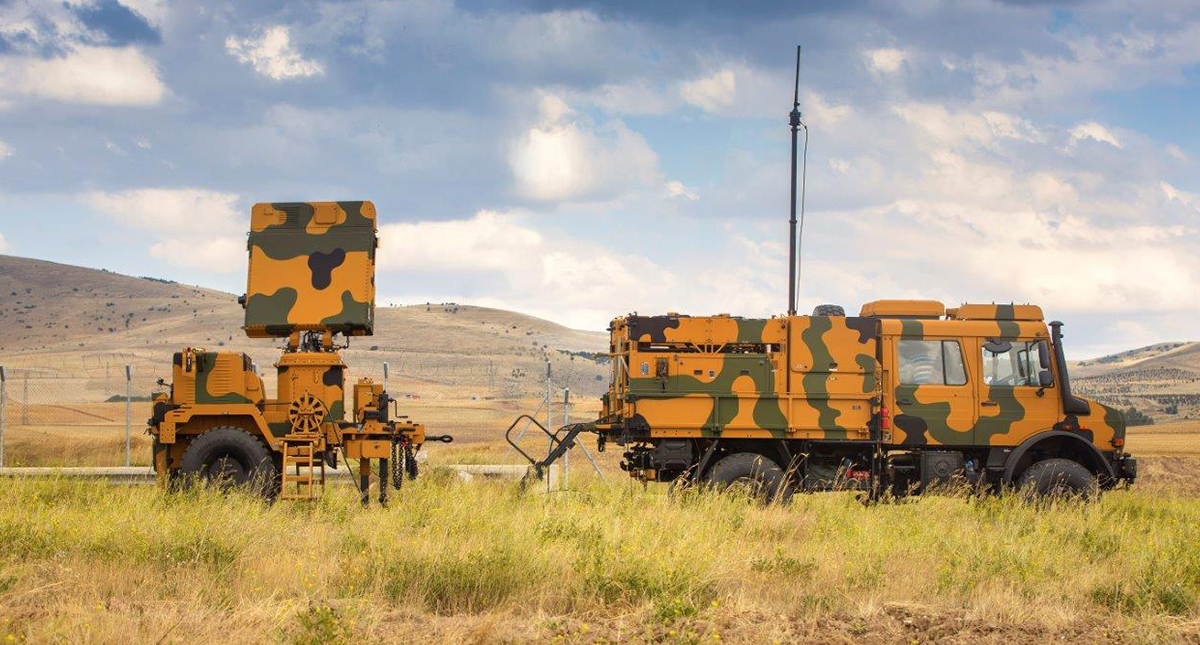
An exclusive report by The Jerusalem Post, citing Western intelligence and regional security sources, claims that Türkiye has explored the deployment of radar systems inside Syrian territory. The report frames the information as intelligence-based monitoring rather than a confirmed policy decision and notes that no official Turkish announcement has been made regarding such installations.
The Jerusalem Post attributes the claim to unnamed intelligence officials, presenting it as part of a broader assessment of changing military and surveillance dynamics in the Levant.
What the Report Alleges
According to the Jerusalem Post's sources, the reported radar systems would be intended to expand early-warning and airspace monitoring capabilities in and around Syria. Intelligence officials cited in the report suggest that such systems, if operational, could influence regional air activity depending on their location and technical reach.
The report emphasizes that the information reflects ongoing intelligence observation and should not be interpreted as confirmation of an executed deployment.
Why Radar Coverage Has Strategic Weight
Radar infrastructure is a cornerstone of air defense and situational awareness, particularly in regions where multiple state and non-state actors operate in overlapping airspaces. Intelligence assessments referenced by the Jerusalem Post argue that any expansion of radar coverage in Syria could have implications for regional military planning and deterrence calculations.
At the same time, defense analysts note that radar systems are commonly framed by states as defensive tools, designed to monitor threats rather than project force.

Ankara's Position: Deepening Cooperation with Damascus
From Ankara's perspective, any discussion of military or security activity in Syria must be understood within the framework of Türkiye's expanding cooperation with Syrian authorities. Turkish officials have publicly acknowledged close coordination with Damascus, including military training, security assistance, and on-the-ground engagement in certain areas.
Senior Turkish leaders have repeatedly stated that Türkiye is physically present on the ground in Syria and views its role as essential to stabilizing the country and preventing further fragmentation. Ankara has consistently framed this presence as aligned with Syria's sovereignty rather than in opposition to it.
Most notably, Turkish officials — including at the highest political level — have frequently and publicly declared that Türkiye will "do whatever is necessary" to protect Syria's territorial integrity, including the use of military force if required. These statements, reiterated almost daily in official briefings and public remarks, form a central pillar of Ankara's Syria policy.
Sovereignty, Security, and Regional Perceptions
Against this backdrop, Turkish officials argue that security measures taken in coordination with Syria should not be viewed as unilateral or destabilizing. Instead, Ankara presents its actions as part of a broader effort to preserve Syria's unity, counter terrorism, and prevent external-driven partition scenarios.
Nevertheless, claims of expanded Turkish military infrastructure — even when framed as cooperative — are closely scrutinized by other regional actors due to Syria's complex sovereignty environment and the presence of multiple foreign powers.
Reading the Claim with Caution
The Jerusalem Post itself characterizes the report as an intelligence-based claim, not a confirmed policy move. Analysts stress that intelligence reporting, media disclosures, and strategic signaling often intersect in conflict-adjacent regions, requiring careful distinction between assessment and fact.
Without confirmation or denial from official Turkish channels, the reported radar plans remain an unverified claim, albeit one that reflects broader discussions about Türkiye's growing strategic footprint in Syria.
A Wider Strategic Context
The report emerges amid a period of recalibration in Middle Eastern security architectures, where airspace control, surveillance systems, and military coordination are increasingly central. Whether or not the reported plans materialize, the discussion underscores how technical systems such as radar are inseparable from diplomacy, deterrence, and sovereignty debates.
***Credit: This article is based on exclusive reporting by The Jerusalem Post, citing Western intelligence sources, and presents those claims alongside Ankara's publicly stated positions without asserting the allegations as established fact.