
By Bosphorus News Geopolitics Desk
Unit 4000: The Structure Israel Named
Mossad, the Israel Defense Forces (IDF) and Shin Bet said on April 20 that the network operated under Unit 4000, the Special Operations Division of Iran's Islamic Revolutionary Guard Corps (IRGC), which Israel describes as the body responsible for directing terrorist activity outside Iran, including weapons smuggling, foreign recruitment and surveillance of Israeli, Jewish and Western targets.
Israeli officials named Rahman Moghadam as the senior figure overseeing overseas activity. Two other officials, Mohsen Suri and Majid Khademi, head of the IRGC Intelligence Protection Organization, were killed during Israel's war with Iran. Those identifications come from the Israeli side of the disclosure and are difficult to corroborate independently because the named figures are dead.
Israel also named Mehdi Yekeh-Dehghan, known as "the Doctor," as the figure overseeing activity in Azerbaijan and Türkiye. That identification is central to Israel's effort to connect several earlier, separately reported cases into one chain of command.
The Türkiye Connection
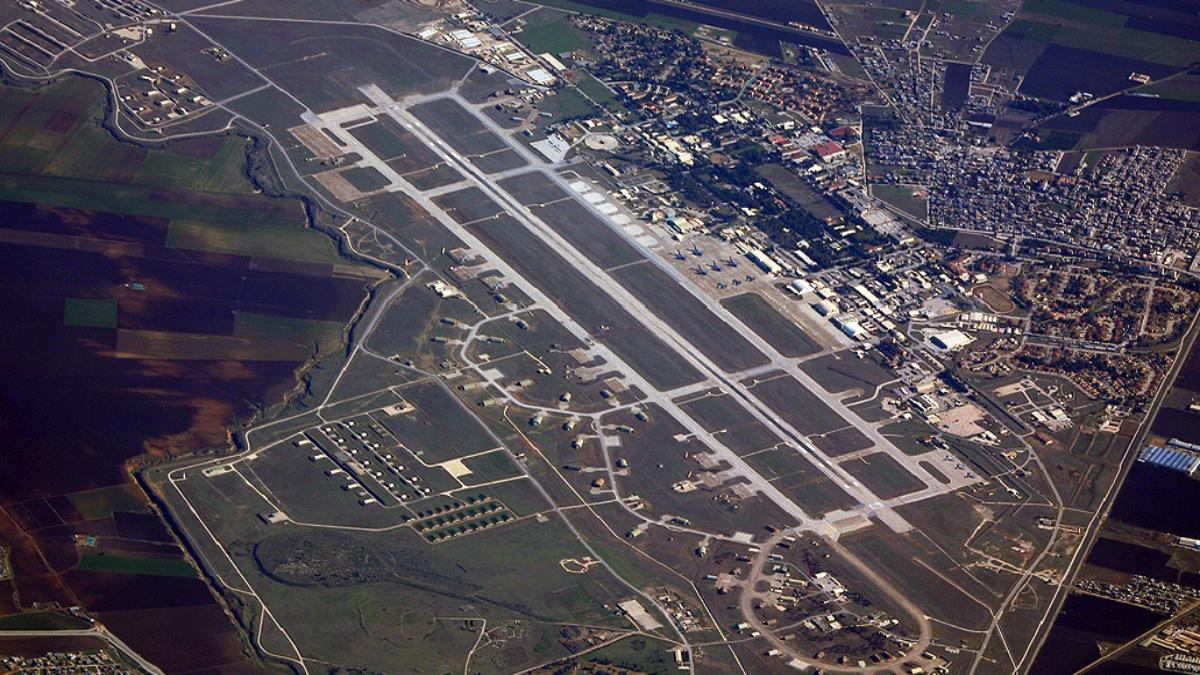
The strongest independently reported element concerns Türkiye. In January 2026, Turkish security services conducted coordinated raids across five provinces and detained six people, including an Iranian national, on charges of political and military espionage for Iran. Reuters and Anadolu Agency reported the group was accused of reconnaissance around sensitive military facilities, including Incirlik Air Base in Adana, the US Air Force installation that serves as a critical NATO logistics hub in southern Türkiye, and of involvement in drone shipments through Türkiye for use in third countries. Turkish authorities did not publicly connect the case to a wider regional network at the time.
That distinction matters. Israel now says the same network used Türkiye as a transit route for explosive drones bound for Cyprus. That specific claim has not been independently verified beyond the Israeli disclosure and follow-on reports citing it.
Cyprus and Crete
In Cyprus, police arrested a dual Azerbaijani-British national in June 2025 on suspicion of terror-related offences and espionage. Israel said at the time that Iran's Revolutionary Guards had tried to target Israeli citizens on the island and that the arrest followed a tip passed by Israeli intelligence to Cypriot security services. That case is independently documented. How directly it maps onto the broader network now described by Israel is less settled.
In Crete, Greek authorities arrested an Azerbaijani national travelling on a Polish passport in June 2025 on espionage charges. Reuters reported that investigators were examining whether the suspect had collected intelligence on Souda Bay, the naval and air base that serves as the only Mediterranean port capable of hosting a US carrier strike group. Israel now places both cases inside the same IRGC-linked structure. That framing is consistent with the pattern of arrests, but the public record still shows separate national investigations that Israel is consolidating into one operational picture.
The Baku-Tbilisi-Ceyhan Pipeline
Among the network's stated targets was the Baku-Tbilisi-Ceyhan (BTC) pipeline, which runs through Azerbaijan, Georgia and Türkiye and carries a significant share of Israel's oil imports, as well as supplying southern European countries including Greece, Italy and France. Reuters reported on April 20 that Israeli authorities said the network had planned to attack the pipeline alongside Israeli and Jewish targets in Azerbaijan. Azerbaijani authorities arrested cell members found in possession of explosive drones and fragmentation charges. Israel has connected that cell to the same chain of command.
The pipeline runs through Türkiye and sits inside a corridor where energy security, NATO infrastructure and regional military competition directly intersect.
Iran's Response
The Iranian embassy in Nicosia rejected the allegations on April 22. In a statement, the embassy said it "strongly rejects" claims that Iran helped smuggle explosive drones to Cyprus and described the accusations as politically motivated.
What the Disclosure Does Not Settle
The Israeli statement pulls together incidents that unfolded across several countries over roughly a year. It does not establish on its own whether these cases formed a centrally directed campaign from the start or whether parallel operations have been retrospectively grouped into a single network.
The arrests in Türkiye, Cyprus, Crete and Azerbaijan are independently documented. The wider architecture linking them is Israel's claim. Parts of it still await fuller independent confirmation.
***This report is based on the April 20 joint statement by the Mossad, IDF and Shin Bet, corroborated by Reuters, Anadolu Agency, Times of Israel, Jerusalem Post, Cyprus Mail and Israel Hayom. Iran's denial is drawn from the Cyprus Mail report of April 22. The claim that explosive drones were successfully transferred through Türkiye to Cyprus has not been independently verified.