
Iraq's federal government and the Kurdistan Regional Government (KRG) have agreed to renew a temporary oil export arrangement for a further three months, extending shipments through the end of March, as negotiations continue over a more permanent framework for managing energy revenues and exports.
Officials on both sides described the extension as a necessary pause rather than a resolution, aimed at keeping oil flowing while deeper political and legal disagreements remain unresolved.
Keeping the Oil Moving, Even If the Arguments Remain
The renewed deal allows crude produced in the Kurdistan Region to continue reaching international markets under federal oversight, buying time for negotiators grappling with long-standing disputes over constitutional authority, revenue sharing, and contractual legitimacy.
Both Baghdad and Erbil have acknowledged that this is not a breakthrough, but a stopgap designed to prevent further economic disruption while talks continue behind closed doors.
When Every Barrel Matters
Oil remains the backbone of Iraq's economy, and recent figures show that the country generated more than $6 billion in oil revenue in November alone. In this context, even temporary interruptions — particularly from the north — carry significant fiscal and political consequences.
Energy analysts note that continued exports from the Kurdistan Region ease pressure on the federal budget and help Iraq maintain predictable output at a time of fluctuating global prices.
Why Türkiye Still Sits at the Center of the Equation
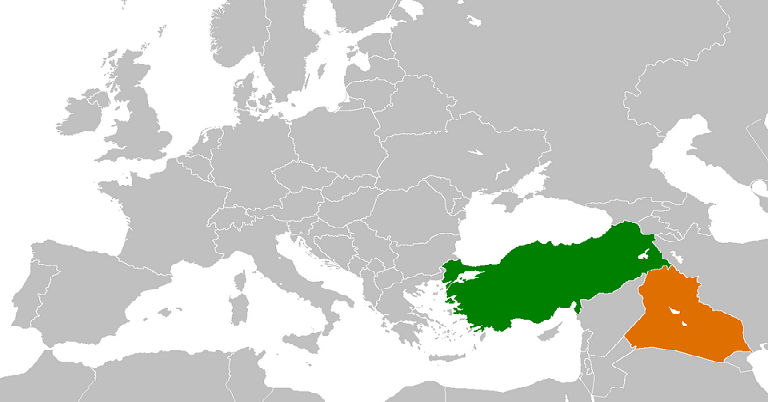
A critical constant in the export chain remains Türkiye, through which northern Iraqi crude is transported to global markets via the Mediterranean. The pipeline corridor linking Iraq to Türkiye has long been the indispensable outlet for Kurdistan's oil.
From Ankara's perspective, stable energy flows are not merely commercial but strategic. Turkish officials have repeatedly emphasized that energy transit should remain insulated from internal political disputes and managed through dialogue, legal clarity, and continuity.
Investors Watch, Markets Listen
International oil companies operating in the Kurdistan Region are closely following the renewed arrangement. Many have voiced concerns over delayed payments and contractual uncertainty, making any signal of continuity — even temporary — significant.
Beyond corporate boardrooms, the deal also resonates in global markets, where Iraq's production levels play a role in broader supply calculations and OPEC dynamics.
Three Months Is Not a Strategy
Despite the relief provided by the extension, officials privately acknowledge that repeated short-term fixes are unsustainable. Negotiators now face pressure to convert provisional agreements into a durable settlement addressing revenue transparency, budget allocations, and the legal status of existing contracts.
Without such a framework, the cycle of extensions risks becoming a substitute for resolution.
A Fragile Balance, For Now
For the moment, oil continues to flow, revenues continue to accrue, and diplomacy remains active. The renewed agreement avoids an immediate crisis — but it also highlights how fragile Iraq's energy governance remains.
Whether this three-month window leads to lasting stability or yet another extension will depend on political will in Baghdad and Erbil — and continued coordination with key partners, including Türkiye.