
By Reza Talebi
The war in and around the Persian Gulf has often been described in military terms, through missile exchanges, drone swarms, air-defence failures and the vulnerability of forward bases. Yet the deeper logic of the confrontation was not only military. It was also economic. More precisely, it was about energy, cost imposition and the politics of oil.
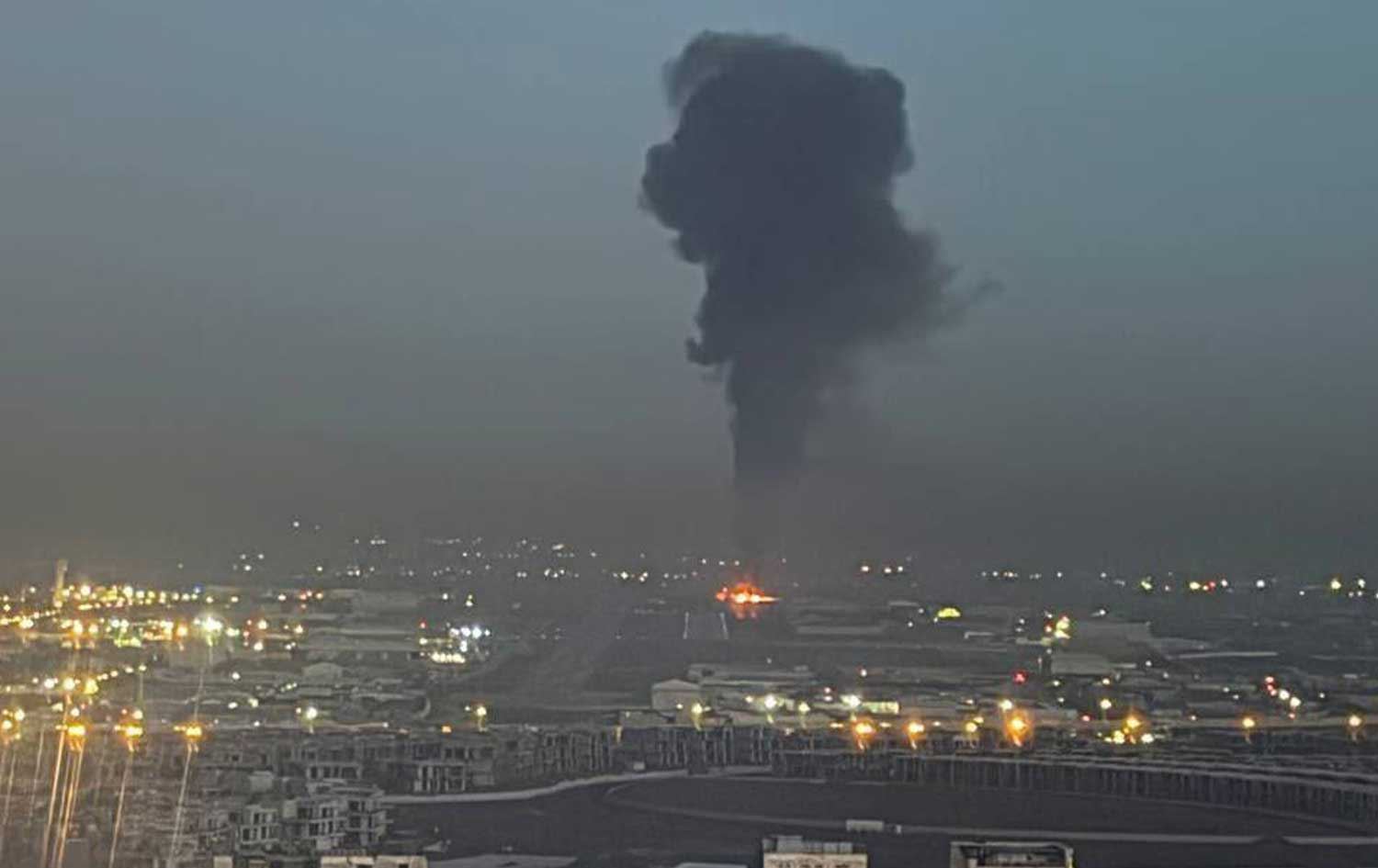
In the early phase of the conflict, Iran's attacks on targets across the Gulf appeared confused to outside observers. Some were initially read as signs of disruption in the chain of command or as attempts to inflict casualties on U.S. personnel and partner states. Over time, however, a clearer pattern emerged. Tehran appeared to be doing more than firing at military targets. It was also trying to shape the economic environment of the war by raising the costs of air defence, threatening energy flows and increasing the perceived risk around the Strait of Hormuz.
That logic matters. Gulf states with some of the world's largest defence budgets were forced into an expensive defensive campaign against relatively cheap Iranian drones and missiles. Even where interceptions succeeded, the cost exchange ratio was stark. The burden was not only operational. It was financial, logistical and psychological. The more drones and missiles entered the airspace, the more defensive systems were pushed into a war of expenditure.
Iran also sought to degrade the region's defensive awareness. By targeting radar and early-warning architecture, it aimed not simply to destroy hardware but to disrupt the wider detection and response chain on which Gulf security depends. In that sense, the attacks were designed to produce blindness as much as damage.
At the same time, the energy dimension of the war grew harder to ignore. Even without a formally declared closure of the Strait of Hormuz, disruption to shipping, insurance costs, oil exports and refinery operations deepened the sense of systemic risk. Flight cancellations, pressure on maritime trade and fears of wider regional escalation all reinforced the same message: energy insecurity was becoming a strategic weapon in its own right.
Washington and its partners tried to contain that pressure. Military operations targeted Iranian launchers, while broader efforts sought to stabilise shipping and reassure energy markets. Strategic reserves helped limit some of the immediate price shock. But these were mitigating steps, not a solution to the underlying problem. The crisis exposed how quickly military confrontation in the Gulf can spill into global energy and trade systems.
The conflict also highlighted the fragility of regional balance. Iraq remained under pressure but stopped short of becoming a full secondary front. That restraint mattered. A deeper Iraqi entry into the war could have widened the confrontation through militia networks and opened a more dangerous phase of escalation. The same logic applied elsewhere. Risks extended beyond the Gulf to surrounding theatres, including the Caucasus, where any targeting of energy infrastructure would have had consequences well beyond the immediate military arena.
This is why overly cinematic readings of the war miss the point. The confrontation was not only a story of retaliation, regime survival or military spectacle. It was a contest over leverage. Iran used drones, missiles and the threat to energy routes to raise costs and complicate the strategic calculations of its adversaries. The United States and its partners, in turn, sought to limit escalation while protecting the energy order on which both regional stability and global markets depend.
In that sense, oil was not a background variable. It sat near the center of the war's strategic logic. It shaped escalation, external responses and the limits of military action. It also exposed a familiar truth about the modern Middle East: energy is never just an economic asset. It is a source of power, vulnerability, coercion and survival at the same time.
The deeper lesson is not that oil explains everything. It is that no serious reading of this war can afford to treat oil as secondary. In moments of regional breakdown, energy does not simply reflect the crisis. It becomes one of the main ways the crisis is fought.