
By Bosphorus News Geopolitics Desk
Hungary's parliamentary election is being watched closely in Ankara as Prime Minister Viktor Orban faces his strongest challenge since returning to power in 2010, with a result that could affect one of Türkiye's most useful political relationships inside the European Union.
Polls closed on Sunday evening after a high-turnout vote that quickly turned into a test of whether Orban's long grip on Hungarian politics can survive a mobilised opposition and growing voter frustration over corruption, public services and the cost of living.
His challenger, Peter Magyar, has pushed the Tisza Party into the strongest position any opposition force has reached against Fidesz in years. Pre-election surveys pointed to a competitive race, but Orban entered the vote with structural advantages built into the electoral and political system, leaving the outcome uncertain even after the polls closed.
For most European capitals, the election is being read through the future of Hungary's place inside the EU, its line on Russia and its stance on Ukraine. For Türkiye, the implications are different.
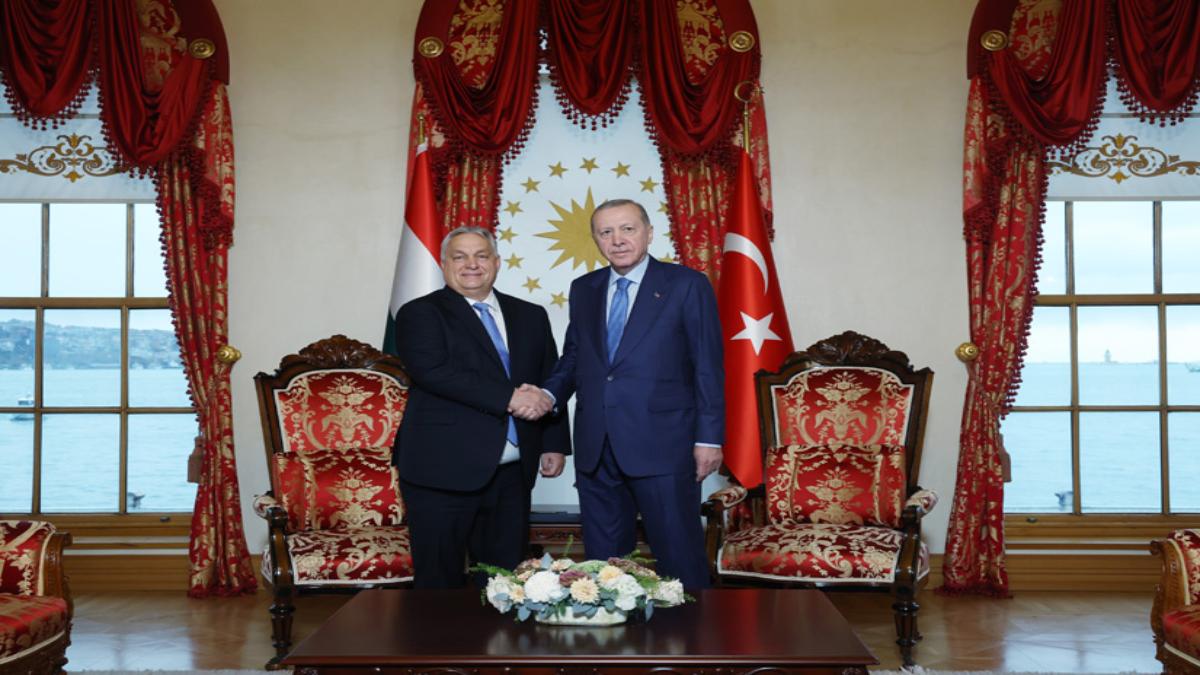
Orban has been one of Ankara's most consistent political counterparts inside the EU. The Türkiye-Hungary High-Level Strategic Cooperation Council, active since 2013, has given the relationship an institutional base beyond personal chemistry between Orban and President Recep Tayyip Erdogan. That framework has been reinforced by regular high-level contacts and by a broader effort to keep the Ankara-Budapest line active during periods when Türkiye's ties with Brussels have been strained.
That relationship has also widened into security and defence. The Joint Consultation Mechanism launched by the Turkish and Hungarian foreign ministers brought foreign policy, security and defence industry cooperation into the same channel, showing that the partnership is not limited to protocol diplomacy.
Energy has added another layer. Hungary depends heavily on Russian gas reaching Central Europe through routes connected to Türkiye, which gives Ankara practical value in a part of Europe where energy security still shapes political decision-making. That makes the relationship with Budapest more than symbolic. It also gives Türkiye leverage through a partner that has treated energy realism as a political priority rather than an ideological liability.
Hungary has also stood out as one of the few EU member states willing to maintain an openly supportive line toward Türkiye's long-stalled accession perspective. At a time when many European capitals deal with Ankara through caution, conditionality or tactical distance, Budapest has been more willing to keep the political door open.
Orban's Hungary has also invested in ties with the Turkic world. Budapest's observer role in the Organization of Turkic States gave that policy a formal setting and allowed Orban to present Hungary as both a Central European state and a country with a different civilisational vocabulary from the Brussels mainstream. For Ankara, that has created an unusual but useful opening inside the EU.
A Magyar government would not break relations with Türkiye. Trade, geography and energy infrastructure would still matter. But the political character of the relationship would likely change.
Magyar is much closer to the European mainstream in tone and alignment. Under his leadership, Budapest would be more likely to define its foreign policy through tighter coordination with the EU and NATO center rather than through the distinct strategic posture Orban cultivated for years. That would not produce an anti-Türkiye line overnight. It would, however, reduce the room for the kind of flexible political support Ankara has received from Budapest on difficult files.
That matters for Erdogan because Orban has not been just another European leader. He has been one of the few figures inside the EU able and willing to engage Türkiye on terms that were politically useful to Ankara. If he loses, Türkiye will not lose its ties to Europe. But it could lose one of its few dependable channels inside the European Union at a time when such channels are limited.