
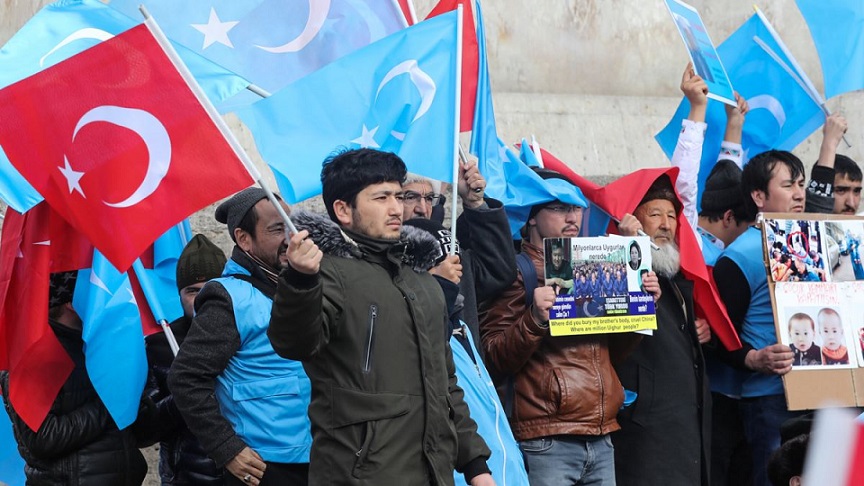
According to a series of recent reports by Human Rights Watch (HRW), Uyghurs who fled persecution and sought safety in Türkiye are increasingly encountering legal, administrative, and security challenges that undermine their sense of protection. HRW's findings, based on interviews, legal documents, and case analysis, point to what the organization describes as a troubling erosion of legal certainty for a community that has long viewed Türkiye as a place of refuge.
Many Uyghurs arrived in Türkiye over the past decade to escape repression in China's Xinjiang region, often relying on temporary or pending legal statuses while seeking durable solutions. While Türkiye hosts one of the world's largest Uyghur diasporas, HRW argues that protection has become more fragile in recent years.
Restriction Codes and Legal Limbo
A central concern raised by HRW is the use of administrative "restriction codes" placed on some Uyghurs, which can limit freedom of movement, access to residency procedures, and basic public services. According to the organization, individuals affected by these measures frequently struggle to obtain clear explanations or effective remedies, leaving them in prolonged legal limbo.
HRW warns that such uncertainty can have serious consequences, including barriers to healthcare, employment, and education, alongside persistent fear of detention or deportation.
A Deeply Sensitive Issue in Türkiye
Beyond legal and administrative dimensions, the Uyghur issue carries strong emotional and moral weight within Turkish society. Across the political spectrum—among government supporters, opposition figures, civil society groups, and the wider public—there is broad sensitivity toward the fate of Uyghurs, rooted in historical, cultural, and humanitarian ties.
Public debate in Türkiye has repeatedly reflected concern that Uyghurs seeking safety should not be left vulnerable or exposed to rights violations, regardless of shifting regional or international dynamics. This societal awareness has made the issue not only a legal matter, but also a deeply human one.
What Is at Stake
Under international law, including the principle of non-refoulement, states are prohibited from returning individuals to countries where they face a real risk of persecution, torture, or inhuman treatment. This principle applies regardless of whether a person has completed formal asylum procedures.
Human rights experts note that prolonged legal uncertainty itself—such as unresolved residency status or opaque restriction measures—can undermine effective protection, particularly for people who fled persecution. HRW argues that transparency, due process, and access to legal remedies are essential to meeting these obligations.
Why It Matters
HRW stresses that the situation of Uyghurs in Türkiye should be understood not as isolated cases, but as part of a broader challenge of ensuring consistent protection for vulnerable communities. Clear procedures and legal safeguards, the organization argues, are critical to preventing further harm and maintaining trust in protection systems.
What Comes Next
HRW calls for a review of restriction codes, clearer residency pathways, and stronger procedural guarantees for Uyghurs seeking safety. The organization also urges continued engagement between authorities, legal professionals, and affected communities to resolve cases that have remained in limbo for years.