
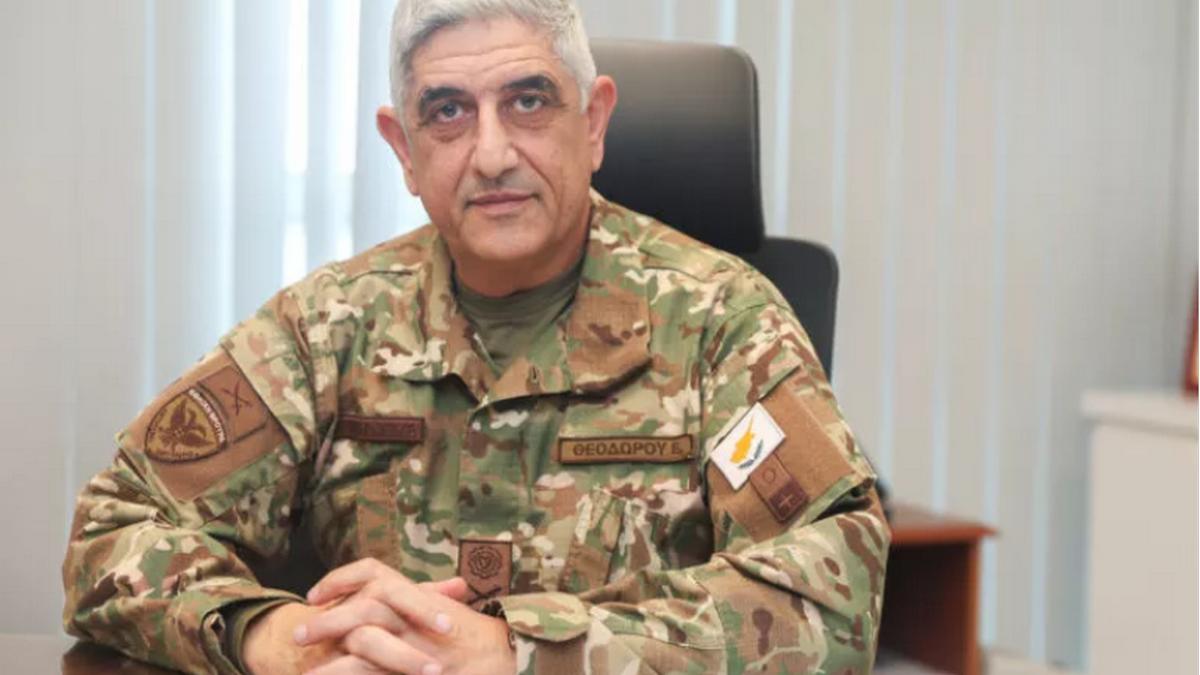
On 25 January 2026, Cyprus's Emmanouel Theodorou, gave an interview to Philenews, outlining how Cyprus defines its role within the Eastern Mediterranean security environment. Published under the headline "Cyprus consolidates its role as a reliable partner and security factor – Cooperation with France and Israel," the interview focused on defence modernisation, military partnerships, and the strategic logic guiding Cyprus's security posture.
Speaking in his official capacity, Theodorou framed Cyprus as a security actor anchored in cooperation rather than operating in isolation.
"Cyprus is consolidating its role as a reliable partner and a factor of security, through systematic cooperation with countries such as France and Israel," he said.
The interview comes at a moment of heightened regional uncertainty, marked by overlapping crises in the wider Middle East and expanding military coordination among regional and extra-regional actors. Cyprus uses this context to present itself not as a peripheral state, but as a stabilising node within a broader security structure.
Cyprus as a Security Partner
Theodorou's remarks place emphasis on credibility. Cyprus is not portrayed as seeking visibility or symbolic status, but as aiming to be a dependable participant in coordinated security arrangements. Partnership, in this framing, is measured by operational contribution rather than political alignment alone.
This positioning reflects a broader effort to shift Cyprus's security profile from reactive posture to structured participation. The interview presents cooperation as a long-term choice rather than a situational response.
Modernisation as Credibility
Defence modernisation is presented as the backbone of this approach. Theodorou described the National Guard as a force adapting to evolving operational demands, where readiness matters more than size.
"The National Guard is evolving in order to respond to modern challenges, strengthening its deterrent capacity through new technologies and contemporary weapon systems," he noted.
Modernisation is defined broadly. It includes organisational change, revised training doctrines, and technological integration. The objective is not expansion, but relevance within joint operational environments.
France and Israel as Capability Multipliers
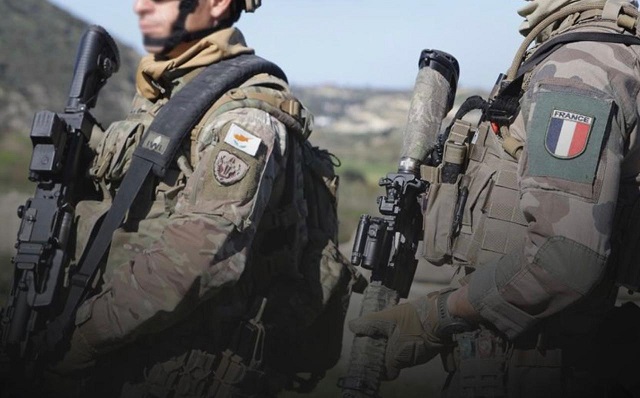
Cooperation with France and Israel is described as central to Cyprus's defence trajectory. These relationships are framed as sources of operational experience that a small force cannot generate independently.
Israel is cited for its high-tempo operational environment and readiness standards. France is positioned as both a European power and a Mediterranean actor, providing access to wider defence networks and institutional depth.
Theodorou stressed that such partnerships are judged by their practical impact.
"International cooperation is not a matter of public relations. It directly enhances operational readiness, training quality, and interoperability," he said.
The U.S. and the Logic of Interoperability
The interview also highlights growing engagement with the United States. The lifting of long-standing restrictions on U.S. defence equipment is framed as a turning point, expanding access to training and exercises aligned with Western operational standards.
"The lifting of restrictions on defence equipment opens new possibilities for exercises, training, and deeper cooperation with the United States," Theodorou said.
Here, interoperability emerges as the organising principle. Compatibility with U.S. systems and procedures is presented as essential for meaningful participation in multinational activities, even without formal alliance membership.
Türkiye and the Consolidation of a Changing Security Geometry
Taken together, the elements outlined in the interview point to a deliberate effort to embed Cyprus within a layered security structure. Modernisation, interoperability, and external partnerships function as mutually reinforcing components.
For Türkiye, the significance lies in structure rather than intent. Cyprus's military capabilities remain limited, but its strategic relevance increases through connectivity. The challenge is not Cyprus in isolation, but the cumulative effect of coordinated cooperation among regional actors.
This environment reshapes how presence, access, and coordination operate across the Eastern Mediterranean. Strategic friction emerges less from explicit confrontation than from the consolidation of interoperable security ecosystems around Türkiye's maritime and airspace neighbourhood.
The interview matters because it formalises this trajectory as settled policy. Cyprus is not signalling a new direction; it is confirming an alignment already in place. In a region where structure increasingly shapes outcomes, that confirmation carries weight.