
By Bosphorus News Geopolitics Desk
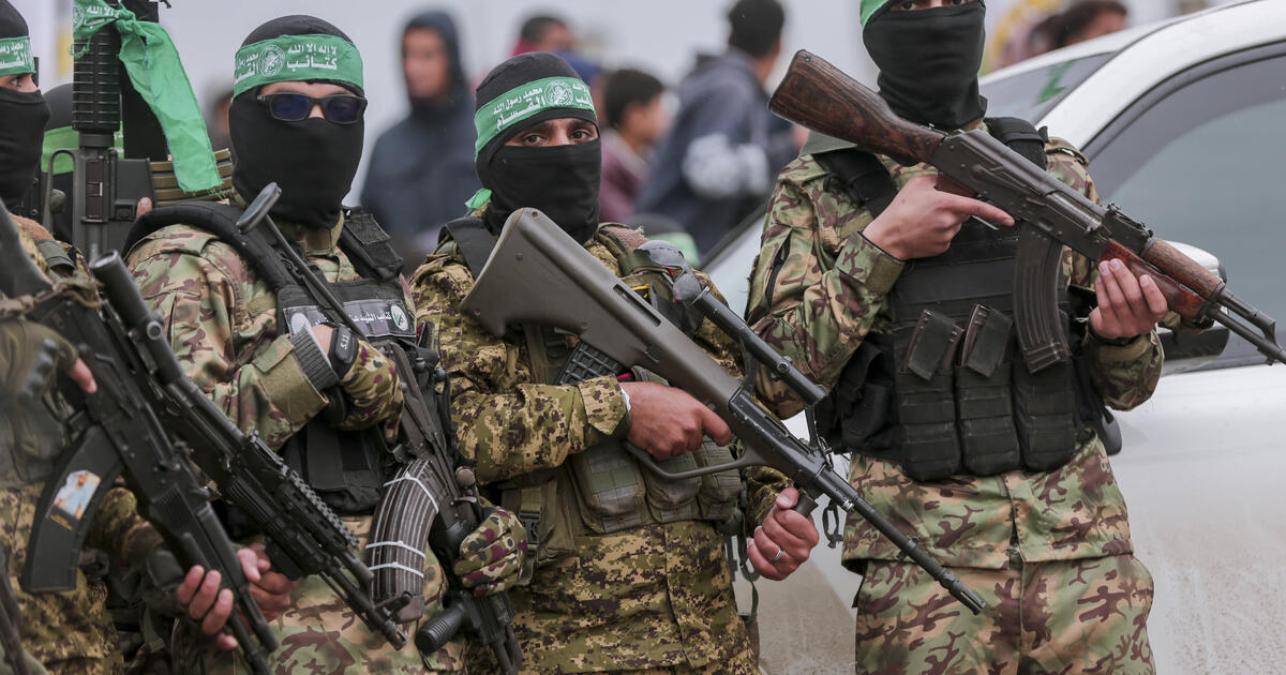
Hamas issued a public statement on March 14 calling on Iran to refrain from targeting neighboring countries, while affirming Tehran's right to respond to US and Israeli strikes by all available means. The statement was Hamas's first direct public appeal to Iran on the issue since the war began on February 28. Iran has fired missiles and drones at more than ten countries in the region, including Türkiye, where a ballistic missile was intercepted by NATO forces on March 7, and Qatar, where two missiles were intercepted on March 14 after explosions were heard in Doha.
Qatar's ultimatum
The timing of the statement was not spontaneous. Israeli officials said Hamas issued it under direct pressure from Qatar. Qatari officials had warned Hamas leadership that if the group did not publicly distance itself from Iran's attacks on Gulf states, Doha could halt financial support and expel senior Hamas figures from the Qatari capital, where the group's political bureau has been based since 2012. Hamas had previously condemned the killing of Iranian Supreme Leader Ali Khamenei on the first day of the war as a heinous crime and had not issued any criticism of Iran's regional strikes until March 14. Qatar's Prime Minister Mohammed bin Abdulrahman had already condemned the Iranian strikes as a flagrant violation of Qatari sovereignty in a call with Iran's foreign minister, rejecting Tehran's claim that the attacks were directed only at US military infrastructure.
The IRGC communications breakdown
A separate development underscores the depth of the rupture. Palestinian sources told the Saudi newspaper Asharq Al-Awsat that contact between Hamas leadership and senior IRGC officials responsible for Palestinian affairs had been severed since the start of the war. The sources said it was unclear whether the Iranian officials had been killed in strikes or whether Iran had imposed strict security protocols. In previous conflicts, including the twelve-day war of June 2025, messages were still delivered through encrypted channels. Since February 28, no messages have been received.
Türkiye's position
Türkiye sits in the middle of several overlapping pressures in this story. Iran struck Turkish airspace with a ballistic missile on March 7, a fact acknowledged by Türkiye's Defence Ministry and confirmed by NATO. Hamas's statement explicitly listed Türkiye, alongside Qatar and Iraq, as a country its leadership had contacted to urge a halt to US and Israeli operations against Iran. Analysts and US officials have identified Türkiye as the most likely alternative host for Hamas's political leadership if Doha proceeds with an expulsion, given Türkiye's longstanding political support for the group under President Recep Tayyip Erdoğan. Current indications suggest Ankara has not signalled willingness to take in senior Hamas leadership under present circumstances, though no official position has been stated.
Iran's contradictory signals
Iranian President Masoud Pezeshkian said last week that Iran's strikes were directed only at US military bases and facilities and did not target neighboring countries. He subsequently walked back the statement under pressure from IRGC hardliners. Iran's judiciary chief Gholam Hossein Mohseni-Ejei was more direct, warning that countries which had allowed the US to use their territory to attack Iran would continue to face strikes.