
By Murat YILDIZ
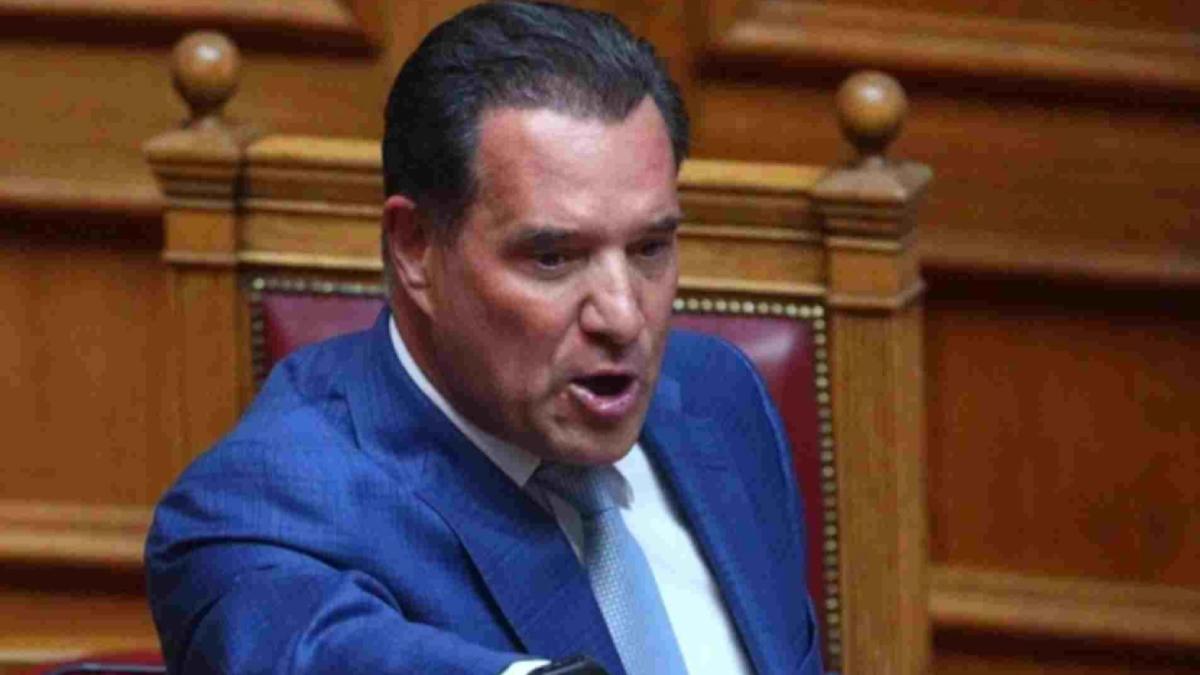
Greek Health Minister Adonis Georgiadis did not coin a new language when he described Turks as "Mongols from the steppes" on April 7. He reached for a vocabulary that academic literature has been documenting for years.
As Bosphorus News reported in its initial coverage of the controversy, the remarks were made during a live interview on Parapolitika 90.1, where a domestic discussion about patronage drifted into ethnic language and triggered criticism across Greek media and political circles. That shift matters because it shows how quickly a debate rooted in internal politics can slide into an older register once Türkiye enters the frame.
What surfaced was more than a personal outburst. The phrasing belongs to a deeper current in Greek public discourse in which "the Turk" is not treated simply as a neighbouring state or contemporary political actor, but as a civilizational other shaped by inherited stereotypes, historical memory and nationalist language.
Research by Alexis Heraclides places this in a broader framework. In his work on Greek-Turkish rivalry, he argues that bilateral tensions cannot be understood only through disputes over the Aegean, Cyprus or maritime claims. They are also sustained by national narratives that turned each side into a durable political and psychological reference point for the other. His concept of "imagined enemies" is especially relevant here. Georgiadis' remark did not function as a random insult. It drew on an established repertoire that casts Turks as foreign, threatening and culturally alien.
That same pattern appears in Dimitrios Theodossopoulos' work on how Greeks imagine Turks. His research shows how perceptions are often built through generalised and essentialist categories rather than through the concrete realities of contemporary relations. In that context, the insult used by Georgiadis was not remarkable because it was inventive. It was remarkable because it was instantly legible.
The educational dimension makes the picture more serious. Studies on Greek school narratives and childhood socialisation have shown that the image of "the Turk" has often been reproduced through conflict centred historical storytelling. In textbook and classroom analysis, Turks frequently appear through the memory of conquest, oppression and national struggle. Some studies go further and show how ideas of the national enemy are introduced early, sometimes before children are able to distinguish between historical actors and living societies. That does not mean Greek education is reducible to a single hostile line, nor that no reforms or counter-currents exist. It does mean that political rhetoric can draw from language that has long circulated beyond party politics.
The timing also deserves attention. Georgiadis' remarks came as Greek domestic politics was already under strain from several fronts, including continued fallout from the Tempi train disaster, scrutiny linked to the Predator spyware affair, and wider arguments over governance and accountability. In that setting, the slide from a domestic discussion on patronage into language targeting Türkiye was not a minor detour. Studies on political discourse in Greece suggest that references to external actors, especially Türkiye, can become more visible during periods of internal pressure. This does not require a coordinated diversion strategy to matter. It works because the language is already familiar, politically available and easy to activate.
This is why Georgiadis' comments should not be treated as an isolated scandal with no deeper context. They reflect the persistence of an older vocabulary that remains accessible in moments of political stress, especially when speakers want to externalise a domestic argument or mobilise instinctive historical associations. The backlash inside Greece is significant, but so is the ease with which this language reappeared.
The controversy therefore says something broader about the political culture that made the remark intelligible in the first place. What Georgiadis said on air was crude, but it was also familiar. That familiarity is exactly what the academic literature helps explain.
***References:
Alexis Heraclides, The Essence of the Greek-Turkish Rivalry: National Narrative and Identity, London School of Economics, October 2011
Alexis Heraclides, The Greek-Turkish Conflict in the Aegean: Imagined Enemies, Palgrave Macmillan, 2010
Dimitrios Theodossopoulos, "The 'Turks' in the Imagination of the 'Greeks'," South European Society and Politics, 2005
https://www.tandfonline.com/doi/full/10.1080/13608740500470299
"Transforming the Identity of the Enemy in Pre-school Children: A Case Study in a Greek Kindergarten"
"Representing Turks in Greek Children's and Young Adult Fiction"
"Images of 'the Other': The Turk in Greek Cypriot Children's Imaginations"