
By Bosphorus News Geopolitics Desk
Greece has turned the discovery of an armed sea drone near Lefkada into a formal diplomatic dispute with Ukraine, warning that the incident could carry Black Sea naval warfare into Mediterranean security calculations.
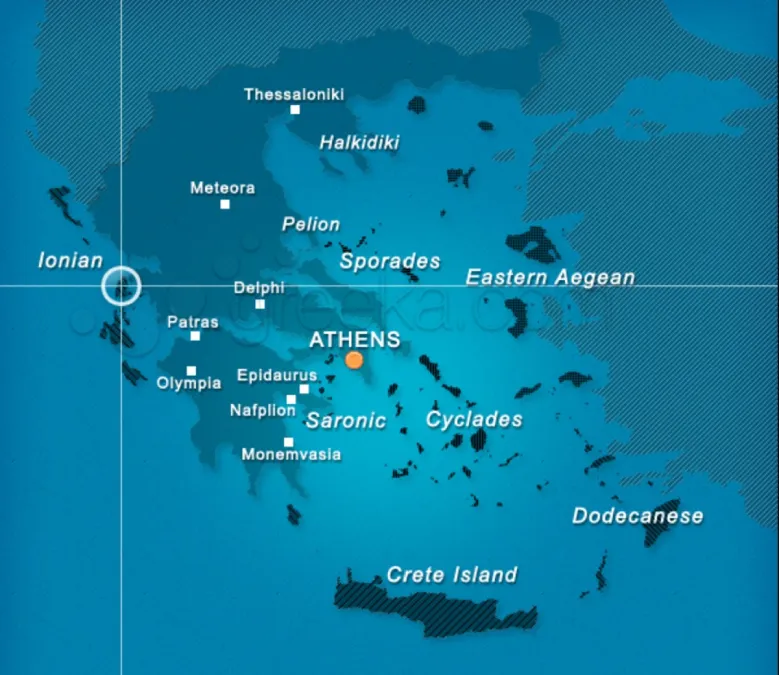
The Greek Foreign Ministry issued a demarche to Kyiv over the unmanned surface vessel, or USV, found on May 7 off the southern coast of the Ionian island. Greek Foreign Ministry spokesperson Lana Zochiou said Athens had formally raised the case with Ukraine and was still waiting for an official answer.
Greek reporting says the protest was delivered on May 28 and 29 through the Ukrainian Embassy in Athens and directly to Ukraine's Foreign Ministry in Kyiv. Athens argues that the incident created risks for maritime safety, civilian life, the environment, national security and the Greek economy.
The Lefkada incident
A fisherman found the drone inside a coastal cave near Lefkada on May 7. It was towed close to Vasiliki harbor and later transferred to a naval base on the Greek mainland for examination. Greek authorities neutralized its explosives.
Greek officials did not initially identify the vessel's origin. Naval experts said its design resembled Ukrainian Magura-type unmanned surface vessels, a class of sea drone Ukraine has used against Russian naval assets in the Black Sea.
On May 12, Greek Defense Minister Nikos Dendias said Athens was certain the craft was a Ukrainian unmanned surface vessel. He described the case as "an extremely serious issue" because of its implications for the freedom and safety of navigation.
The demarche follows a case Bosphorus News tracked from its first stage in May, when Greek officials said the armed naval drone recovered off Lefkada had known origin and payload, while forensic work focused on its software, components and explosive configuration.
Athens presses Kyiv
Greek officials are treating the case as more than a lost military device. Athens wants to know how an armed naval drone linked to the Ukraine war reached Greek waters, far from the Black Sea front and close to civilian maritime routes.
Greek reporting says Athens asked Kyiv for an explanation, acknowledgment of the incident and steps to ensure that no combat drones remain in the Mediterranean. Greece has also taken the issue to European and North Atlantic Treaty Organization channels.
Foreign Minister George Gerapetritis briefed European Union foreign policy chief Kaja Kallas and raised the case with Ukrainian Foreign Minister Andrii Sybiha during an informal European Union foreign ministers' meeting in Limassol. Greek reporting also says the matter was raised with North Atlantic Treaty Organization Secretary General Mark Rutte.
Kyiv has not publicly accepted responsibility. Ukrainian officials earlier said they had no information confirming that the drone had been launched by Ukrainian forces and were ready to cooperate if Greece made a formal request.
Drone identity remains disputed
The drone's exact identity remains unclear. Greek officials have identified it as Ukrainian-built, while reporting has differed over whether it resembled a Magura-type system or another Ukrainian naval drone design.
UFORCE, a Ukrainian-founded defense technology company associated with the Magura family of unmanned surface vessels, has denied that the Lefkada drone was one of its products, according to Ukrainian reporting.
The uncertainty matters. Athens is acting on the conclusion that the vessel was Ukrainian-linked. Kyiv has not claimed it. The technical model, route and intended target remain open questions.
Some reporting has linked the case to possible operations against Russian-linked or "shadow fleet" vessels operating beyond the Black Sea. Greek officials have not publicly presented a full operational account, keeping their public argument focused on navigation, national security and civilian maritime exposure.
Mediterranean spillover risk
Lefkada has placed a Black Sea warfare method inside the Mediterranean security debate.
Ukraine's naval drones have changed the maritime war in the Black Sea, where unmanned surface vessels have been used against Russian naval and oil transport targets. Greece's concern is that the same tools, through deliberate deployment, technical failure or loss of control, could create new risks in Mediterranean waters.
The Ionian Sea sits on busy maritime routes between Greece, Italy and the wider Mediterranean basin. An armed unmanned vessel drifting or operating in that space threatens more than military targets. It can put commercial ships, fishing boats, ports, coastal communities and environmental safety at risk.
The case also matters for Türkiye and the wider North Atlantic Treaty Organization southern flank. Any movement of Black Sea naval drone warfare into Mediterranean risk planning would touch the Turkish Straits, Black Sea access, Eastern Mediterranean navigation and allied maritime security. It would also complicate the sensitive issue of Russian-linked shipping routes, sanctions enforcement and civilian maritime exposure.
The Lefkada case stops short of proving that the Ukraine war has moved into the Mediterranean. Its weight lies in the uncertainty it created. An armed naval drone linked by Greek officials to Ukraine was found in Greek waters, Kyiv has not publicly taken responsibility, and Athens has brought the issue before European and NATO partners as a maritime security problem. The harder question now is whether Black Sea drone warfare can remain contained when its platforms begin to appear near civilian routes in the Mediterranean.
***Sources: Greek Foreign Ministry spokesperson briefing, Associated Press, Kathimerini, Skai, Ukrinform, Ukrainian media, Bosphorus News.