
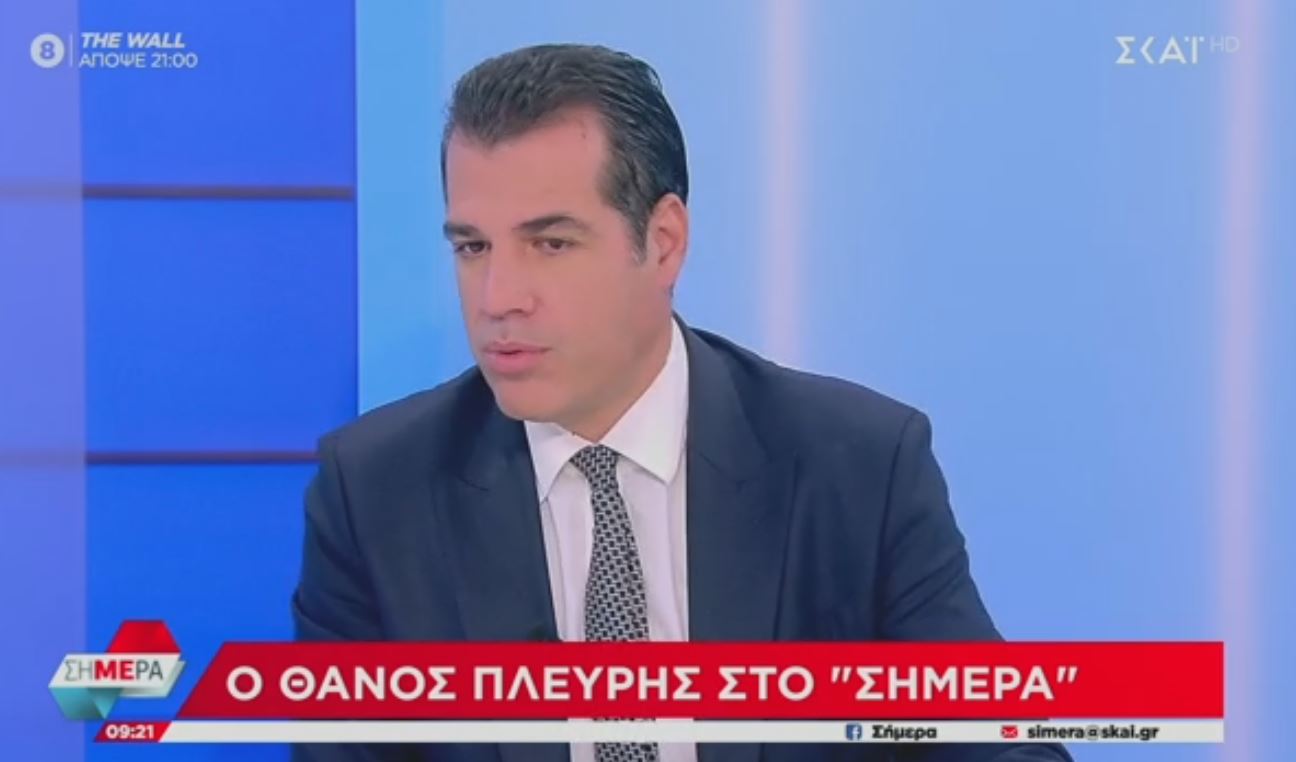
Greek authorities have signalled stricter enforcement against unlicensed places of worship in Athens, after the Minister for Migration and Asylum, Thanos Plevris, warned that foreign nationals operating such sites could face residence permit revocation and deportation if they do not comply with Greek law.
The remarks were made during a parliamentary committee discussion on migration legislation and were reported by multiple Greek media outlets. Plevris later reiterated the same position in posts published on his official Facebook account, reinforcing the government's message.
Parliamentary remarks
According to Greek press reports, Plevris referred to a recent case in the Agios Nikolaos area of Athens, where an unlicensed place of worship was shut down and the operator's residence permit revoked. Speaking to lawmakers, he indicated that similar action would follow in other cases.
"What happened in Agios Nikolaos will happen everywhere," he was quoted as saying, adding that unlicensed places of worship would be sealed and that those responsible would face deportation if they failed to comply with Greek legislation.
In the committee discussion, the minister framed the issue in terms of legal and administrative compliance, linking the operation of unlicensed premises to violations of residence and immigration rules rather than to religious practice.
Social media statements
Following the parliamentary session, Plevris used his official social media accounts to restate the same position in more direct language.
In one post, he wrote that illegal places of worship would be shut down, adding that the legal documents of those operating them would be revoked. In another, he said that those who do not comply with Greek law will be deported, presenting the approach as part of broader enforcement of migration and residence regulations.
The wording of the posts closely mirrors the statements attributed to him in Parliament, indicating a consistent public line rather than an isolated remark.
What is known, and what is not
So far, the government has not published a formal decree, ministerial circular, or written instruction setting out the scope or procedures of the initiative. Nor have verbatim transcripts of the parliamentary session been released on the official websites of the Greek Parliament or the Ministry of Migration and Asylum.
As a result, the policy currently exists at the level of ministerial intent and public signalling, supported by press reporting and social media statements, rather than as a codified administrative measure.
What remains unclear is whether the approach will be limited to the Municipality of Athens or extended more broadly, and how authorities will apply the rules in cases involving informal community prayer spaces.
For now, the government's position is explicit but incomplete: enforcement has been publicly signalled, legal consequences have been outlined, but the operational details have yet to be formally set out.