

By Bosphorus News Defense Desk
Greece has not publicly disclosed where it plans to station the Israeli-made PULS rocket artillery systems it is acquiring, but the available indications point to a deployment model built around northeastern Greece and selected Aegean positions rather than a single concentrated basing concept.
That is where the real story begins. Once a system with a strike range extending to around 300 kilometers enters service, the issue is no longer the contract itself but the geography of how that capability will be distributed and used.
The clearest public indication so far comes from earlier reporting on the Greece, Cyprus and Israel military track, which said the 36 PULS systems approved by Greece in late 2025 were expected to be deployed along Greece's northeastern border with Türkiye and on Aegean islands. That remains the strongest clue available on how Athens may choose to structure the system.
A deployment in northeastern Greece would be the more conventional military option. It offers depth, stronger logistics, easier integration with existing land-force infrastructure and a more survivable basing environment. It would also allow Greece to exploit the range of the system from mainland positions without placing every launcher in politically sensitive forward areas.
An island deployment would carry a different weight. In that case the issue would not simply be range, but proximity. A long-range launcher positioned on selected Aegean islands would compress reaction time, tighten the tactical picture and give the system a more immediate role in any confrontation involving the Aegean theatre. That is also why such a deployment would draw closer scrutiny than a mainland-based posture.
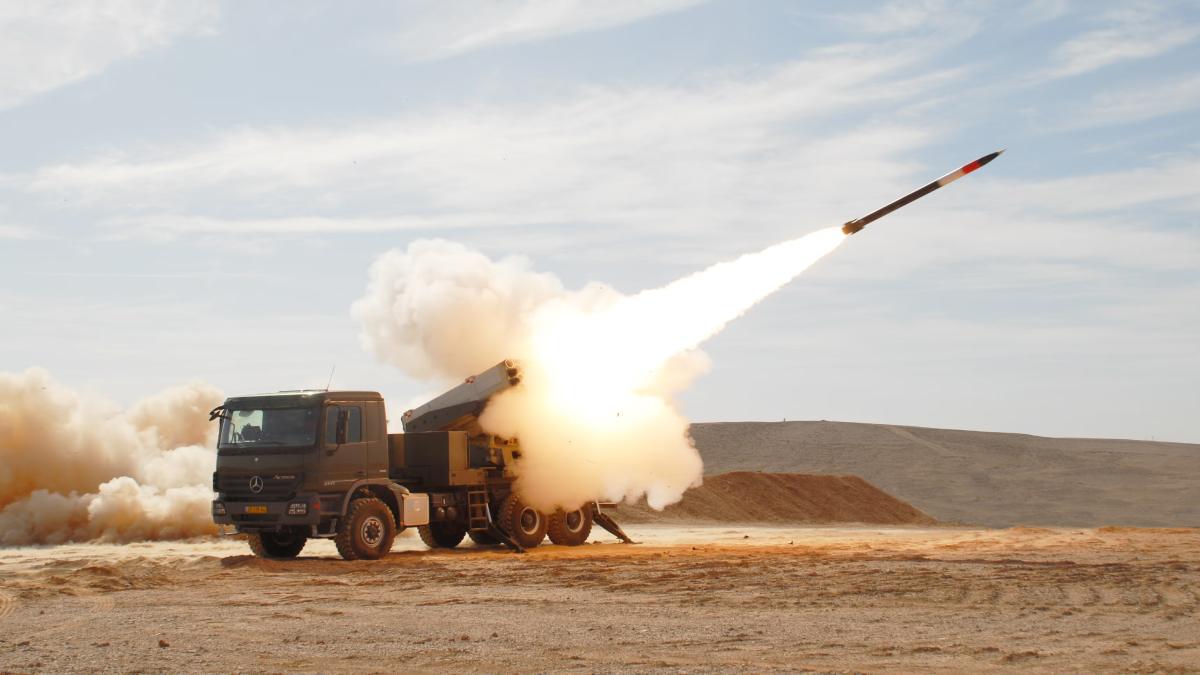
The more plausible outcome is a mixed structure. Main batteries could be based in northeastern Greece, while smaller or more distributed elements could be assigned to selected island positions. That would fit a broader Greek pattern visible in other programmes, where dispersal, survivability and layered coverage matter as much as the headline capability itself.
This is also where the PULS deal connects to the rest of Greece's current force posture. Athens has already moved deeper into an Israeli-linked defence build-up, from the Achilles Shield air defence architecture to the operationalisation of the Greece-Cyprus-Israel trilateral framework. Seen in that setting, the rocket artillery purchase looks less like a standalone procurement decision and more like part of a wider effort to add depth, dispersal and flexibility to Greece's eastern flank.
Athens also has reasons to keep the exact basing plan vague. Strategic ambiguity complicates targeting, avoids locking the system into a publicly declared posture and lowers the immediate diplomatic cost of discussing politically sensitive locations. In practice, that means the deployment map may remain deliberately blurred even as the systems move closer to operational use.
What emerges is a shift that is less about a single launch point and more about how Greece is reorganising the geography of its land based strike options, spreading capability across different areas in a way that makes the system harder to fix, easier to reposition and more flexible to use within the broader Eastern Mediterranean security environment.
No official response from Türkiye had been issued at the time of publication.