
By Bosphorus News Geoplitics & Defense Desk
Greek outlet Neostrategy.gr on 21 March published a report centred on allegations that Greece sent Patriot interceptor missiles to Qatar. The immediate trigger was a parliamentary question from PASOK. But the report does something else as well. It repeatedly places Türkiye's military presence in Qatar next to Qatar's Rafale fleet, drawing attention to a more sensitive issue than the missile story itself.
The Rafale is not just another combat aircraft in Greek service. It sits near the centre of Athens' claim to a qualitative edge over Türkiye in the Aegean. Any indication of Turkish pilots operating alongside Qatari Rafales attracts attention well beyond the Gulf file.
The concern did not begin this month. In 2021, Türkiye and Qatar signed an air training agreement that allowed Qatar to deploy up to 36 combat aircraft and 250 personnel to Türkiye on a temporary basis. The question in Athens was straightforward: how much could Turkish pilots and planners learn by working around Qatar's Western-made fleet?
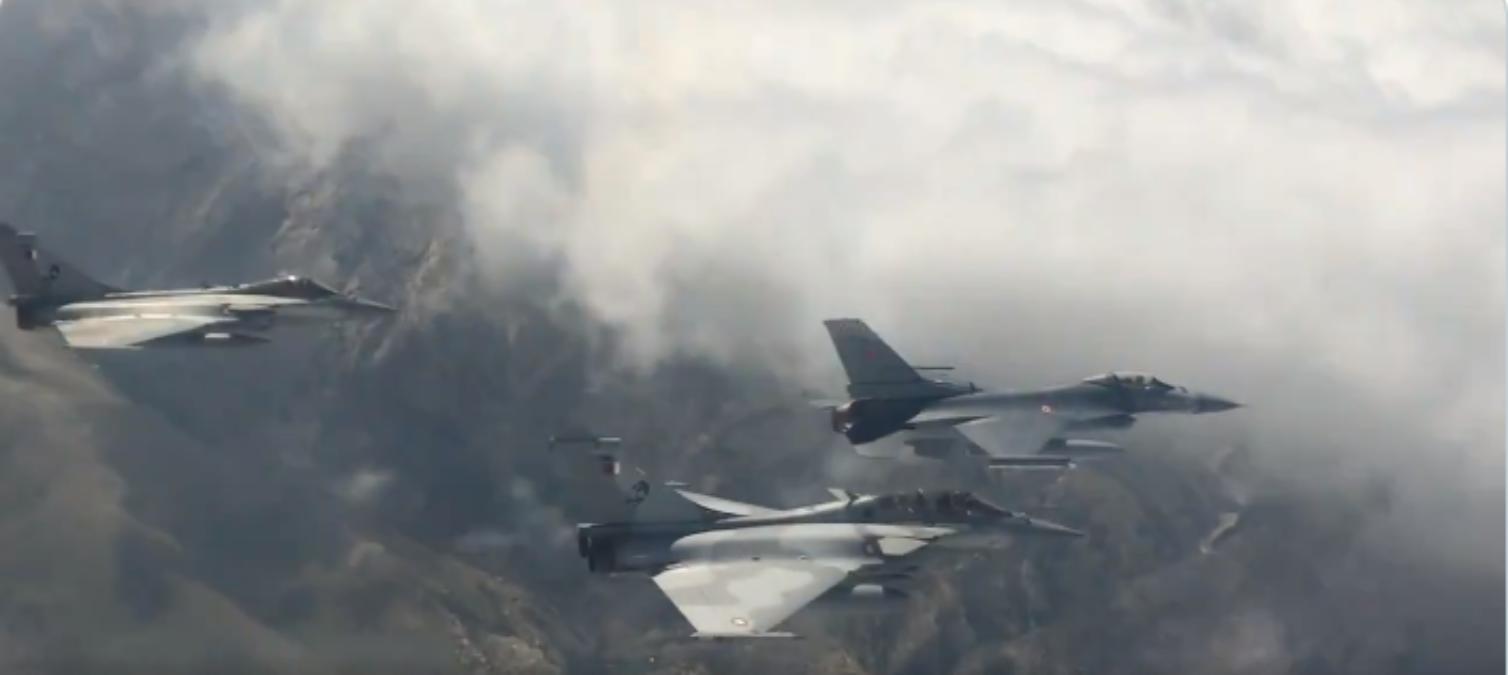
The question became harder to brush aside in August 2024, when Türkiye and Qatar carried out their first joint flights. Turkish and Qatari reporting described a joint air squadron framework involving Qatari Rafales, Eurofighters and Turkish F-16s. At minimum, the arrangement created a shared operational environment.
None of this proves access to sensitive technical data. It does point to repeated operational contact with a platform Greece treats as strategically important.
The Patriot controversy has given the concern a new opening. PASOK asked Defence Minister Nikos Dendias whether Greece transferred 40 to 50 Patriot interceptor missiles from Tanagra air base to Qatar, and if so, under what terms. The party also sought clarification on whether the missiles were intended for Qatari systems or for US batteries at Al-Udeid Air Base, where roughly 10,000 US personnel are stationed.
Greek authorities have not confirmed any such transfer. Even so, the parliamentary dispute has opened a wider conversation. Once the Qatar file is pulled into domestic politics, attention quickly shifts from Patriot stocks to the broader Turkish military footprint in the emirate and, with it, to the Rafale question.
Türkiye has maintained forces in Qatar since 2015, with the Tariq bin Ziyad base south of Doha able to host up to 3,000 personnel. The deployment expanded during the 2017 Gulf crisis, when Saudi Arabia, the United Arab Emirates, Bahrain and Egypt severed ties with Doha. In the Neostrategy.gr account, the presence is still described in overtly political terms. What matters more now is that the partnership has matured into a long-term military relationship with an air component that draws closer scrutiny in Greece.
The issue is no longer confined to Patriots or Gulf deployments. The sharper question being asked in Greek security circles is whether Türkiye's partnership with Qatar is giving its air force a practical familiarity with the aircraft Greece sees as most valuable in its own order of battle.
***This analysis is based on reporting by Greek outlet Neostrategy.gr and open-source reporting on Türkiye-Qatar military cooperation. Greek authorities have not confirmed the alleged Patriot transfer.
Source: Neostrategy.gr