
By Bosphorus News Defense Desk
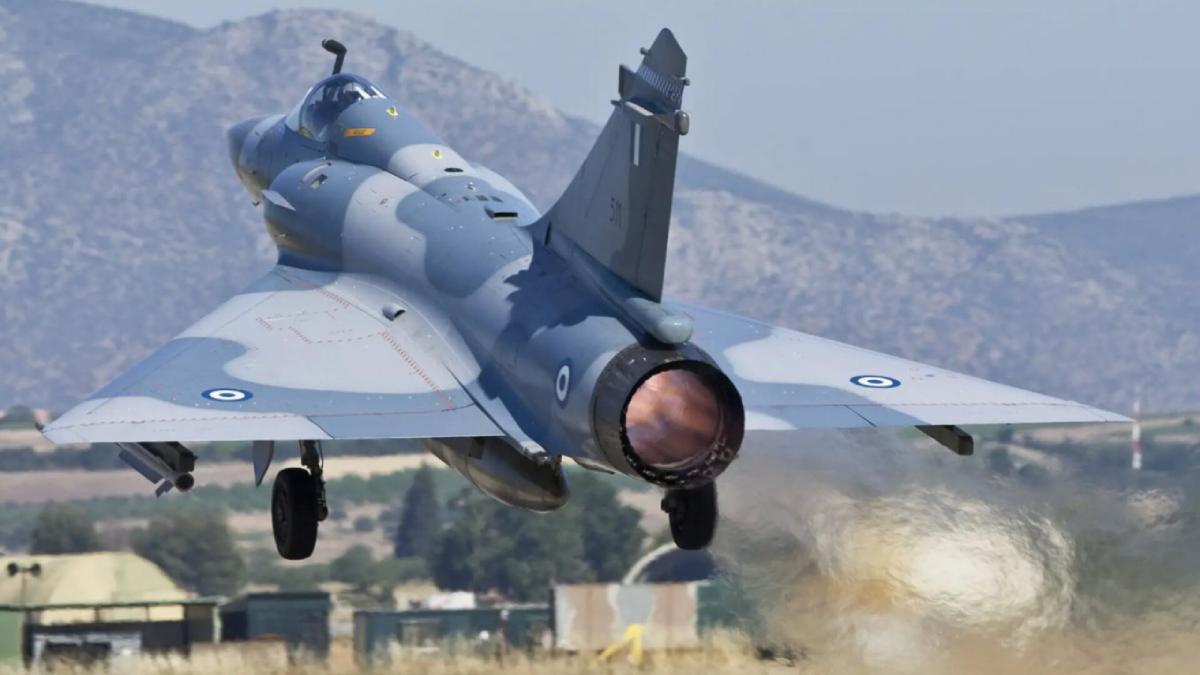
France is pressing Greece to consider transferring its Mirage 2000 fleet to Ukraine ahead of President Emmanuel Macron's April 24 visit to Athens, with Rafale incentives reportedly part of the discussion, according to Greek media. The proposal has not been officially confirmed by either government, but it has brought a sensitive question back into focus in Athens: whether moving the Mirage fleet now would create a gap in the Hellenic Air Force before replacements arrive.
The core reporting comes from eKathimerini, which said in early April that French officials had intensified pressure on Athens and that more favorable Rafale terms were among the options under discussion. Follow-on defence outlets then pushed the story further, circulating a more detailed version under which Greece would part with its full Mirage inventory, including active Mirage 2000-5 Mk II aircraft and older Mirage 2000 EGM/BGM models already retired from service, in exchange for discounted replacement Rafales. That more expansive version remains unconfirmed. French pressure is visible. The final shape of any offer is not.
Why Athens Is Still Holding Back
Athens has clear reasons to resist. The Mirage 2000-5 fleet still holds real value inside the Hellenic Air Force because of its Exocet compatibility and its place in Aegean anti-ship and intercept missions. Greece may already be planning for the aircraft's eventual exit, but timing is the issue. A fleet phased out on a controlled national schedule is one thing. A fleet transferred out under outside pressure before replacements arrive in matching numbers is another.
That is where the 2027 maintenance deadline becomes important. The support contract for the active fleet is due to expire then and is not expected to be renewed. Paris can point to that date and argue that the Mirages are approaching the end of their Greek service life anyway. Athens sees the same deadline differently. The aircraft still cover specific mission requirements, and the sequencing already built into Greek planning is Rafale, F-16 Viper and then F-35, not an accelerated wartime transfer shaped by Ukraine's immediate needs.
The production timeline makes the French case harder to absorb. Even with favorable pricing, replacement does not mean immediate delivery. Rafale output remains limited, and an order on paper would still leave a gap between transfer and full reconstitution. Greece's 24 Rafale F3R aircraft already in service would carry more weight during that period, while the F-16 Viper fleet would absorb part of the burden without fully replacing the Mirage profile, particularly in the anti-ship role. Greece would be accepting a thinner force structure before a stronger one emerges.
Domestic politics add another obstacle. Greece has already supplied certain systems and munitions to Ukraine, but sending combat aircraft into an active war would cross a different threshold. That decision would be harder to manage in parliament and harder to sell to the public than previous support packages. Athens has shown little appetite for opening that front on Paris's timetable.
The Transition Window Türkiye Is Watching
This is where the issue starts to matter directly for Türkiye. In March, Türkiye and the United Kingdom signed a Eurofighter Typhoon training and support agreement that moved the programme beyond a procurement announcement and into operational preparation. Under the arrangement, BAE Systems is set to provide spares, simulators, electronic warfare systems, pilot training and a three-year technical support package, while the Royal Air Force is expected to train Turkish instructor pilots and maintenance personnel. First deliveries are scheduled for 2030.
The timeline is the real pressure point. If Greece were to move Mirages out before replacement Rafales arrived in sufficient numbers, the Hellenic Air Force would enter a transition period with less frontline mass. Türkiye's Typhoons would still be years away, but Ankara would be watching a narrower Greek air posture take shape well before 2030. The shift would come from Greece's replacement sequence rather than from any abrupt Turkish jump in airpower.
A Mirage Deal Would Not Stay a Narrow Question
The Mirage file also lands inside a broader political reading in Ankara. At the Antalya Diplomacy Forum on April 19, Foreign Minister Hakan Fidan said the defence agreements linking Israel, Greece and Cyprus amount to "a military alliance against Muslim countries in the region," adding that Ankara had received no assurances that this alignment was not directed at Türkiye. Greece's Foreign Ministry answered the same day by saying it owed no explanations to anyone regarding its foreign policy choices. As previously reported by Bosphorus News, that exchange sharpened a Turkish argument that separate bilateral and trilateral defence tracks in the Eastern Mediterranean are beginning to point in the same direction.
Macron's Athens visit arrives inside that atmosphere. France already has a strategic defence relationship with Greece and has signed a separate partnership with Cyprus, expanding its military footprint in the Eastern Mediterranean beyond one bilateral axis. These are not identical arrangements and they do not form a single formal bloc, but Ankara is not reading them in isolation. It is reading the accumulation.
That is why the Mirage question cannot be reduced to a procurement discussion. The issue for Türkiye is larger than whether France eventually finds a formula that moves Greek aircraft toward Ukraine. The more consequential question is whether deeper Western defence coordination with Greece and Cyprus, Türkiye's exclusion from the European Union's SAFE defence funding mechanism and its continued absence from the F-35 programme are together creating a structural imbalance across the wider regional theatre. A Mirage deal would not settle that question, but it would show where pressure is being applied and where strain could emerge.
Greece has not agreed to transfer its Mirage fleet, and neither Paris nor Athens has officially confirmed the more detailed versions of the proposal circulating in Greek and defence media. That uncertainty matters, but it does not cancel the signal already visible in the story. France is pressing Athens to move faster than Athens appears willing to move. The larger issue now is whether Greece can hold to its own replacement schedule while pressure grows around Ukraine's immediate air requirements.
The Mirage fleet will leave Greek service sooner or later. The question is whether that happens on Athens's terms or on a timetable shaped elsewhere, and what opens in the period before replacements are fully in place. In the Aegean, that interval matters more than the headline number of aircraft because that is where the military effect would be felt first while Türkiye will be watchign closely.
***French pressure on Greece to consider a Mirage transfer is based on Greek media and independent sources reporting; subsequent defence outlet amplification. No official confirmation has been issued by either government. Türkiye's Eurofighter programme details are drawn from the March 2026 BAE Systems announcement. The airpower assessment here is based on open-source fleet and procurement data, not on official threat assessments.