
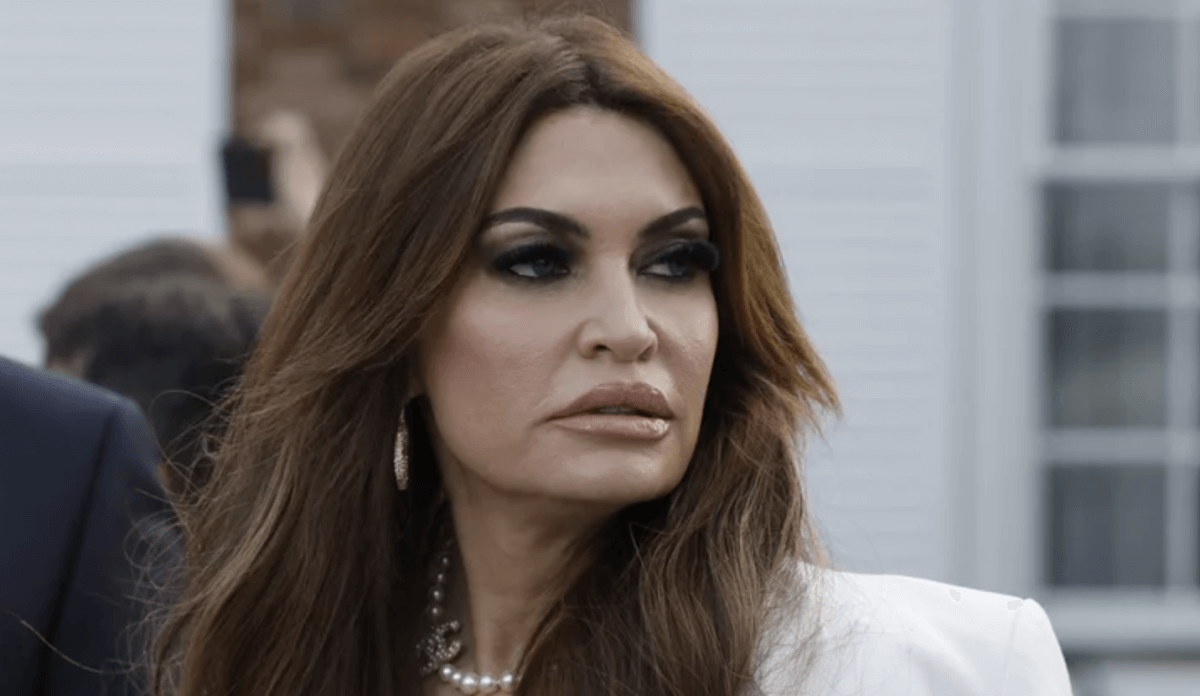
The interview given by the US Ambassador to Greece, Kimberly Guilfoyle, to the Athens–Macedonian News Agency and journalist Sofia Papadopoulou, on the occasion of her first visit to Thessaloniki, initially appears to be a standard introductory statement by a new head of a diplomatic mission. Yet behind the conventional diplomatic language, a far more political and strategic agenda emerges—one that goes beyond the narrow framework of bilateral relations and fits into a broader architecture of repositioning the American presence in the Balkans and the Eastern Mediterranean. It is not only Greece that is being introduced to the new ambassador; rather, it is the new United States—shaped by Donald Trump and his political environment—that is being presented to Greece.
A central pillar of Kimberly Guilfoyle's intervention is the promotion of Greece as a strategic energy hub. Her wording is not merely descriptive but almost binding: the country is presented as a critical corridor for Europe's energy supply under American influence, with particular emphasis on LNG and the role of Alexandroupoli, the Vertical Corridor and the ports of Northern Greece. When the ambassador repeatedly stresses that "energy independence equals national security" and directly links the example of Ukraine to US initiatives for supplying it through Greek infrastructure, she is not merely describing the present; she is outlining the framework within which Athens is expected to move in the years ahead. Greece's energy "upgrade" thus emerges simultaneously as both an opportunity and a commitment.
The same framework also includes the announcement of a new "3+1" meeting in Washington, focused on energy, to be held in the first quarter of 2026. Guilfoyle presents the partnership between Greece, Cyprus, Israel and the United States as a tool of stability and connectivity, without making any explicit reference to Turkey. The absence of Ankara from the ambassador's rhetoric is perhaps just as revealing as what is said: Greece is projected both as a "safe pair of hands" for US policy in the region and as the recipient of an agenda that combines energy, military capabilities, logistics infrastructure and, increasingly, artificial intelligence.
The emphasis on Northern Greece functions as a second, equally critical message. Thessaloniki is not presented merely as a dynamic regional center, but as an emerging technological hub where energy infrastructure, data centers, cloud systems and the presence of American companies converge. The ambassador's assertion that "whoever controls energy will also control AI" encapsulates the new doctrine: artificial intelligence is no longer treated as a purely technological or business field, but as an extension of geopolitical power. Within this framework, Northern Greece emerges as a priority destination for US investments, with Athens remaining the political center while now sharing strategic weight with a second, powerful northern pole.

© NASA
The investment dimension highlights the third level of the interview. Kimberly Guilfoyle speaks of a "strong appetite for investment" from American companies and refers to meetings with institutions and business representatives from Northern Greece, stressing that Greece currently stands at a moment of "enormous opportunities." At the same time, however, she clearly defines the conditions: predictability, stability and a clear strategic direction for the country. This is a message with a double audience. Toward the government, the ambassador is effectively calling for continuity and consistency in the choices already made in the fields of energy, defense and infrastructure. Toward the opposition, the implicit message is that any attempt to overturn core energy or strategic projects would act as a deterrent to American investment.
The interview, however, is not confined to the "hard" agenda. Guilfoyle devotes substantial attention to the religious dimension and to human security, describing with particular warmth her meeting with the Metropolitan of Thessaloniki Philotheos and her visit to the Church of Saint Demetrios. Her reference to religious freedom as a core element of Donald Trump's political platform, combined with links to initiatives addressing domestic violence and the empowerment of women, highlights a different but equally political aspect of the American presence. The ambassador is not seeking only to engage with the state apparatus, but to build networks of influence through the Church, local communities and civil society, following a classic model of soft power.
Similarly, the reference to the Holocaust Museum of Greece and Freedom Square, as well as the close engagement with the president of the Central Board of Jewish Communities in Greece and the Jewish Community of Thessaloniki, David Saltiel, place Thessaloniki within a broader US–Greece–Israel axis. Guilfoyle appears determined to actively support the implementation of the memorial projects, even through fundraising initiatives, linking the city's historical dimension with its contemporary geopolitical role. In this way, Thessaloniki is presented not only as an energy or technological hub, but also as a center of historical memory and cultural diplomacy, with clear references to Washington's strategic priorities.
At the geopolitical level, the ambassador repeatedly returns to the role of Donald Trump, presenting him as a leader capable of "ending wars," from Ukraine to Gaza. Regardless of whether one agrees with this portrayal, the fact that Guilfoyle chooses to articulate this line so explicitly in a Greek media outlet—and in particular through the national news agency—is indicative. It sends a clear signal to Athens that US foreign policy, as she perceives it, will take on a more personalized, direct and demanding character. Greece is cast as a stable ally, yet at the same time is called upon to prepare for an environment in which major decisions will be taken at a rapid pace and under the pressure of successive crises.
Finally, Guilfoyle's personal narrative—her references to the "American dream," her past as a prosecutor, and the path that led her to become the first female US ambassador to Greece—functions as a tool for personalizing governance and diplomacy. The ambassador does not appear as an abstract institutional representative, but as a political figure with a clear ideological identity, seeking to build capital in popularity and public recognition in the host country. This, in turn, foreshadows a term during which the US Embassy is likely to maintain a more visible public presence and assume a more active role in areas that go beyond the traditional diplomatic agenda.
The overall picture that emerges from the interview is not simply one of a warm embrace between Greece and the United States. It is the mapping of a denser, more demanding relationship, structured on multiple levels: energy and Artificial Intelligence, investment and regulatory stability, religious diplomacy and Holocaust memory, the strategic role of Northern Greece and Greece's upgraded position in the Balkans and the Eastern Mediterranean. The question for Athens is not whether it will make use of the opportunities outlined by Guilfoyle, but to what extent it will be able to do so autonomously, balancing between American expectations, European commitments and domestic political constraints. This interview reads less as a courtesy introduction and more as the prelude to a new phase in Greek–American relations, in which the stakes will be at once more tangible and more complex.
***The original article by IBNAEU is available here:
Greece, Energy and AI: What Kimberly Guilfoyle's message from Thessaloniki really signals