
By Bosphorus News Defense Desk
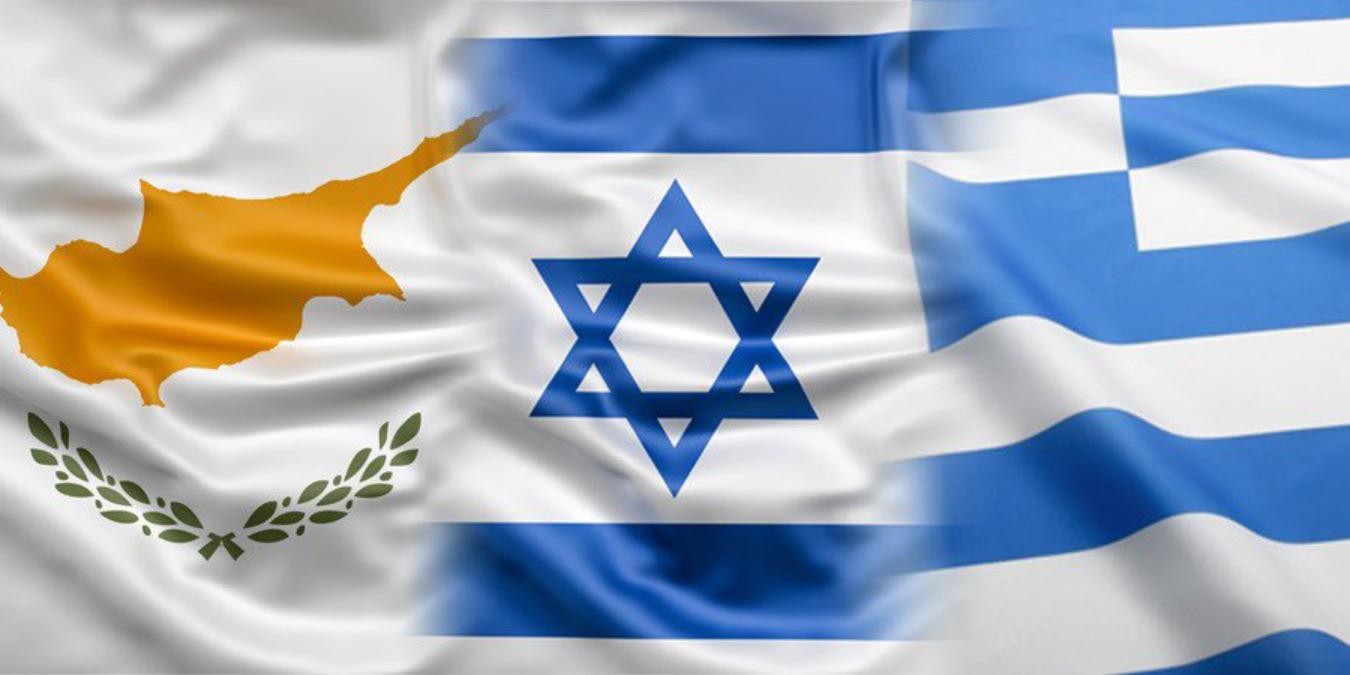
Senior military officials from Greece, Cyprus, and Israel signed two formal defense documents in Nicosia in late December 2025: a Trilateral Joint Action Plan and a bilateral Greece-Israel Military Cooperation Programme for 2026. The Israeli delegation was led by Brigadier General Amit Adler, head of the IDF's International Cooperation Division. His Greek and Cypriot counterparts signed on behalf of the Hellenic National Defence General Staff and the Cypriot National Guard respectively.
The signing followed the 10th Trilateral Summit in Jerusalem on December 22, where Israeli Prime Minister Benjamin Netanyahu hosted Greek Prime Minister Kyriakos Mitsotakis and Cypriot President Nikos Christodoulides. The agreements were formally announced by the IDF on December 28 and confirmed by the Hellenic National Defence General Staff the following day.
What the Pact Covers
The Joint Action Plan commits the three armed forces to joint air and naval exercises, Special Operations Forces training, staff level meetings, and strategic dialogue on shared security challenges. It also includes the transfer of Israeli operational know-how to Greece and Cyprus to address both asymmetric and conventional threats, covering areas such as drone countermeasures, electronic warfare, and C4I command-and-control infrastructure.
Two specific exercises are already confirmed. Israeli fighter jets will return to Greece for the Iniochos air exercise for the first time since 2023. Greece will also join Israel's Noble Dina naval exercise in the eastern Mediterranean. Aerial refueling maneuvers south of Crete and coordinated naval and special operations activities across the Aegean and Levantine seas are also planned.
Speaking on December 29, Cyprus Defence Minister Vasilis Palmas confirmed that trilateral exercises will form part of the Cypriot National Guard's 2026 activity calendar, with similar joint exercises also planned with Egypt and Jordan.
Arms Procurement Running in Parallel
The military pact is running alongside a significant and accelerating Greek and Cypriot weapons procurement drive anchored in Israeli technology. Cyprus received its first batch of IAI's Barak MX surface-to-air missile systems in December 2024, a procurement initiated in 2021 and valued at hundreds of millions of euros. In Greece, the parliament approved the purchase of 36 PULS rocket artillery systems from Elbit Systems in December 2025, in a deal valued at 650 to 700 million euros, confirmed by Reuters. The systems are to be deployed along Greece's northeastern border with Türkiye and on Aegean islands. Athens is simultaneously negotiating a broader Achilles Shield air and missile defence overhaul, a programme estimated at 3.5 billion dollars that would integrate three Israeli systems: Rafael's SPYDER, IAI's Barak MX, and Rafael's David's Sling. If finalised, Greece would become only the second country after Finland to acquire David's Sling. Israel Aerospace Industries acquired Greek firm Intracom Defense in 2023, embedding Israeli defence-industrial capacity directly inside Greece. Initial Achilles Shield deployments are targeted from 2026, with full operational capability by 2028.
The Türkiye Dimension
Netanyahu's remarks at the December 22 Jerusalem summit were pointed. "To those who fantasize they can reestablish their empires and their dominion over our lands, I say: Forget it. It's not going to happen. Don't even think about it," he told the assembled leaders. The statement was widely read as a direct reference to Erdoğan's maritime claims and regional posture.
The trilateral partnership has been built in part as a counterweight to Türkiye's expanding footprint in the Eastern Mediterranean. Greece and Türkiye have long disputed maritime boundaries in the Aegean. Cyprus's relationship with Ankara remains shaped by the island's division and unresolved sovereignty disputes.
Analysts at the Foundation for Defense of Democracies described the pact as a signal to Ankara. "This trilateral meeting should be a wake-up call to Ankara," said Sinan Ciddi of the FDD. "This is not a threat but an opportunity for Türkiye to reconsider its posture."
The Cypriot government was careful to soften the message, with officials stating publicly that Nicosia has no intention of provoking Türkiye or escalating verbal tensions.
NATO Cohesion Question
The deepening axis raises a structural question within NATO. Greece and Türkiye are both alliance members. Israel is not. A security architecture that draws Greece and Cyprus closer to Israel while explicitly framing Türkiye as the threat reference point creates friction that NATO has not yet formally addressed.
Washington has backed the trilateral framework, viewing it as a stabilising factor against Russian influence in the Mediterranean and a check on what US analysts describe as Türkiye's 'unpredictable behaviour' within the alliance.