
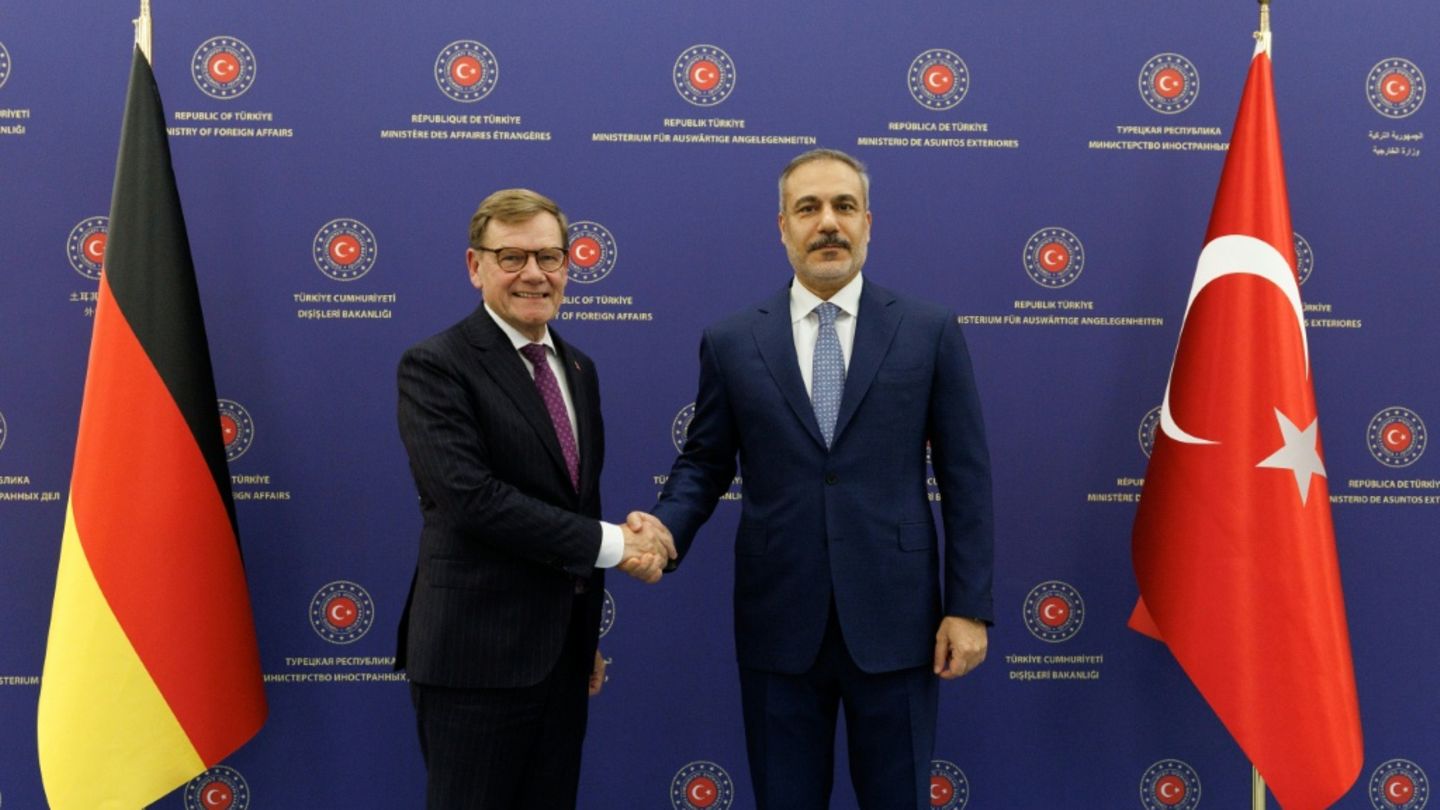
In a major diplomatic breakthrough that signals a potential thawing of strained relations, Türkiye's Foreign Minister Hakan Fidan completed a pivotal bilateral visit to Berlin, successfully securing Germany's public endorsement for Ankara's immediate inclusion in new European Union defense structures.
The core of Fidan's message, delivered during a joint press conference with German counterpart Johann Wadephul, was twofold: an appeal for the EU to reignite the accession process with genuine "political will," and a firm demand that Ankara, as a vital NATO ally, can no longer be excluded from the bloc's multi-billion Euro defense architecture.
The €150 Billion Defense Gambit
The most concrete point of friction addressed was Türkiye's exclusion from the EU's flagship defense procurement plan, the SAFE programme, which is backed by a budget of approximately €150 billion (or $173 billion). This fund is designed to strengthen Europe's post-Ukraine war defense industry and capabilities.
Minister Fidan argued that European security is fundamentally "incomplete" without the full, integrated involvement of Ankara. The ongoing conflict in Ukraine has exposed serious weaknesses in the continent's defense industrial base, an area where Türkiye's robust, advanced sector could offer immediate and crucial contributions.
In a move that surprised many observers, German Foreign Minister Wadephul publicly and unequivocally backed Ankara's demand, calling for the immediate opening of the SAFE programme to key non-EU allies.
"I firmly believe the EU's SAFE program must be opened to Türkiye and the United Kingdom as important NATO partners," Wadephul stated, emphasizing that Türkiye has always been a "very reliable and stable NATO partner."
Wadephul further described Türkiye as an important "geostrategic partner," confirming that constructive talks are underway between Berlin, Ankara, and Brussels to formalize this inclusion. This strong German support is seen as the most significant boost to Türkiye's defense agenda within the EU framework in years, aligning with Germany's stated policy of taking the bilateral relationship to a "new level" focused on security cooperation.
A Call for Political Will on Membership
While defense cooperation saw swift progress, Fidan used the platform to issue a challenge to the entire European bloc regarding the stalled accession talks. He reiterated President Recep Tayyip Erdoğan's clear commitment to joining the EU, stating that "Now it is the EU's turn."
Fidan differentiated between the procedural elements of the accession process and the political hurdles, noting that the objective process has been derailed by the "political and ideological attitudes" of certain member states.
"What matters for us is the revival of political will in Europe for Türkiye's EU membership; once that happens, the rest will be resolved," Fidan asserted, demanding that the EU "must take steps."
Beyond the symbolic act of reviving membership talks, the ministers also engaged in crucial discussions aimed at practical steps for integration, including the much-needed modernization of the Türkiye–EU Customs Union and progress toward visa liberalization for Turkish citizens traveling to the Schengen area.
Fidan's successful visit underscores Ankara's strategy of leveraging its essential NATO defense role and economic potential to force a recalibration of its complex relationship with Brussels, using key bilateral partners like Germany to advance its agenda.