
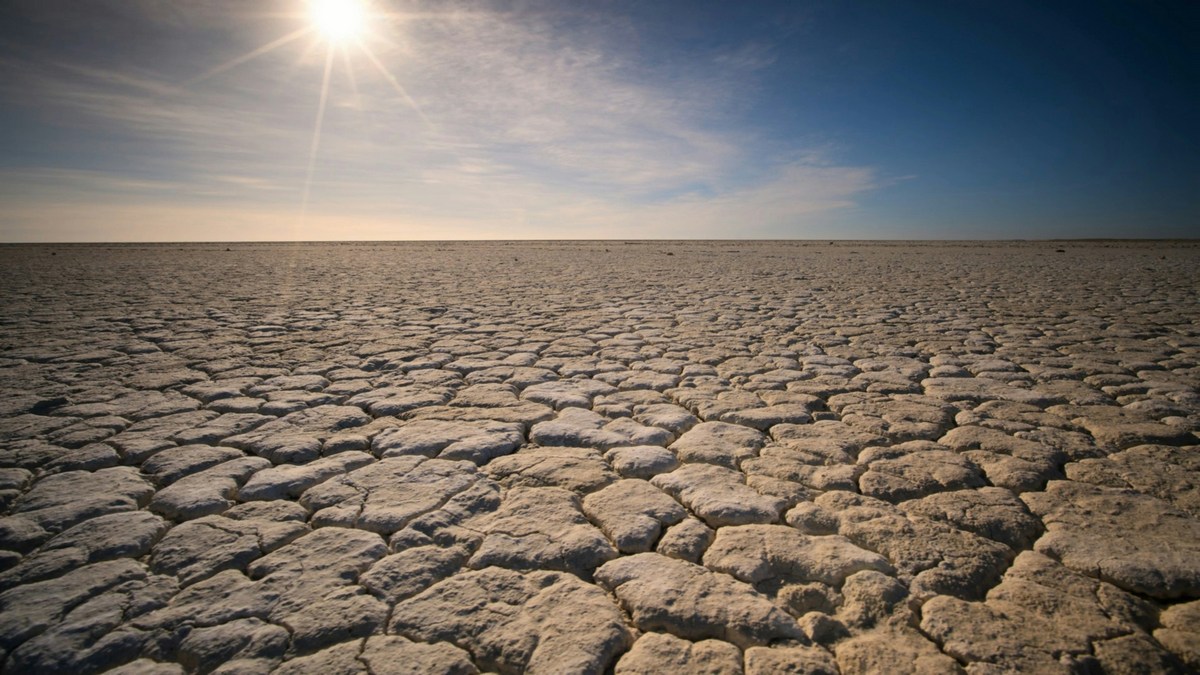
A recent report led by the UN University Institute for Water, Environment and Health (UNU-INWEH), in coordination with the Global Commission on the Economics of Water, argues that the prevailing language of "water crisis" no longer captures the scale or permanence of global water stress. Its conclusion is direct. In many major basins, scarcity is no longer temporary or reversible. These systems have entered a condition the report defines as "water bankruptcy".
The intervention is conceptual but anchored in physical limits. The report separates episodic scarcity from structural insolvency. Water bankruptcy describes basins where demand persistently exceeds sustainable supply, governance mechanisms fail to halt depletion, and ecosystems lose the capacity to recover within meaningful timeframes. These systems are not strained. They are exhausted.
In Türkiye's case, the distinction translates directly into policy constraints rather than language.
The limits of crisis-based water policy
For decades, water policy rested on the assumption that shortages were episodic. Droughts were treated as shocks. Recovery was expected once rainfall normalised or emergency measures expired. The report rejects this assumption.
In water-bankrupt basins, extraction has crossed thresholds that cannot be reversed through incremental efficiency gains or infrastructure expansion. Frameworks that continue to promise restoration misread hydrological conditions and delay adjustment. The outcome is not resilience, but postponed insolvency.
WASH and the boundaries of the global water agenda
The report does not dismiss WASH priorities. WASH refers to water, sanitation, and hygiene, the framework underpinning access to safe drinking water, sanitation services, and basic public-health protection. These remain essential.
The critique is structural. WASH does not address where most water is consumed, depleted, or rendered unusable. Groundwater over-extraction, agricultural demand, energy–water trade-offs, and ecosystem degradation sit largely outside the WASH-centred agenda.
As a result, access indicators can improve even as entire water systems deteriorate. The report identifies this gap as a core weakness of current global water governance, particularly in semi-arid regions.
Groundwater as the point of irreversibility
Aquifers occupy a central place in the report's diagnosis. Groundwater provides buffering capacity during dry periods, yet it is being depleted faster than natural recharge across large parts of the world.
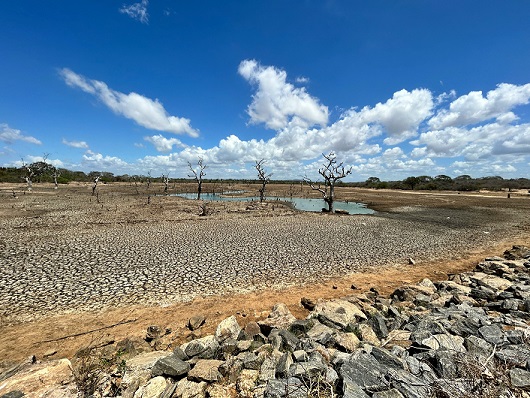
In Türkiye, these dynamics are already visible across multiple basins. Prolonged over-pumping has driven persistent declines, producing land subsidence, salinisation, and long-term productivity loss. These effects do not reset with rainfall. Once an aquifer collapses or becomes saline, recovery is either impossible or economically prohibitive.
Groundwater depletion accumulates quietly. Political response tends to arrive after options have narrowed.
Agriculture and locked-in demand
The report notes that roughly 70 percent of global freshwater withdrawals are driven by agriculture, making it the primary pressure point in water-bankrupt basins.
Water-intensive crop patterns, irrigation inefficiencies, and pricing structures that reward volume rather than sustainability lock demand into trajectories that exceed long-term availability. In semi-arid climates, this is not cyclical stress. It is cumulative depletion.
Water bankruptcy, in this sense, is produced by demand profiles that policy has been unwilling to confront.
Anthropogenic drought in the Eastern Mediterranean
A central analytical contribution of the report is its emphasis on anthropogenic drought. Here, anthropogenic refers to water scarcity generated primarily by human activity—over-extraction, misallocation, and pollution—rather than by climatic variability alone.
In the Eastern Mediterranean, climate variability remains relevant, but institutional and economic drivers increasingly shape outcomes. Under these conditions, adaptation measures are insufficient. Enforcement, reallocation, and political trade-offs become unavoidable.
When rivers fail to reach the sea
The report identifies the failure of rivers to reach the sea as a critical but under-recognised indicator of water bankruptcy. Reduced surface flows disrupt sediment transport, alter salinity balances, and degrade coastal ecosystems.
In the Aegean and Eastern Mediterranean, inland depletion increasingly registers at sea. Agricultural water use inland translates into marine stress in ecologically and politically sensitive zones, without requiring formal transboundary disputes.
Water quality and phantom supply
Water quantity statistics increasingly overstate real availability. Pollution, salinity, and untreated wastewater reduce the volume of water that can be safely used.
The report highlights the widening gap between nominal supply and functional water. This hidden scarcity complicates planning and allocation well before it becomes visible in headline indicators.
Food systems and indirect exposure
More than half of global food production now depends on regions experiencing declining water storage. The report treats food trade as a transmission channel for hydrological risk.
Exposure therefore extends beyond domestic basins. Import dependence, price volatility, and supply disruptions increasingly reflect water depletion elsewhere, embedding external hydrological stress into food systems.
Water bankruptcy as a security multiplier
The report frames water bankruptcy as a multiplier rather than a standalone threat. Persistent scarcity raises the likelihood of displacement, social strain, and regional tension.
Where governance capacity is uneven, water stress compounds existing fragilities. Environmental depletion and political instability reinforce each other rather than remaining separate domains.
Governing insolvency rather than managing crises
The report's policy message is unambiguous. The objective of returning to normal is no longer viable in water-bankrupt basins.
Governance shifts from crisis response to managing permanent limits. Demand reduction, sectoral reallocation, enforcement against illegal extraction, and managed transitions for affected communities move to the centre of policy.
Türkiye at the Core, Basins in Motion
Exposure to water bankruptcy is uneven and interconnected. Groundwater-dependent agricultural basins form the primary stress points. The Konya Plain is the most visible case, but similar dynamics extend across Central Anatolia, the Aegean hinterland, and parts of the GAP region.
Scarcity in these areas is no longer seasonal. Allocation patterns have hardened, keeping withdrawals high even as marginal returns decline and aquifers deteriorate.
Inland depletion and coastal pressure
Inland water insolvency does not remain inland. Weakened surface flows and collapsing groundwater buffers alter downstream and coastal systems.
Reduced discharge affects sediment transport, salinity, and marine ecosystems. Agricultural decisions taken far from the coast increasingly shape maritime environments.
The Black Sea's quiet exposure
The same logic applies to the Black Sea basin, often treated as hydrologically insulated. Upstream extraction, pollution, and climate variability introduce cumulative risk.
Trade routes, energy corridors, and food logistics depend on basin stability. Water degradation here carries strategic weight despite limited visibility in policy debates.
Interlinked basins, uneven risk
The Aegean, Eastern Mediterranean, and Black Sea differ in hydrology but are connected through trade, food systems, migration, and climate spillovers. Water bankruptcy propagates without requiring direct hydrological continuity.
Domestic water stress increasingly intersects with regional stability, narrowing policy space even in the absence of formal transboundary conflict.
From managed scarcity to binding limits
The report leaves little room for interpretive comfort. In water-bankrupt systems, the issue is no longer restoration but allocation: who absorbs adjustment costs, which sectors contract first, and how loss is governed rather than postponed. Water shifts from an environmental background condition to a binding constraint that reshapes economic choices, agricultural priorities, and governance capacity well before it produces open crisis.