
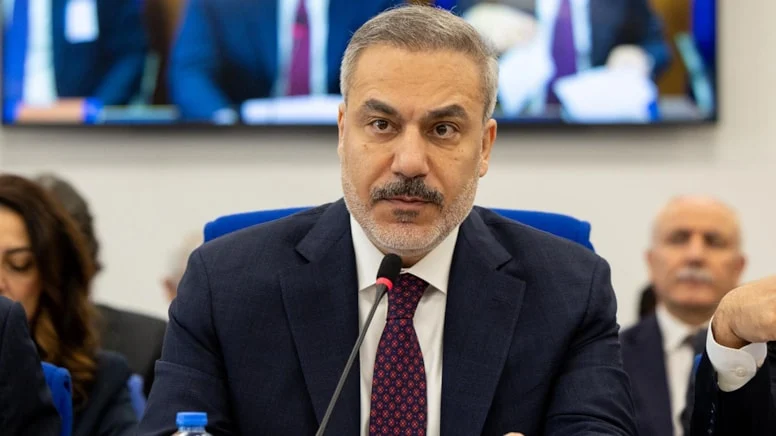
Foreign Minister Hakan Fidan delivered a stark warning this week, highlighting that Israeli military activity in Syria is complicating efforts to implement a key peace agreement and encouraging hesitation among Syrian Kurdish forces, known as the SDF. Türkiye considers the SDF closely linked to the PKK/YPG. Fidan emphasized that external influences risk derailing a fragile transition toward peace and unity in Syria.
He drew a direct connection between the intensity of Israel's movements in Syria and the SDF's reluctance to move forward with the March 10 accord, which envisages integrating armed elements into Syria's national military under Damascus' authority. "There is a relationship, a proportion, between Israel's activity in Syria and the SDF's unwillingness. This is not a decision the YPG took on its own," Fidan stated.
The minister reiterated that the core goal for Türkiye remains regional stability and the prevention of renewed conflict. At a recent conference on Syria's recovery and reconstruction, he stressed that a unified national army under state control is essential and warned that dual armed formations could lead to chaos.
While Ankara supports integrating the SDF into Syria's state structures, Fidan voiced frustration that progress has stalled and warned of the dangers of allowing external actors to exacerbate tensions. He expressed hope that dialogue between Damascus and the Kurdish forces—independent of outside influence—could offer a pathway to lasting peace that benefits both Syrian Kurds and Arabs.
Türkiye's position complements its broader diplomatic efforts: Fidan has repeatedly underscored Ankara's calls for respect for international borders and an end to policies perceived as destabilizing the region, including Israeli activities in Syria. Türkiye does not seek direct confrontation with Israel but insists that security arrangements respect the sovereignty and unity of regional states.
The March 10 accord, promoted as a potential foundation for Syria's political stabilization, has yet to be fully implemented. Ankara continues to press for renewed focus on its provisions as part of a broader peace architecture. Fidan also highlighted Türkiye's role in facilitating the safe and voluntary return of hundreds of thousands of Syrian refugees, and its ongoing coordination with Damascus on reconstruction and reintegration efforts.
Context and Diplomatic Balance:
Fidan's statements reflect Ankara's long‑standing priorities: opposing fragmentation along ethnic lines, advocating for a single national military structure in Syria, and resisting what Türkiye sees as the instrumentalization of armed groups by external powers. At the same time, Türkiye anchors its diplomacy in political dialogue and regional cooperation to prevent renewed war and support reconstruction.