
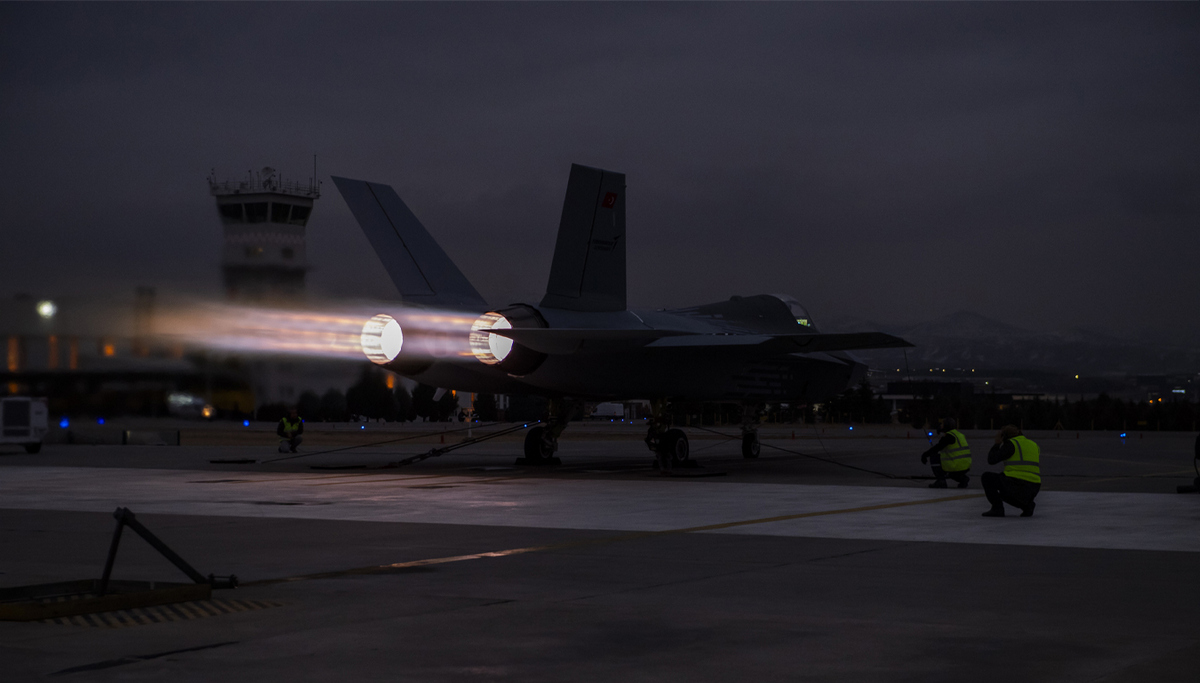
Türkiye has confirmed the delivery of the first batch of engines for its national combat aircraft KAAN, marking a practical step forward in the programme's testing and development schedule while parallel efforts continue on a domestic engine solution for later phases.
Defence Minister Yaşar Güler stated that 10 F110 turbofan engines have been delivered for use in KAAN's early prototypes and test activities. The engines will support ongoing ground and flight tests as the aircraft moves through successive development milestones.
Deliveries and Ongoing Talks
Officials underline that the delivered engines are intended specifically for the initial testing and validation phase of KAAN. Discussions with international partners are continuing regarding further deliveries, with Ankara stressing the importance of maintaining an uninterrupted testing and production schedule.
At the same time, Turkish authorities frame the current arrangements as transitional, emphasizing that foreign-supplied engines are a short- to medium-term solution rather than a permanent dependency.
Focus Shifts to the Local Engine
In parallel with engine deliveries, Türkiye is accelerating work on a homegrown turbofan engine for KAAN. Development efforts are being led by TEI, with coordination from Turkish Aerospace Industries.
Officials have reiterated that a clear timetable is in place for the domestic engine programme, which is expected to power later blocks of the aircraft once testing and certification phases are completed. The local engine project is presented as a strategic investment in long-term sustainability, industrial capability, and export flexibility.
Programme Context
KAAN is designed to form the backbone of Türkiye's future air combat capability and to gradually replace older platforms in the inventory. The aircraft completed its first flight earlier this year, a milestone widely seen as confirmation that the programme has moved beyond the conceptual stage into sustained development.
Defence officials stress that the coexistence of delivered engines for early use and indigenous engine development for the future reflects a phased and realistic programme structure rather than a deviation from long-term goals.
A Measured Outlook
Ankara's messaging remains deliberately balanced: current engine deliveries ensure continuity in testing, while diplomatic and technical work continues on both additional supplies and the domestic alternative. For Turkish defence planners, the priority is maintaining momentum on KAAN without losing sight of the strategic objective—a fighter aircraft ultimately powered by a Turkish-designed engine.
As the programme advances into 2026, further updates are expected on testing schedules, additional engine arrangements, and milestones related to the indigenous propulsion system.