
By Bosphorus News Geopolitics Desk
Foreign Minister Hakan Fidan arrived in Qatar on 19 March for the second stop of a regional diplomatic tour. The Turkish Foreign Ministry confirmed the visit in a written statement without disclosing an agenda.
The timing leaves little doubt about the diplomatic context. Iran struck Qatar's Ras Laffan Industrial City on 18 March, causing fires and what QatarEnergy described as extensive damage to LNG facilities. Qatar's Foreign Ministry declared Iran's military and security attachés persona non grata the same evening and ordered them out of the country within 24 hours.
Fidan had announced the tour publicly on 17 March at a joint press conference with Canadian Foreign Minister Anita Anand: "I will be going on a regional visit starting tomorrow. We will come together with countries in the region to discuss steps that can be taken to stop the war."
Saudi Arabia convened a consultative meeting of Arab and Islamic foreign ministers in Riyadh on 18 March. Twelve countries participated: Azerbaijan, Bahrain, Egypt, Jordan, Kuwait, Lebanon, Pakistan, Qatar, Saudi Arabia, Syria, the United Arab Emirates and Türkiye. The joint statement, published on the Turkish Foreign Ministry's website, was specific. Participating ministers condemned Iran's ballistic missile and drone attacks as deliberate strikes targeting civilian areas, oil facilities, desalination plants, airports, residential buildings and diplomatic premises. The text called on Iran to refrain from any action that would obstruct international navigation through the Strait of Hormuz or threaten maritime security in the Bab el-Mandeb, placing energy supply and sea-lane security inside a diplomatic document that Ankara co-signed.
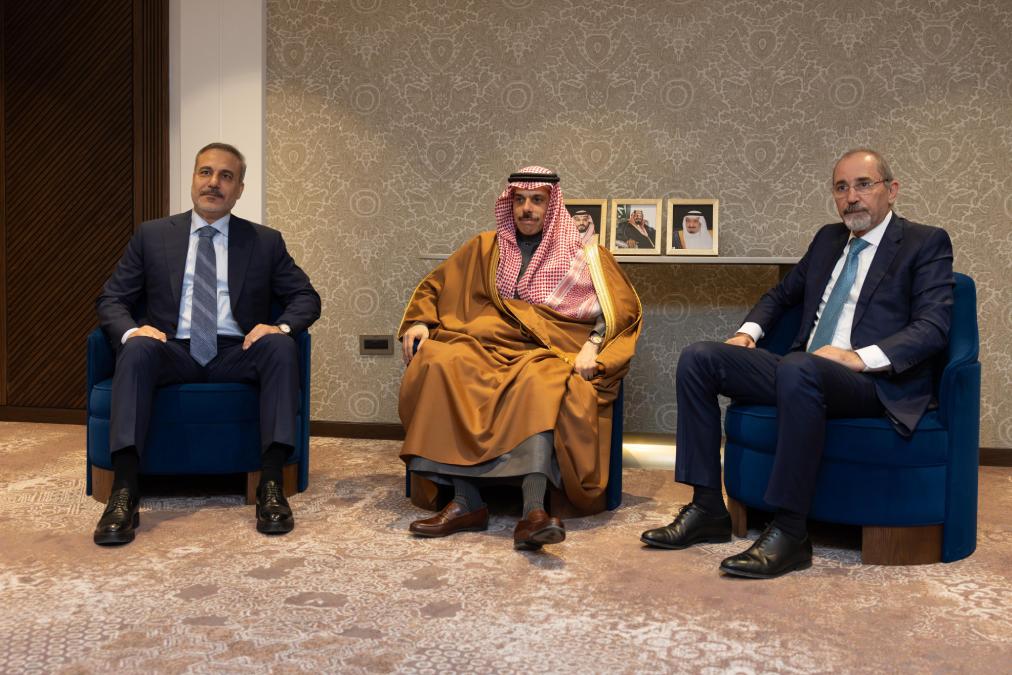
Fidan held bilateral meetings on the sidelines with Saudi Foreign Minister Prince Faisal bin Farhan, Jordanian Foreign Minister Ayman Safadi, Azerbaijani Foreign Minister Jeyhun Bayramov and Pakistani Foreign Minister Ishaq Dar. The contents of those conversations have not been disclosed. What the documents and readouts do not reveal is what Türkiye specifically proposed inside the room: which formula Ankara is pushing, which sequence of steps it is pressing Washington or Tehran to accept, where its own red lines sit.
Ankara has maintained a dual line since the war began on 28 February: condemning US and Israeli strikes on Iran as violations of international law while also rejecting Iran's attacks on Gulf states as unacceptable. Co-signing a multilateral text that condemns Iranian strikes without an equivalent reference to the US-Israeli campaign marks a visible, if unacknowledged, shift in register. A Turkish diplomatic source told Reuters ahead of the summit that Fidan would underline the need for a negotiated and peaceful end to the war, warning that continued conflict risks lasting damage to ties between regional countries. On the question of talks, Fidan told the Associated Press on 14 March that conditions for US-Iran diplomacy were not "conducive" but that he believed Tehran remained open to back-channel engagement.
Türkiye and Qatar co-brokered the Eid ceasefire between Afghanistan and Pakistan on 18 March alongside Saudi Arabia, the same day Ras Laffan was struck. Qatar also hosts the US Al Udeid Air Base, the largest American military facility in the Middle East, which Iran struck directly on 3 March. Qatar's decision to expel Iran's military attachés while receiving Türkiye's foreign minister reflects Doha's effort to consolidate alternative channels as its relationship with Tehran reaches its lowest point since the war began.
Fidan also spoke by phone with Russian Foreign Minister Sergey Lavrov on 17 March. The Russian readout said the two discussed the Iran war and reaffirmed readiness to coordinate on de-escalation, suggesting Ankara is keeping not only Gulf channels but also Moscow open as it searches for a diplomatic off-ramp.
Twenty days into the war, Türkiye has condemned both sides, co-signed a multilateral statement demanding Iran halt its strikes, and is running parallel bilateral diplomacy from Riyadh to Doha to Moscow. What it has not yet produced publicly is a concrete proposal that any party has acknowledged engaging with.