
The European Commission has formally referred Greece to the European Court of Justice over significant concerns about the country's air traffic management performance, marking an escalation in EU oversight of aviation operations in Athens and beyond.
Brussels says that despite repeated warnings and infringement notices, Greece has not sufficiently improved its air traffic control systems, leading to persistent delays and operational inefficiencies that fall short of Union regulatory standards. EU authorities have stressed that efficient air traffic management is essential not only for passenger convenience but also for safety, competitiveness and integration within the broader European aviation network.
Greek officials have accepted the Commission's decision and reiterated their commitment to modernising the national air traffic system, framing the case as part of an ongoing dialogue with EU institutions to strengthen performance, compliance and coordination with EUwide aviation priorities.
Growth in Passenger Traffic and Airport Performance
The referral coincides with a period of significant expansion in European and Greek air travel. Eurostat figures show that air passenger transport across the European Union has recorded continued growth, with several countries — including Greece — achieving double-digit increases in passenger numbers in recent reporting periods, reflecting robust recovery from pandemic impacts.
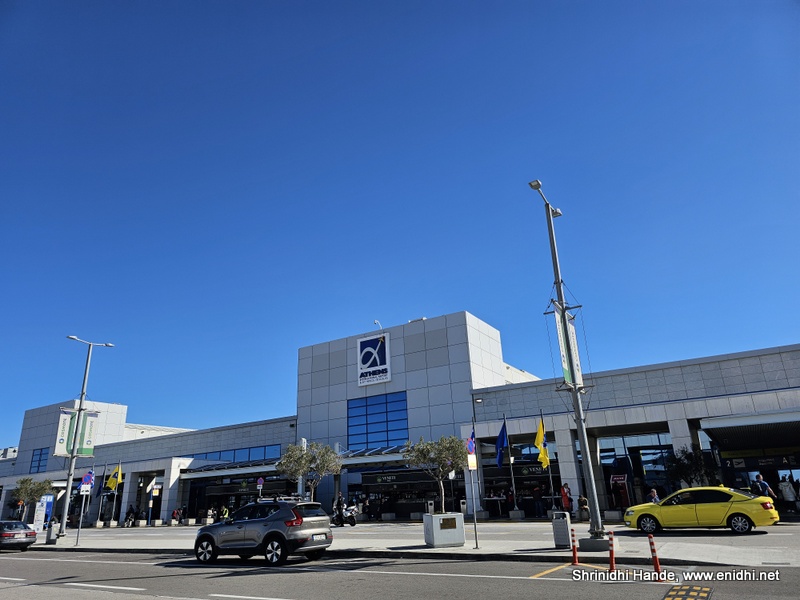
In this context, Athens International Airport (AIA) has posted remarkable results. For the first time, Athens Airport entered the list of the EU's top 10 busiest airports in 2024 by passenger volume, joining major hubs such as Paris, Amsterdam and Madrid. The airport's prominent ranking underscores the increasing importance of Greece's aviation sector in regional and international travel flows.
Passenger traffic at Greek airports overall also shows strong momentum. Data compiled for 2024 indicate that total passenger movements across the country's airports rose by close to 9–10 percent, with Athens serving more than 28 million travellers and the broader network of 39 commercial airports collectively handling nearly 80 million passengers over the year.
Industry analysts say the surge is bolstered by sustained tourism demand, expanded international flight schedules and improved connectivity with markets in Europe, the Middle East and North America.

Operational Strain and Social Tensions
Despite these positive trends, operational challenges persist. Airlines and passenger groups have previously highlighted issues related to air traffic control capacity, staffing shortages and system delays, factors that contributed to the Commission's referral.
At the same time, Greece has faced social tensions that have intersected with aviation operations. In early December, nationwide farmers' protests over delayed EU subsidy payments disrupted travel and transport infrastructure, including airports on the island of Crete. In several incidents, demonstrators entered tarmac areas and blocked access routes, forcing temporary suspension of flights and prompting police to use tear gas to manage clashes during nationwide blockades. The protests, linked to delayed European Union agricultural funds and a broader rural economic crisis, underscore the complex social context in which aviation performance issues are unfolding.
Government Response and Future Steps
Greek transport authorities have underlined that addressing air traffic management deficiencies is a priority. Plans are underway to upgrade radar and communication systems, enhance controller training and strengthen coordination with EU safety frameworks. Officials emphasise that the judicial referral should be understood as part of an institutional partnership aimed at strengthening compliance and efficiency, not as a punitive measure.
Athens Airport's commercial success and its new ranking among Europe's busiest hubs are cited by government spokespeople as evidence of strong structural demand and the potential for Greece to play a more central role in European aviation — provided that operational and regulatory gaps are addressed.
For now, the combination of rapid passenger growth, EU regulatory action, and domestic social pressures highlights the multifaceted challenges and opportunities facing Greece's aviation sector as the industry adapts to evolving demands and standards across the continent.
TEMPI Train Accident Adds Pressure on Greek Authorities
The referral comes after the TEMPI train accident in Greece, which resulted in multiple casualties and drew international attention to the country's transportation safety standards. The tragedy has highlighted systemic gaps in infrastructure oversight and operational safety, reinforcing the European Commission's concerns over air traffic management failures and the broader need for rigorous safety enforcement across Greek transport networks.