

Europe's Security Calculus Now Runs Through Türkiye
Across Europe's political and security circles, one message has grown louder over the past two years: Europe cannot secure itself without Türkiye. Senior officials from Belgium to Central Europe have emphasized that Türkiye's military posture, geographic position, and operational readiness remain essential for the continent's defense at a time of heightened geopolitical anxiety.
This recognition reflects a broader structural shift. With the war in Ukraine, continued instability in the Middle East, and uncertainty over the long-term reliability of U.S. security guarantees, European governments have recalibrated their defense thinking. In this new strategic environment, Türkiye—home to NATO's second-largest army and located at the crossroads of multiple conflict zones—has emerged not as a "partner of convenience" but as a central pillar of European security planning.
Several European leaders have gone as far as arguing that life in Europe "would be impossible" without Türkiye's protective role, underscoring the extent to which Ankara's strategic relevance has grown. In defense ministries and European think tanks, Türkiye is increasingly viewed as a lifeline within NATO's southern flank and a buffer against an expanding range of security threats—from migration management to counterterrorism and Black Sea stability.
From Skepticism to Dependence: A Shift in Europe's Strategic Outlook
Türkiye's expanding defense industry has further changed how European capitals perceive Ankara. Turkish-made UAVs, naval assets, and air-defense capabilities have become indispensable elements of regional military planning. This has strengthened Ankara's hand not only within NATO but also in bilateral political relationships across the continent.
At the same time, internal debates within the EU over "strategic autonomy" have reinforced Türkiye's importance. As the EU contemplates building more independent security structures, it faces a stark reality: few member states possess the operational capability, manpower, or geographic leverage that Türkiye provides. For nearly all major scenarios—Black Sea deterrence, eastern Mediterranean monitoring, or Middle Eastern instability—the EU's military calculus still relies on Türkiye's cooperation.
Put simply, Europe may aspire to a future where it controls its own defense, but today, Türkiye remains one of its few irreplaceable partners.
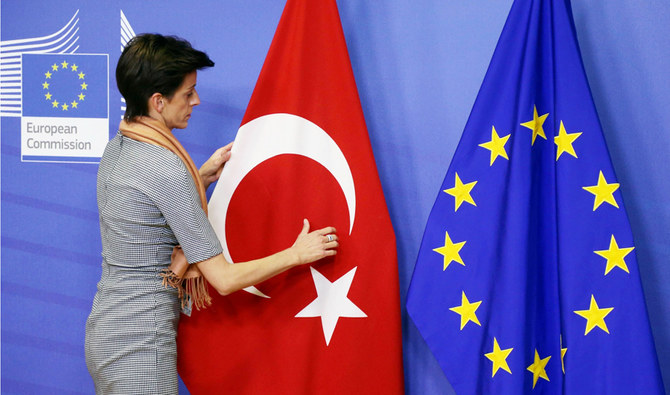
The Democratic Paradox: Western Silence Grows Louder
Yet this strategic dependence has produced a noticeable contradiction. While Türkiye's military importance has never been greater, Western rhetoric on democracy, rule of law, and human rights in Türkiye has sharply diminished.
A decade ago, European institutions issued frequent and forceful public statements criticizing Ankara on media freedom, judicial independence, and political rights. Today, those high-intensity critiques have given way to muted language, brief mentions, or symbolic gestures.
Even within the European Parliament—historically one of the harshest critics of Ankara—the most recent debates on Türkiye's accession process have prioritized geopolitical themes over democratic concerns. References to human rights still appear, but primarily as formalities, not as the central focus they once were.
This shift is not accidental. European governments increasingly prioritize stability and military cooperation over value-based pressure. As long as Türkiye continues to deliver significant security benefits, the West appears less inclined to confront Ankara over internal democratic developments.

Why Europe Is Looking the Other Way
Several strategic dynamics explain this shift:
- The war in Ukraine elevated the importance of Türkiye's control over the Turkish Straits, its mediation capability, and its role in maintaining a balance in the Black Sea.
- A declining U.S. footprint in European security has pushed EU states to deepen cooperation with Ankara, even if political tensions persist.
- Türkiye's defense modernization—especially in UAVs, naval platforms, intelligence capabilities, and growing export power—has changed the balance of leverage.
- Migration and border control pressures continue to shape European political agendas, reinforcing the need for Türkiye's cooperation on refugee flows.
In this environment, Europe appears willing to compromise on previously non-negotiable principles if doing so preserves military and geopolitical stability.
A Growing Tension Between Values and Interests
This evolution leaves Europe facing a dilemma: it increasingly relies on a strategic partner whose democratic trajectory it no longer challenges with consistency.
For Türkiye, the new dynamic reinforces its position as a critical power whose cooperation is actively courted. Yet for the European Union, the trade-off is more complex. The quiet retreat from value-based diplomacy risks undermining Europe's long-standing claim to normative leadership on human rights and rule of law.
If European states continue to treat democracy issues in Türkiye as a minor footnote while prioritizing security cooperation, they may ultimately weaken the credibility of the very principles upon which the EU was founded.
Conclusion: Stability at the Expense of Principles?
Türkiye's central role in European security is undeniable. The question is whether Europe can uphold its normative identity while drifting into a more transactional relationship with one of its most important neighbors.
The current trajectory suggests that, for now, strategic interests prevail. Yet the cost of this choice—both for Türkiye-EU relations and for the European project itself—remains uncertain.
Despite presenting itself as a global champion of democracy and human rights, the European Union has shown a striking willingness to mute its principles when confronted with hard security realities. Brussels now treats Türkiye less as a candidate country bound by shared values and more as a security subcontractor whose democratic shortcomings can be quietly overlooked so long as it stabilizes Europe's borders, absorbs migration pressures, and anchors NATO's southeastern flank. This selective morality exposes a deep inconsistency at the heart of EU policy: when democratic backsliding occurs within a strategically indispensable partner, the Union's commitment to rule of law suddenly becomes negotiable. By prioritizing geopolitical convenience over its own foundational standards, the EU risks eroding the credibility of its values-based foreign policy and signaling to the wider world that human rights matter only when they carry no strategic cost.