
By Bosphorus News Geopolitics Desk
Cypriot President Nikos Christodoulides arrived at the European Council summit in Brussels on 19 March and put the future of Britain's two sovereign bases on Cyprus directly on the diplomatic agenda.
"The British bases in Cyprus is a colonial consequence on the island," he said. "We have more than 10,000 Cypriot citizens within the British bases, we have responsibility for those people. When the situation in the Middle East is over, we are going to have an open and frank discussion with the British government."
Asked whether he wanted the bases removed, Christodoulides said he would not negotiate publicly. "I am not going to make my request publicly, but we do need to open this discussion."
His language had shifted from the day before. On 18 March he described the bases as a "colonial remnant" and said "nothing has been ruled out." By Thursday, the framing had moved to "colonial consequence" and the call for talks was more direct.
On 2 March, an Iranian-made drone launched by Hezbollah from Lebanon struck RAF Akrotiri, the first such attack on a British base in Cyprus in decades. The strike damaged a hangar, prompted protests across the island, and brought into the open a question that had been building since the war began: whether the British presence had made Cyprus a target rather than shielded it. Cyprus Foreign Minister Konstantinos Kombos told the BBC: "Right now we have the British bases on the island. There are questions. There are issues. There are concerns."
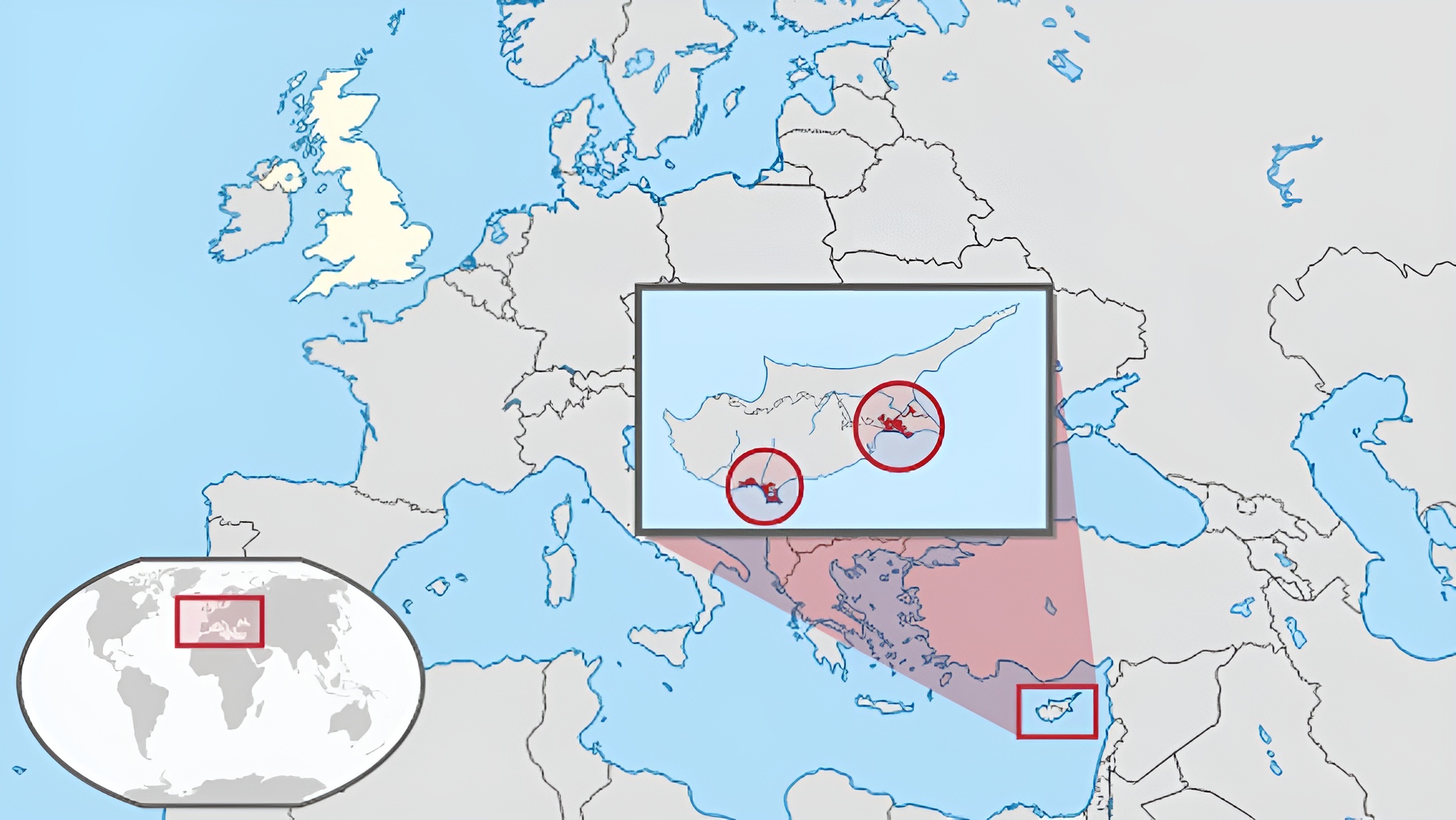
The UK's two sovereign base areas, Akrotiri and Dhekelia, were established under the 1960 treaty granting Cyprus independence from Britain. They cover 254 square kilometres of the island's southern coast and remain British sovereign territory. Any formal renegotiation would not be a bilateral matter. The 1960 framework binds Greece and Türkiye as guarantor powers alongside Britain, and requires the involvement of representatives from both Cypriot communities, making the legal and political architecture of any change exceptionally complex.
Britain responded to the drone strike by deploying F-35 jets, radar systems and 400 extra personnel. HMS Dragon was dispatched to bolster defences but had yet to arrive. While London was issuing reassurances, the warship sent to back them up was still at sea.
UK Minister of State for Europe and North America Stephen Doughty visited RAF Akrotiri this week and pushed back directly. "These bases are crucial for wider security across the eastern Mediterranean and for European security," he told ITV. "I'm confident that they will remain." The UK Ministry of Defence said the future of the bases was "not in question."
The drone cracked open a debate that had remained largely polite and theoretical since 1960. Cyprus is no longer content to be a hosting state. Christodoulides has spent the weeks since the war began positioning the island as a diplomatic actor, not just a forward platform, arguing that its geography and its relationships across the region give it a mediating role that Europe should recognise and use.
At the same summit, Christodoulides raised a connected issue: the operational mechanism for Article 42(7) of the EU Treaty, the mutual defence clause. Cyprus did not formally invoke it after the drone strike, but the rapid deployment of European naval and air assets to the island demonstrated what activation looks like in practice. The drone gave Europe an unplanned rehearsal. Christodoulides said he had raised with both the President of the European Council and the President of the European Commission the need to formalise that response into a specific mechanism. He said the issue would go on the agenda of the informal European Council in Nicosia on 23-24 April. "I am pleased that all the heads of state of the EU member states consider this upcoming discussion to be necessary," he said. Nicosia now wants to turn that response into a formal mechanism.
Bosphorus News reported earlier on Thursday that Christodoulides had pushed for the EU to take a diplomatic initiative to end the Iran war, arguing that countries in the region were expecting international engagement.
When the war ends, Cyprus intends to be at the table. The question of British bases will be among the first tests of that role.