
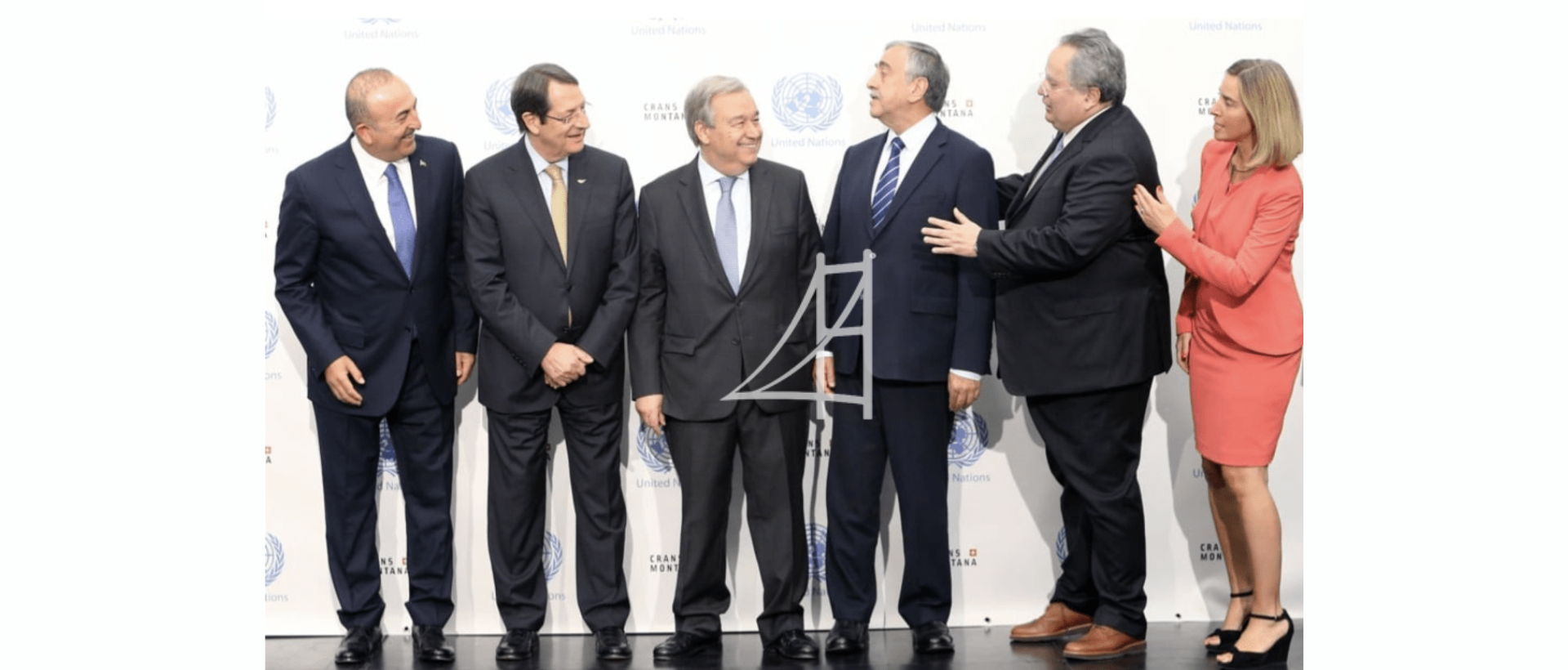
The highly anticipated book "Ithaki" by former Greek Prime Minister Alexis Tsipras was released today, triggering a new wave of debate over his administration, the negotiations on Greece's public debt and —above all— the Cyprus issue. With Alexis Tsipras himself as the core keyword, the book offers detailed accounts of what transpired in Crans-Montana, while senior Turkish diplomats who participated in the talks respond exclusively to IBNA, presenting their own version of events.
"Ithaki" and the New Narratives on the Cyprus Issue
In the extensive chapter titled "Cyprus Issue, One Breath Away from a Solution," Alexis Tsipras offers a detailed account of the behind-the-scenes negotiations of the 2016–2017 period, outlining the strategy of the Greek and Greek Cypriot sides and the pivotal moments of the Crans-Montana Conference. The former Prime Minister argues that Greece focused exclusively on the international security dimension, demanding the abolition of the guarantees system and the full withdrawal of Turkish troops from Cyprus. He further claims that the Guterres Framework constituted a historic opportunity for an agreement — one that was lost due to what he describes as the Turkish side's "intransigence" during the dinner of 6 July. He also refers to key contacts with then-Turkish Prime Minister Binali Yıldırım, as well as to a message that —according to his account— Mevlüt Çavuşoğlu conveyed to António Guterres regarding a possible abolition of the guarantees.
Exclusive to IBNA – Turkish Diplomats Respond to Tsipras' Claims
A senior official of the Turkish Ministry of Foreign Affairs who participated in the Crans-Montana talks told IBNA exclusively that "there was no opportunity as it was presented," adding that the Turkish side had stated it would reconsider the presence of Turkish forces after a period of three electoral cycles and that "we clearly rejected autonomy, as in the 'sunset clause'," concluding with the phrase "these people need to understand this." This position differs significantly from Alexis Tsipras' interpretation, particularly regarding the issue of guarantees and the timeline for troop withdrawal. A second senior diplomat, who also took part in the negotiations, told IBNA that these were "important points, but what he says about our position on the guarantees is not true," making it clear that Ankara does not accept the way its positions are described in the book. These statements indicate that the Turkish side disputes the manner in which the atmosphere and proposals of that period are presented, adding a new dimension to the already charged debate over Crans-Montana.
UN, EU and the Balance of Forces that Shaped Crans-Montana
Throughout 2016–2017, the Cyprus issue remained one of the most complex international dossiers within the UN framework, with the European Union observing developments discreetly due to the dual role of the Republic of Cyprus as an EU member state. The "Guterres Framework" was at the time described by international actors as the closest point to a potential historic agreement. However, the clash between the Greek Cypriot side's demand for strong security safeguards and Turkey's long-standing perception of perpetual guarantees created an unbridgeable gap that ultimately proved decisive for the outcome of the Conference. Alexis Tsipras' book is expected to reignite debate within the European Union over how it handles critical peace processes and to what extent its institutional weight can meaningfully influence security arrangements in a future settlement framework.
What "Ithaki" Reveals About Greek and Turkish Approaches
"Ithaki" presents a version of events that clearly assigns responsibility to the Turkish side for the collapse of the Conference, portraying Crans-Montana as a missed opportunity that ultimately sank over the issues of guarantees and the withdrawal of troops. At the same time, the exclusive responses obtained by IBNA from senior Turkish diplomats create a strong counterpoint, bringing to light differing interpretations of what happened during the dinner of 6 July, conflicting assessments regarding the content of Çavuşoğlu's message to the UN Secretary-General, and a complete disagreement over whether a genuine "window" for abolishing the guarantees ever existed. This demonstrates that the Cyprus issue remains a case where memory, institutional context and political interpretation carry as much weight as the events themselves, while also highlighting how differently Athens, Nicosia and Ankara assess the same critical moment.
A New Cycle of Debate and Political Interpretation
The publication of "Ithaki" is already opening a new political and diplomatic dialogue in Greece, Cyprus and Turkey, with the book's content serving as a starting point for each side to reassess its negotiation strategy. In the period ahead, intense public debate is expected over the "truths" and differing versions of events, as well as reactions from Nicosia and Ankara regarding the points that concern them, alongside detailed commentary from international actors, especially in relation to the "Guterres Framework" and the role of the UN. As "Ithaki" demonstrates, the Cyprus issue is far from settled; on the contrary, the discussion around Crans-Montana is likely to be revived with renewed intensity, both politically and diplomatically.
*** SOURCE: IBNAEU.COM