
By Bosphorus News Defense Desk
Cyprus moved deeper into Europe's Eastern Mediterranean security debate during DEFEA 2026, Greece's main defence and security exhibition in Athens, where President Nikos Christodoulides connected the island's defence planning to NATO, European rearmament and the upgrade of military infrastructure that could serve European and partner countries.
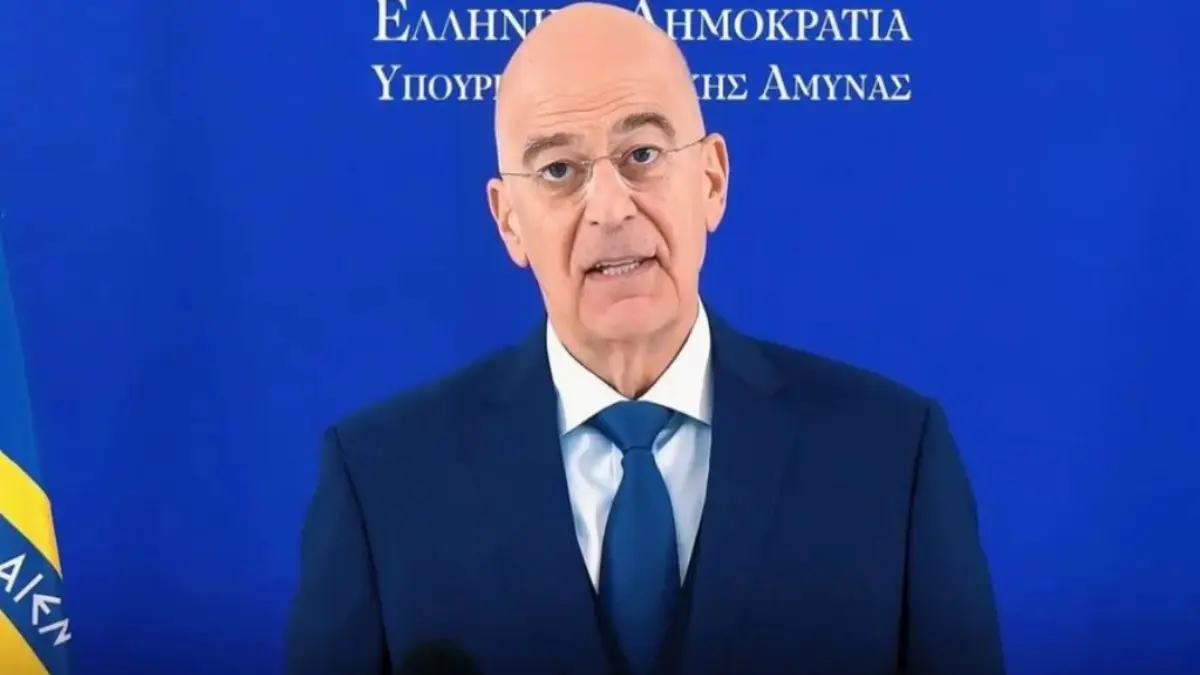
The conference brought Christodoulides, Greek Defence Minister Nikos Dendias, European Defence Commissioner Andrius Kubilius and NATO Deputy Secretary General Radmila Shekerinska into the same room at a moment when the war in Ukraine, Middle East spillover risks, drone warfare and Europe's industrial production gap are forcing defence policy out of abstract declarations and into procurement, infrastructure and readiness.
The Cyprus message was sharper than a routine conference appearance. Christodoulides said Cyprus would be ready to join NATO when political conditions allow, a formulation that keeps the door open without pretending that the obstacle is technical, since Türkiye, a NATO member and guarantor power on the island, remains central to any serious discussion about the island's future relationship with the alliance.
The Athens visit also placed Cyprus' military bases inside the European security conversation. Talks with Kubilius included the upgrade of Andreas Papandreou Air Base in Paphos and Evangelos Florakis Naval Base in Mari, with the infrastructure discussed in terms of possible use by European and partner countries, giving the Cyprus file a practical military layer that goes beyond statements about defence cooperation.
For Nicosia, the base discussion comes at a moment when the island is no longer treated only as a diplomatic problem or an EU member state on the edge of the Levant. Cyprus is becoming a staging, evacuation, surveillance and air defence question for Europe, especially after successive crises linked to Gaza, Lebanon, Iran and attacks affecting British facilities on the island.
Greece is trying to turn that shift into a wider defence architecture. Dendias used DEFEA to place technology, innovation, start-ups and domestic industrial capacity inside Greece's military modernization agenda, linking the exhibition floor to a larger state effort to reduce dependence on imported systems and build a defence ecosystem that can respond faster to drones, missiles, electronic warfare and the pressure of sustained production.
That agenda already has a budgetary and doctrinal base. Greece's Achilles Shield package, approved by parliament earlier this year, gave Athens a formal modernization track covering air defence, command systems and force protection, while the same programme pointed to a deeper shift in Aegean military thinking, as Bosphorus News detailed in its analysis of Greece's changing defence doctrine.
DEFEA adds an industrial and European layer to that shift. Greece is trying to bring procurement, local production, anti-drone technology, space-linked capabilities and European defence funding into the same security programme, while Cyprus gives that architecture geography, bases and crisis proximity at the point where the Eastern Mediterranean touches the Levant.
The Israeli connection remains part of the same picture. Greece has already moved to strengthen its long-range strike and precision fires portfolio through the Israeli PULS rocket artillery system, a deal covered by Bosphorus News as part of Athens' military modernization drive. That track sits alongside Greece-Cyprus-Israel military cooperation and the growing use of Eastern Mediterranean exercises to test air, naval and missile defence coordination.
The EU funding layer gives the file another edge. Cyprus expects access to defence financing under the EU's SAFE framework, while Greece and Cyprus are moving through European mechanisms designed to accelerate joint procurement and industrial cooperation. The same architecture carries a sharper Türkiye angle because Ankara remains outside the EU defence financing core, a structural divide Bosphorus News examined in its coverage of SAFE and Türkiye's exclusion from Europe's defence architecture.
Greece and Cyprus are not waiting for a single alliance decision to define their place in the regional military balance. They are building through overlapping channels: EU defence money, NATO proximity, Israeli technology, national modernization plans, base upgrades and crisis-driven cooperation with Western partners.
Türkiye is not named in every part of that process, yet the geography leaves little room for detachment. Any move that brings Cyprus closer to NATO language, European base access, air defence upgrades or Greece-led military planning lands directly inside Ankara's reading of the Eastern Mediterranean and the Cyprus question.
DEFEA matters because it shows how Athens and Nicosia are translating strategic anxiety into procurement, technology, doctrine and infrastructure. Greece is using defence industry as a bridge between national modernization and European rearmament, while Cyprus is moving from the margins of EU security language into a more operational role shaped by bases, air defence, crisis access and future NATO alignment.
The process remains politically constrained by the unresolved Cyprus dispute, but its direction is no longer difficult to read. Athens and Nicosia are building a defence architecture through cumulative steps, and DEFEA served as the platform where European rearmament, Greek modernization and Cyprus' military geography were placed inside the same Eastern Mediterranean frame.