
By Bosphorus News Staff
The official X account of Cyprus's Finance Ministry briefly shared an opinion article critical of Greece's approach to the Great Sea Interconnector, before deleting the post shortly afterward without explanation.
The article, published by the Cyprus-based outlet Offsite, argued that Finance Minister Makis Keravnos's cautious stance toward the interconnector reflected responsible risk management. It framed the project as carrying financial and strategic risks for Cyprus and warned that insufficiently assessed commitments could expose the country to broader complications through its partnership with Greece. The piece was clearly labeled as commentary.
The commentary drew a historical analogy with the Kardak/Imia crisis, the 1996 standoff between Greece and Türkiye over uninhabited islets in the Aegean that brought the two countries close to military confrontation. The reference was used as a cautionary example of how mismanaged political and strategic decisions can escalate beyond their original scope.
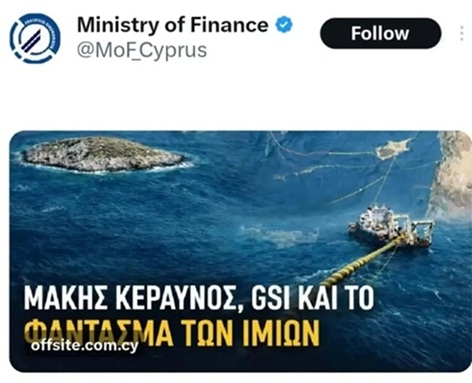
The post drew attention because it appeared to elevate this interpretation through an official ministry channel. Political sources cited in Greek media coverage described the move as resembling institutional guidance rather than personal opinion, given that the article was shared from a government account rather than a private platform.
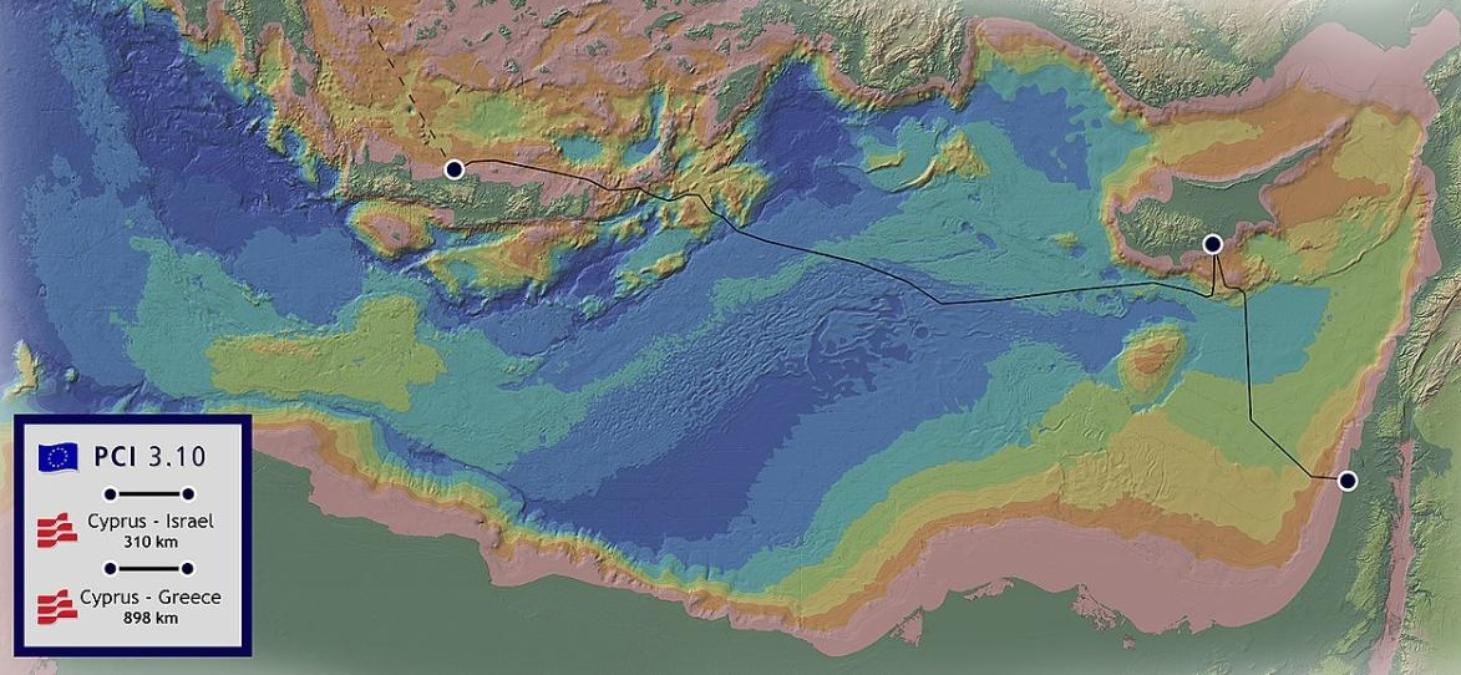
The interconnector, also known as the EuroAsia Interconnector, is a high-voltage electricity link planned to connect Cyprus to Crete and the European grid. The project is backed by European Union funding and is presented by Nicosia as central to ending Cyprus's energy isolation and strengthening regional connectivity.
Keravnos has publicly questioned the project's financial structure and risk allocation over an extended period, referring to assessments and studies that have not been fully disclosed. His position has at times contrasted with statements from other Cypriot officials and political actors who emphasize the project's strategic and geopolitical value.
No official explanation was issued regarding why the article was shared from the ministry's account or why it was later removed. There has been no indication of a policy shift, and Greek authorities have not commented publicly on the episode.
While the incident does not point to a change in Greece–Cyprus relations, it has drawn attention to internal debate in Cyprus over the interconnector and raised questions about message discipline when institutional platforms are used to amplify opinion on sensitive strategic projects.